
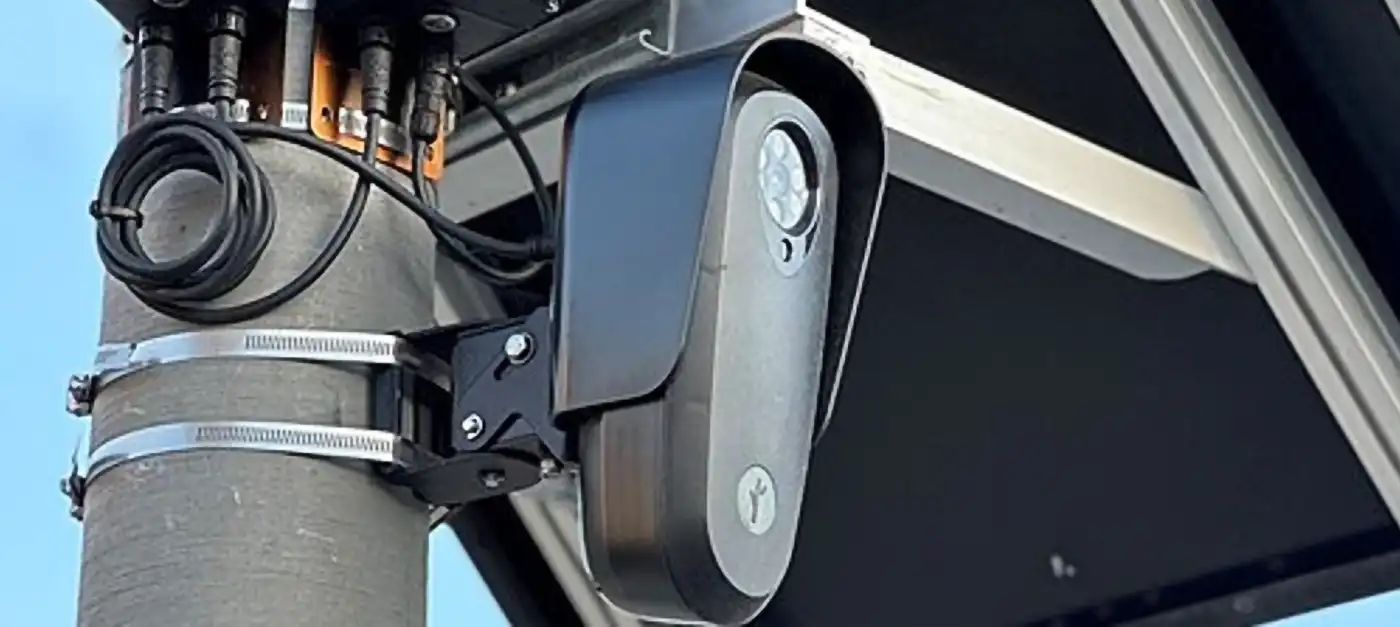
Flock cameras have become a controversial addition to neighborhoods across the country. They’ve been purchased by police, private and commercial property owners, campuses, and homeowners’ associations (HOAs).
The Flock Safety corporation has been under increasing scrutiny over concerns about invasions of privacy.
Deed holders have a range of opinions and feelings about these cameras. But one thing is certain. Flock cameras are tracking, logging, and sharing our movements without warrants.
Here, we delve into the controversy.
About the Technology
Flock’s main products are automated license plate readers, or ALPRs, along with video cameras, gunshot detectors, surveillance drones, and other security hardware and software. Items and pictures are available to view at Flocksafety.com.
Flock cameras are typically installed at property entrances, town borders, and busy intersections. The plate readers (ALPRs), stationed on roads, parking areas, and in front of homes, capture license plate numbers and other identifying information from cars. They can record subtle traits such as scratches and dents, and even bumper stickers.
Using artificial intelligence, they digest the information and store it on Flock’s national surveillance platform. That platform can run the information through federal and state police watchlists.
Flock camera boxes are often attached to lampposts or utility poles. The boxes are topped off with slanted solar panels. The plate readers themselves are compact.
A number of other companies sell similar security cameras and plate readers. A few names: Jenoptik, Axon, PlateSmart, Motorola’s Vigilant Solutions, and Genetec. Readers can visit the websites of the Electronic Frontier Foundation, DeFlock, and Have I Been Flocked to see maps and databases of the Flock network.
Flock Cameras in HOA Properties
Homeowners’ associations (HOAs) have become customers of Flock Safety. When an HOA installed two Flock plate reader cameras in Savannah, Georgia, an unhappy someone took them down.
One homeowner expressed surprise to learn the HOA, Sweetwater Station, had put up cameras to record the cars coming and going. The HOA says it may give records to the police in the case of unlawful activity in the area.
Sweetwater Station’s governing documents let the board manage common areas, buy equipment, and contract with companies. And this is what a home or condo deed holder needs to know about the rules for a community association. Changing the governing documents is important if residents decide they do not want this technology on their common property.
While these cameras could potentially help solve crimes, they do so at the expense of residents’ and visitors’ privacy. HOA boards don’t always consult with deed holders or tell them how they (or the camera company) will handle the data they collect.
It is not always possible for a unit owner to drum up enough support to amend the association’s regulations. Some state condominium laws give community association members the ability to ask for mediation in disputes with the board and management. Residents should contact the association’s office or speak with an attorney if necessary.
Is Camera Surveillance Legal?
On roads and in public spaces, the companies will say there is no legal expectation of privacy. But the relevant legal framework was developed long before the age of AI. A gray area has formed in which people have room to take legal action.
The American Civil Liberties Union calls the Flock surveillance network “contrary to the guarantees of the Constitution,” insofar as it builds records of people’s private lives. So, civil rights and liberties groups along with ticked-off individuals are putting pressure on local governments. Some city councils and even Rhode Island have dropped agreements with surveillance equipment companies.
In a Fourth Circuit case this year, the American Civil Liberties Union (ACLU), in an amicus brief, opposed the use of vehicle plate readers on Fourth Amendment grounds. Also this year, the ACLU supported a bipartisan amendment to the federal highway funding bill to oppose city and state use of the readers except for use at toll booths.
Cases involving invasion of privacy will have various outcomes, depending on the circumstances. In one case, a condo owner in North Carolina refused to give up a Ring camera, on account of a well-founded fear of assault. But the owner’s camera was recording the hallway at an angle that showed other units—and the owner was even complaining about the activities of some of the other unit owners. The association imposed daily fines and finally took her to court. The condo owner wound up owing a five-figure fine and a six-figure lawyer’s bill.
What About Doorbell Cameras?
Early this year, a Super Bowl commercial brought a great deal of attention to an AI feature called Search Party in the Amazon Ring camera. The Search Party feature connects all the cameras in a neighborhood (in the ad, to find a missing dog). This was shortly after Ring announced it was collaborating with Flock. Numerous commentators, at all points on the political spectrum, expressed the sense that the lost dog commercial was “propaganda for mass surveillance.”
Depending on the subscription (or lack of it), Amazon Ring, Google Nest, and other smart security cameras mounted on the front door may keep video inside the home system only. Or they might supply customers with cloud-based video storage. In an emergency, or when sent warrants, subpoenas, or court orders, these companies do share video data with law enforcement. This video can be of the home’s exterior or even the interior. They do not always disclose this sharing when it occurs.
Condo deed holders with concerns about doorbell cameras should know:
- Your condo association may require an architectural approval process for doorbell cameras.
- Cameras should not be installed or positioned to monitor other residents.
Federal, state, or local laws may prohibit people from invading others’ privacy. So, for example, the California code outlaws directing a camera into a private backyard or window. Arizona requires notification to anyone being recorded.
A Few Parting Thoughts
People might also want to consider that hackers or company employees could get into their home video footage. The New York Times recommends using end-to-end encryption. Note that doing this might make some features unavailable.
And speaking of being monitored, the National Association of REALTORS® warns home seekers to be alert for these cameras on open house and inspection visits. Consider yourself in a reality show, advises the Association.
Supporting References
Eric Goldschein for Realtor.com® (from the National Association of REALTORS®): A Complete Guide to Flock Safety Cameras (Aug. 21, 2026).
NBCPalmSprings.com: Savannah HOA Flock Cameras Raise Privacy Questions (published by Entravision on Aug. 26, 2026; quoting Savannah attorney Michael Schiavone).
Dorie Chevlen for The New York Times: What Homeowners Need to Know About Smart Home Cameras (Feb. 11, 2026).
American Civil Liberties Union, via ACLU.org: Get the Flock Out (last updated Oct. 1, 2026).
Chad Marlow and Jay Stanley for ACLU.org: Tracking ALPR Cameras – How to Fight Deployment of Flock and Other Mass Surveillance License Plate Readers in Your Community (Jun. 29, 2026).
AMG HOA & Community Association Property Management (North Carolina): Condo Owner Sues HOA Over Ring Camera, Loses, Has to Pay $73K (published Aug. 8, 2024, based on an article from WSOCTV).
And as linked.
Photo by Bruxton, available under the CC0 1.0 Universal Public Domain Dedication.