
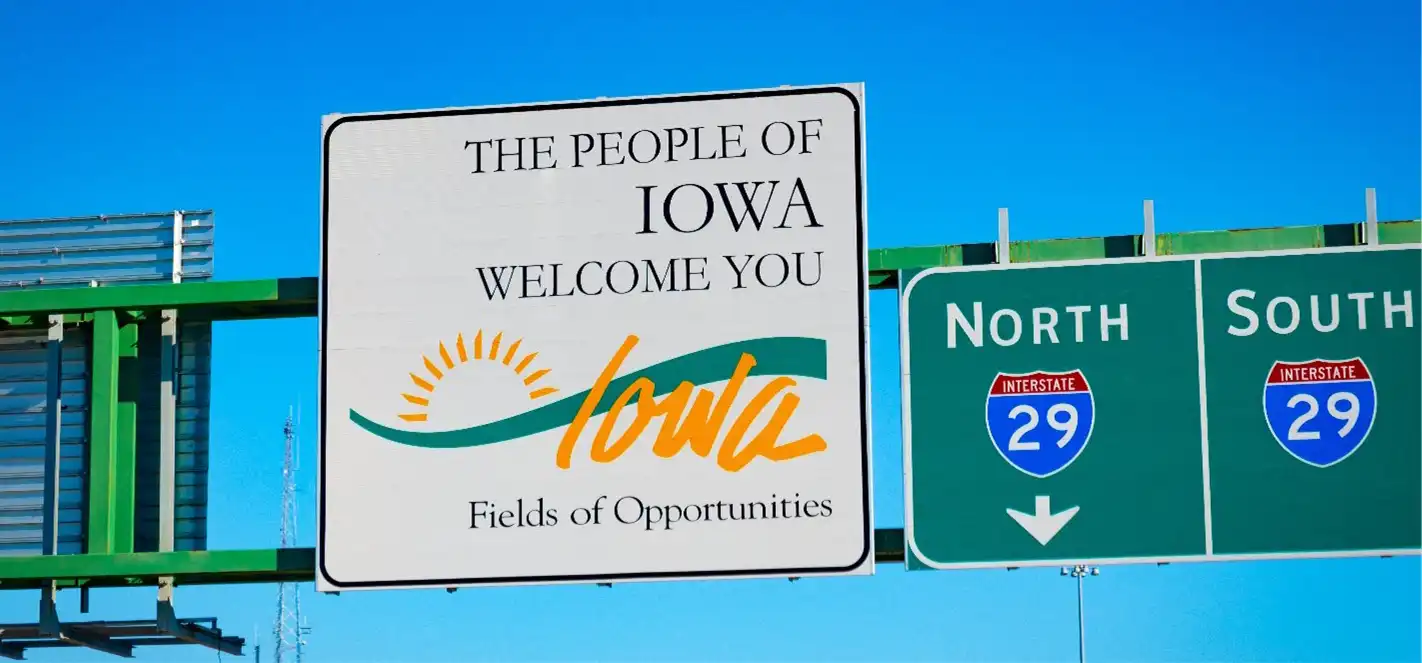
Lisa Houser, who directs Habitat for Humanity of Iowa, tells some harrowing stories. Stories of residents who deal with broken HVAC systems in extreme weather, or suffer major damage in disasters. Residents who’d be eligible for aid—if only the deed were in their names!
The cost of probate keeps quite a few households sidelined from the process. When families leave the deed in a dead relative’s name, problems occur later. Plus, for a home left in someone else’s name (with no living member of the household receiving survivorship rights), keeping the home insured can be impossible.
Lisa Houser wants Iowa to legalize transfer-on-death (TOD) deeds.
A Simple Solution? The Uniform Real Property Transfer on Death Act
Transfer-on-death deeds (TOD deeds) are legal in some 30 U.S. states. These deeds automatically pass a home’s title to a named beneficiary upon the homeowner’s death. While the owner is alive, creating a TOD is a simple matter of completing a form, taking it to a notary, and then filing it with the county recorder of deeds.
In contrast, passing the home through a Last Will means the home goes to probate. The probate process takes months to get through. The fees and costs typically amount to some 2% of a deceased person’s assets.
And creating a living trust can cost thousands of dollars.
Habitat for Humanity of Iowa is pressing Iowa lawmakers to consider adopting the Uniform Real Property Transfer on Death Act (URPTODA), which would allow TOD deeds. It’s a matter of equipping households with choices, says the advocacy group. Now that so many other states have adopted the method, why wouldn’t Iowa give heirs a similar probate alternative? There’s an obvious need for Iowa deed holders to have a cheap and easy way to transfer their homes to the coming generations.
TOD deeds have several user-friendly aspects:
- The owner must simply complete the form, and get a notary acknowledgement.
- A TOD deed must be filed in the county records, but it can be revoked at any point during its creator’s lifetime (through a new form, or by selling the home).
- The fee for filing a TOD form is minimal.
- The TOD deed can designate one or more beneficiaries.
- When the creator of the TOD deed dies, the beneficiary legally owns the home.
Of course, a TOD deed doesn’t wipe out the deceased owner’s debts. The beneficiary must be able and willing to resolve those.
Overall, the TOD deed is an effective, affordable way for a household to pass along a home, especially if the homeowner has just one beneficiary in mind. (It’s still important to write a will, so that all assets can be distributed according to their late owner’s wishes.)
Iowa’s TOD Deed Debate Is Ongoing. What’s the Holdup?

In fact, Iowa lawmakers have introduced the Uniform Real Property Transfer on Death Act four times in the past decade.
Who’s argued against it, and why? Since you asked…
- Some point out that Iowa has already adopted a small estate probate process for deceased homeowners who leave assets worth $200K or less. This should help households of modest means get through probate as the older generations pass. Of course, that’s still not as simple as writing up a beneficiary form.
- Others raise the concern that elders will come under pressure to sign away their homes if beneficiary forms are allowed. Of course, misuse can happen with a will, too. But a will needs witnesses. A TOD deed does not.
- There are also follow-the-money reasons to oppose a TOD. It’s very cheap, and needs no middle people. Iowa will not get much revenue through a TOD deed. And the state’s funeral association told the press it opposes TOD deeds because it’s easier for funeral businesses to get paid when there’s a probate case.
A bill to legalize TODs was introduced in Iowa’s last legislative session. One House subcommittee has approved. There’s been little interest in the Senate. If you’re an Iowan, let your legislators know your opinion!
What About Property Taxes? Iowans Demand Relief
Iowa deed holders have been pressing their legislature to stop letting property tax bills soar along with real estate prices.
In 2025, the Iowa House and Senate agreed on a bill they claimed would amount to $426 million in tax savings for households over a five-year period. But by the end of the lawmaking session, they hadn’t ironed it out.
The Iowa House Republicans promise to deliver relief. They’re pressing to place a 2% cap on local property tax revenue growth, while incentivizing new construction. The governor has also put forth a proposal that has a similar 2% cap.
Then there’s the Senate Republicans’ proposal. They want to create a homestead exemption that excludes half a home’s value, up to $350K, from property tax.
Cash-strapped deed holders await real action.
Pipelines in My Backyard? The Duel of the Eminent Domain Bills
If you’re one of our regular readers, you know that Summit Carbon Solutions wants to construct a pipeline through five states, and Iowa is one of them. It would divert carbon dioxide emissions from corn-based ethanol processors, injecting the gas underground. This would boost the allowable use of crops in the state. But it would also tear up a lot of residential property. The state would force deed holders to give up land for easements where the pipes would be placed. This forcing would occur by way of eminent domain—a constitutional workaround that allows a government to take private property if it pays the owners.
Iowa regulators are on board, but construction is on hold unless and until all five states agree to let Summit Carbon Solutions in. South Dakota has refused.
The pause in the action made time for a bill in Iowa’s House of Representatives, intended to ban government takings for the pipeline company. Opponents fear pipe bursts and other risks to residents.
There are two related bills pending in the Iowa Senate. One would let the pipeline companies form voluntary easement agreements with deed holders. This way, eminent domain could become unnecessary—as long as a sufficient number of deed holders go along with Summit. The other Senate bill would tax the carbon that pipeline companies would send through Iowa.
The governor vetoed an eminent domain law last year, but is conversing with lawmakers on revising their bills.
For a proposed law to advance in Iowa, it must pass a committee in either the House or Senate. The practice is called a legislative funnel. Iowa’s next legislative funnel takes place on March 20. Stay tuned.
Supporting References
Bailey Cichon for The [Des Moines] Gazette: Curious Iowa – Why Doesn’t Iowa Authorize Transfer on Death Deeds for Real Property? (Feb. 9, 2026).
Maya Marchel Hoff, Erin Murphy, and Tom Barton for The [Des Moines] Gazette: Next Up for Iowa Lawmakers – Property Tax Relief, Eminent Domain Debate (Feb. 22, 2026).
And as linked.
More on topics: How your deed is vested (matters as much as your will or trust)
Photo credits: Tony Webster via Wikimedia Commons, licensed underCC BY-SA 2.0 Generic; and Peter Fitzgerald via Wikimedia Commons, licensed underCC BY-SA 3.0 Unported.