

Recently the Virginia Supreme Court issued a decision on easement rights that will have an impact throughout the Commonwealth of Virginia. Justice Stephen McCullough penned the decision, and it came out on April 9, 2026.
After this case, a Virginia land owner can feel free to leave belongings on an easement—as long as reasonable passage is possible.
This is a legal game-changer. Owners who have rights of way that pass through other Virginians’ properties have long assumed that they always get the full width of the easement. That assumption has guided prevailing custom—even if the party using the access point doesn’t need or use the full width stated on the easement deed.
The new Virginia Supreme Court decision rejects this longstanding, customary practice. And it changes the way Virginia property owners will treat their easements.
What’s an Easement Deed?
An easement provides physical access to one property through another. For example, here’s where you can learn how a driveway easement is made.
By recording an easement deed in your home’s county, you formally grant access rights to another party without giving up your title to the land. This may be necessary when adjacent homeowners share driveways, or when utility contractors need access to infrastructure, or for general right-of-way purposes.
A professional surveyor is usually hired for the creation of the easement. This is because the easement needs to state its exact place, path, and measurements.
Get an easement deed form for your location with the Deeds.com Easement Deed Forms & Complete Guide.
Virginia Easement Holders Can’t Claim Exclusive Control Over Every Inch
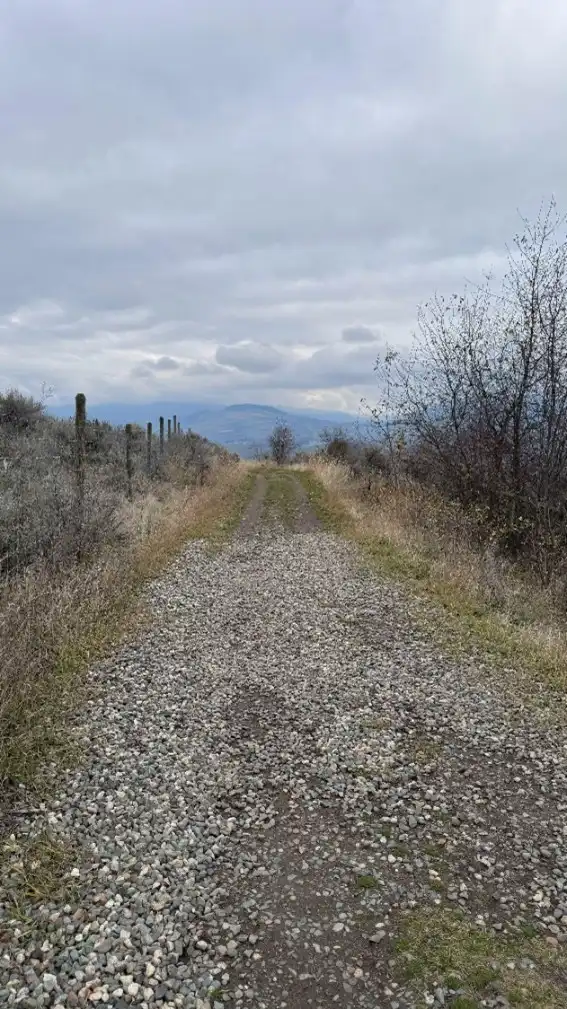
Unless their access is “unreasonably impeded” by the owners of the property with the easement, easement holders may not claim exclusive control over the space, Virginia has ruled. What does this mean in practical effect? The owner of the land with the easement may leave equipment, belongings, or debris on the easement.
In short, Virginia Supreme Court Justice Stephen McCullough wrote, easements are simply about providing access. And the owners of the underlying titles don’t lose all their property-use rights on the space just because they’ve granted a right of way. As long as they don’t block the necessary passage, that’s legally fine.
This creates a murkiness in the law, because what’s “unreasonable” depends on what the passageway is used for and how wide it happens to be. Virginia law has no blanket easement standard. What if the material left in the easement is possible to navigate around, although passage might be made difficult? Would that be reasonable? This would be a case-by-case question.
Why Has Virginia Looked at This Question?
The question arose over a driveway.
David and Caryn live in Dinwiddie County, Virginia. They bought a landlocked property. Their gravel driveway uses an easement over land owned by Thibault Enterprises LLC to connect the home to State Route 601.
The easement, granted to them when they purchased their home, is 50 feet wide. The gravel passageway, though, is just 12 feet wide.
The couple sued the Thibault company over fencing and foliage materials left on the easement. The items weren’t on the gravel road itself, but were situated within the easement’s 50-foot width. The couple claimed the company’s stuff was annoying to drive around. The circuit court sided with the couple, and halted the company’s use of the easement.
By 2025, Thibault Enterprises was pressing the case in the appeals court. Stuff might be left on the easement granted to the household, yes. But, the company pointed out, it wasn’t blocking “reasonable” access.
In short, the company was still the owner of the land, and it wanted Virginia to set the record straight. Caryn and David had access to their home—and that, said the company, was enough.
Again, the company lost. The Court of Appeals of Virginia agreed with the circuit court and found for David and Caryn. The appellate court reasoned that storing things within the easement constituted an impermissible narrowing of it.
Going to Court Didn’t Pan Out for David and Caryn
David and Caryn wanted the court to affirm that an easement is fully available to the party granted access. They wanted a solid, lasting opinion from the court affirming the easement holder’s legal rights. At first, the case went their way. But the lower courts were reversed at the state Supreme Court level.
The Thibault company had its own take on the matter. The company disagreed with the lower courts. And it kept pressing the point until the case got to the Supreme Court of Virginia.
The Supreme Court reviewed the language in the easement deed that the company had granted to the household. It looked for language expressing the intent of the owners of both properties. The court said the issue at hand was whether the actions of the company, which remained the land owner, “unreasonably” interfered with the household’s intended use of the easement. Here, the easement deed specifically grants the homeowners “the right of ingress and egress over an outlet road” that crosses Thibault’s land.
In the view of the Virginia Supreme Court, the evidence was clear. The homeowners could “travel to and from their house over the land owned by Thibault,” the judge wrote. The company’s items were not impeding “ingress and egress in any appreciable way.”
Virginia Supreme Court Justice McCullough cited case law that supported Thibault, such as a 2012 case, Piney Meeting House v. Hart. In that case, the court disagreed that an underground propane tank interfered with an easement.
Thibault was therefore free to leave items within the easement’s boundaries. “The Court of Appeals and the circuit court erred in holding otherwise,” said the Supreme Court.
(Justice McCullough noted that the case-by-case determination could result in a different outcome—if, say, construction or erosion changes a pathway, requiring it to be widened over the full easement.)
At the end of their legal adventure, Caryn and David ended up where they had started.
A right of way is legally known as an “easement appurtenant.” Such easements run with the land—meaning future owners will receive the deed to the home subject to the easement. Unless the easement contains time limitations, future holders of the easement receive a continuing right of access.
Expectations Are Not Always as Settled as They Look
Courts, legislatures, agencies, and deed holders themselves change settled expectations from time to time. We see this strikingly through this case in Virginia.
At Deeds.com, we keep track and inform our readers, so you know the rights and responsibilities that come with a deed today.
At the same time, we recommend consulting with an attorney when agreeing to, or disputing, a question of access rights and/or easement use. The approaches in states, as you see, can vary and even change.
Supporting References
Thibault Enterprises LLC v. Yost (April 9, 2026), written by Justice Stephen R. McCullough for the Supreme Court of Virginia, citing Va. Code § 55.1-305 on interpretation of easement rights.
Jason Boleman for Virginia Lawyers Weekly: Real Property – Supreme Court Clarifies When Objects Can Be Placed in Easement (published Apr. 28, 2026 by BridgeTower Media).
Bill Atkinson for The Petersburg Progress-Index, via Progress-Index.com: Virginia Supreme Court Rules on Dinwiddie Land Easement (reprinted by AOL Media LLC on Apr. 10, 2026).
Deeds.com: Easement Talk – Frequently Asked Questions About Driveways and Deeds (Sep. 11, 2025).
Deeds.com: Will an Easement Need a Separate Recording When Someone Wants to Sell or Buy? (Feb. 14, 2025).
And as linked.
More on topics: Implied easements, Consenting to new property lines
Photo credits: Jim Richter and Anna Chirednichenko, via Pexels/Canva.