
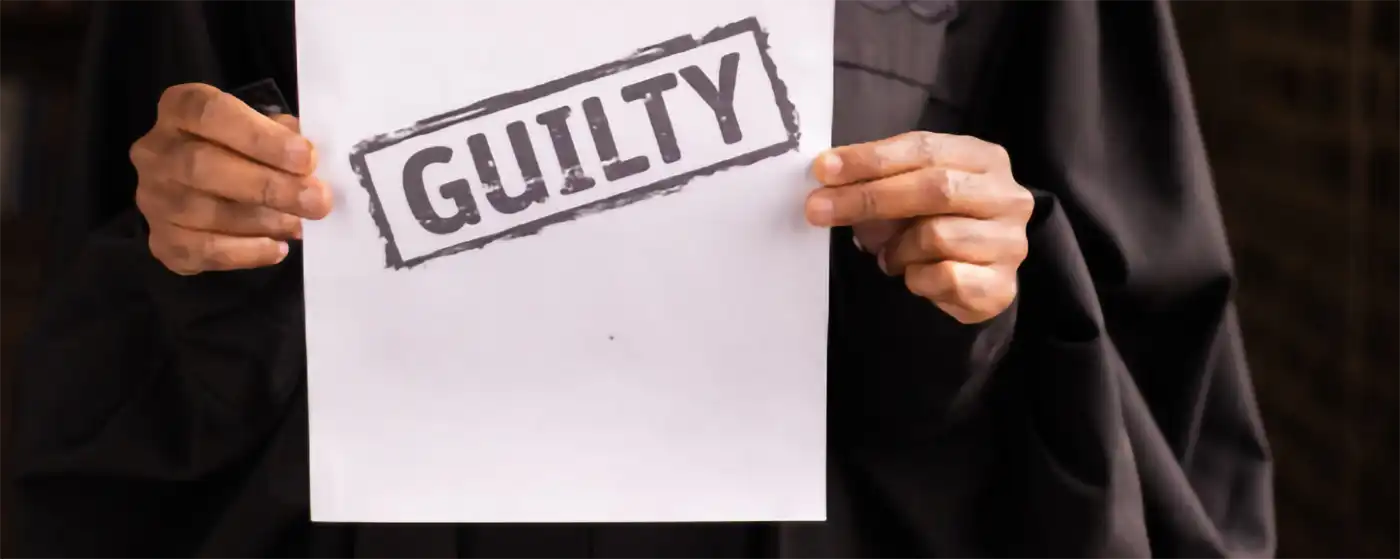
A married couple on tourist visas just got sentenced for a high-stakes swindle. It involved selling homes they did not own, then laundering about a million dollars out of the sale.
Innocent Buyers’ Funds Sent to Mexico and Jordan.
Victor Villalobos and Nayeli Montoya got federal prison time for their white-collar crime. They pleaded “guilty” to pretending to be the real homeowners. They forged deed holders’ signatures on documents. Then they sold two homes to innocent buyers.
The story dates back to 2023, when Villalobos and Montoya, on visas from Mexico, improperly sold two pieces of real estate:
- An unoccupied home in San Diego. The deed belonged to the Mary Q. Cam trust. The couple played the role of trustees. They communicated with an email address that looked like the trust name. Innocent buyers Daniel Magy and Luen H. Lau sent $400K to the couple’s account, falsely held out as doing business for the trust.
- Another unoccupied San Diego home. The deed belonged to DIME Hollister LLC. Here again, the couple used a fake email address to sell the property, which fetched more than $560K. The couple then transferred the funds to banks in Mexico and Jordan.
According to prosecutors, Villalobos and Montoya convinced buyers that the deals were legitimate by:
- Doing their business by email, not in person.
- Holding bank accounts under names that appeared similar to the real deed holders.
In November, the couple was apprehended at an airport. Prosecutors listed 15 counts. Among the alleged crimes: wire fraud and related conspiracy; money laundering and related conspiracy; and aggravated identity theft. This June, the spouses appeared in court and took a plea deal. Both pleaded guilty to fraud.
“It is difficult to imagine,” said U.S. Attorney Adam Gordon in a statement, “a more brazen betrayal of trust than pretending to own someone else’s home and selling it for your own gain.”
The sentencing was announced earlier this month.
Meanwhile, in Texas, Another Couple Gets Caught.
A Fort Worth couple was also sentenced this month. For years, the two had engaged in an intricate swindle. This one ensnared dozens of people who were simply trying to have homes built to live in.
This past December, Christopher Judge and Raquelle Judge pleaded guilty to a serious white-collar crime: wire fraud conspiracy. The couple also admitted to falsely holding out Christopher Judge as a licensed architect.
Both defendants must pay restitution to the tune of millions of dollars. And both will be doing time in federal prison for ripping off their network of hopeful homeowners.
According to prosecutors, the Judge couple pretended to be purveyors of custom-designed homes. They took regular installment payments from customers. But they did not do all the work related to those installments. Ultimately, the home builders bailed on their customers. More than 40 customers, representing at least 24 construction projects throughout the North Texas region, were left without finished homes.
LLC Owners Blame Poor Choices on the Pandemic.
At issue are a Texas-based construction company and its sales to customers from the summer of 2020 to early 2023. The spouses were the managing members of an LLC and held themselves out as an architect and interior designer. They offered to carry out personalized home projects in North Texas at below-market rates. But little of the promised work was delivered.
The court heard how the defendants commingled their defrauded clients’ installment payments with their LLC’s other project funds. About $4.2 million went unaccounted for. The Fort Worth branch of the FBI, the federal Secret Service, and local police worked on investigations.
At the sentencing hearing, ripped-off customers packed the courtroom. Defending the couple before the judge, a lawyer said the LLC was formed in good faith. But in the fog of the pandemic, they started making bad choices.
The prosecutors, in contrast, told a story of “brazen fraud” against the customers, and promised to “ensure that those who engage in such criminal conduct face justice.” The customers said they went to court to witness that justice.
Seller Impersonators Look for Properties No One Is Watching.
Seller impersonation fraud happens when people identify themselves as deed holders with the right to sell a property. They use fake IDs, signatures, documents, and notaries to carry out deed theft.
Since the pandemic, this type of crime is on the upswing. The rise of artificially generated text and imagery has been very helpful to those looking to get rich off other people’s deeds.
To mask their fraud, deed swindlers very often employ real agents to market the targeted homes. Innocent buyers may be asked to wire their payments to distant accounts.
Last year, the National Association of REALTORS® carried out research on deed theft. NAR found that the usual targets are unoccupied homes. These might be trust properties, builders’ properties, vacant rental homes, vacation homes, or real estate left empty by older or recently deceased adults.
Just 12% of the deed fraud cases surveyed had someone living in the homes. And often, the occupied homes are paid off and owned by seniors.
Deed holders and buyers alike should take particular care with unoccupied homes. Seller impersonators appear to prefer such homes.
Assets Attract Fraudsters. Take Precautions.
Buying a home? We need to let you know there are swindlers out there, and they see buyers as potential targets.
- Check up on the notary being used for the transaction. Is it someone at a legitimate institution? Have you verified?
- Use particular care with cash transactions and sellers with no mortgages on the homes.
- Think carefully about a too-good-to-be-true price. In real estate, the general rule is fair market value. A cut-rate deal in an arm’s length transaction may come back to bite a buyer.
- Is the seller trying to rush to closing? Why?
- Is the seller only available remotely? Could be a red flag.
- Is money going to a foreign bank? That’s also a red flag.
Targets of real estate swindlers should report the matter to local police and the state Attorney General and inform the relevant title company. If you or someone you know is leaving a home unoccupied, consider talking with them about fraud risk. It’s up to all of us to safeguard our communities—and our deeds.
Supporting References
Julie Gerstein for Realtor.com®: Husband and Wife Get Prison for Elaborate Scheme to Sell Homes They Didn’t Own (published by the National Association of REALTORS® on Sep. 8, 2026; citing the Realtors Land Institute and other sources).
U.S. Department of Justice, Northern District of Texas, via Justice.gov: Press Release – Husband and Wife Sentenced in Fraud Conspiracy Involving More Than $4 Million In Unfinished Custom Home Projects (announcement published in Fort Worth on Sep. 1, 2026, on behalf of Ryan Raybould, U.S. Attorney for the Northern District of Texas).
David Sentendrey for FOX 4 News (Dallas – Fort Worth): North Texas Couple Receives Federal Prison Time for Fraudulent Custom Home Projects (published by FOX Television Stations on Sep. 1, 2026).
And as linked.
More on: Pittsburgh deed fraud, Use of generative AI in deed theft, Fraud risk in remote deed transactions
Photo credit: Katrin Bolovtsova, via Pexels/Canva.