
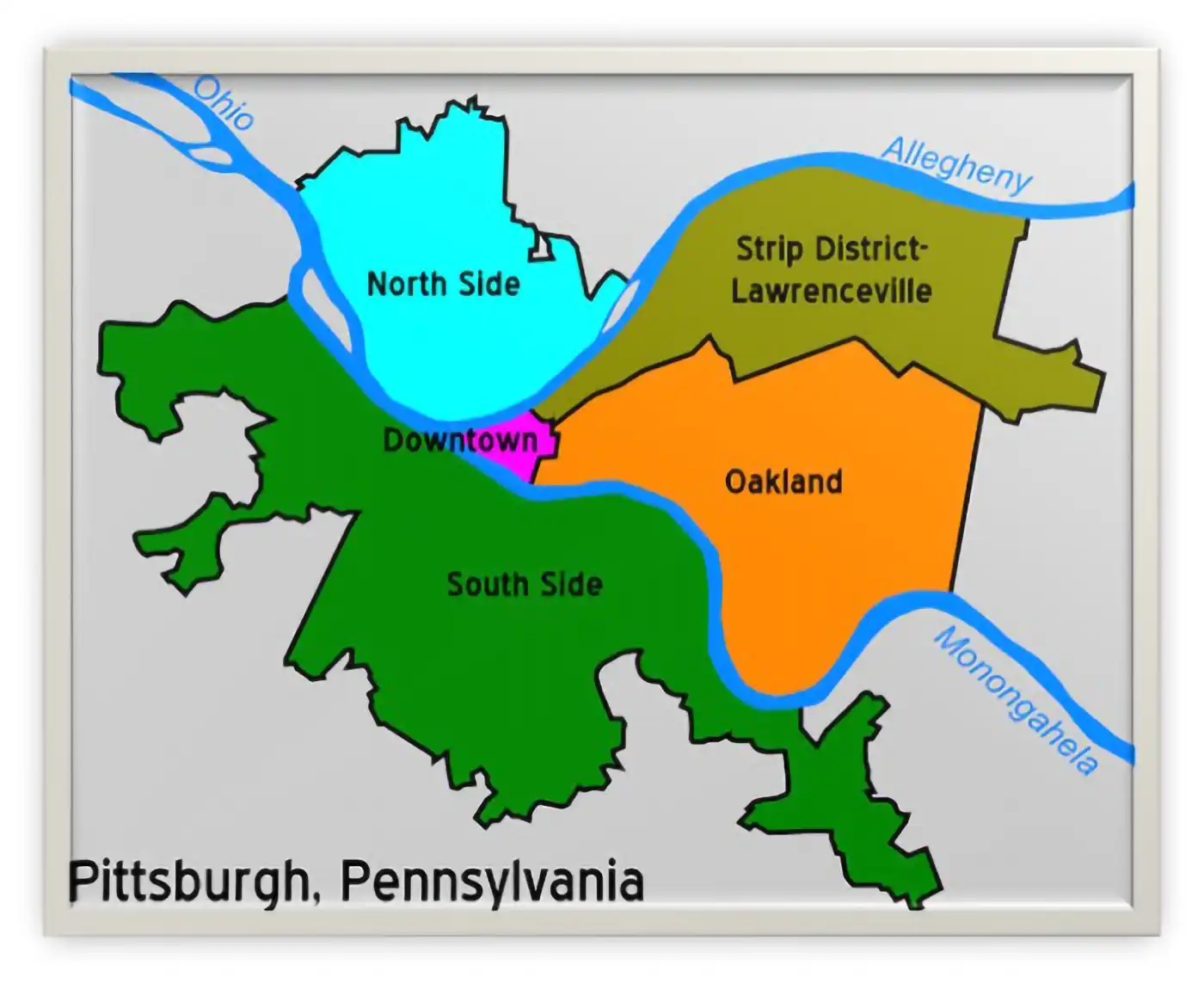
Richard, a senior homeowner, was working with a Pittsburgh agent to sell his South Side property out of bankruptcy. But the Allegheny County property was transferred instead, for $1,000, to a shady LLC. It’s just the latest discovery in the massive fraud case unfolding in Pittsburgh, Pennsylvania.
Richard had to wind down his business due to the impacts of the pandemic. But he remained overwhelmed by a large tax debt. So he filed for bankruptcy and decided to sell the property he owned in order to resolve the debt. He was awaiting a federal bankruptcy court’s go-ahead to sell the home. That’s when Richard’s deed was transferred out from under him without his knowledge.
It’s a Race Against Crime
Dozens of homes in Richard’s neighborhood have been similarly transferred through fraudulently notarized deeds to mysterious LLCs. Allegheny County investigators and attorneys have been scrambling to stop the scheme from spreading further. Meanwhile, struggling residents are looking at expensive court cases to recover their titles from the scheme.
Many of the deed transfers and affected properties have traits in common:
- The deed transfers state that the affected homes have all been purchased for $1,000—no matter what they were worth. Some of the stolen homes are worth close to half a million dollars.
- A number of these homes were unoccupied. Manipulation of vacant homes can go unnoticed.
- Most of the homes were located on the South Side of Pittsburgh and owned by seniors.
Given the involvement of LLCs in receiving the falsified deeds, one might think a pro investor was involved. One might be right.
A Notary Stamp From Amazon
Allegheny County prosecutors now have suspects: William S. and William P. The first William faces the most charges. These include 86 forgery counts, 35 theft counts, and additional counts of criminal attempt and conspiracy. The second William is accused of creating and registering an LLC to receive the ill-gotten deeds.
William P. told investigators the idea was to try to hang onto the homes “until it was safe to sell” them.
Richard, the deed-theft victim who went into bankruptcy, figures the suspects were just going to wait for him to die and then exploit the property they took from him. William S. gave investigators a statement acknowledging the deed transfers but insisting the pair was only trying to renovate neglected homes and make the neighborhood better.
Investigators say William S. is a self-identified real estate investor who holds 200+ properties, with a lot of experience flipping distressed homes. He knows plenty of notaries and allegedly used many of their names to order counterfeit notary stamps from Amazon.com. That’s how he allegedly concocted 43 Allegheny County deeds.
No Questions Asked About Deed Transfers in Pennsylvania
Step back and think about dozens of deeds appearing in the county recorder’s office in a short span of time—all stating that the underlying purchase was made for $1,000. The properties had addresses in Pittsburgh’s South Side Slopes. Western Union money orders were used to pay the recording fees. The deeds arrived at the Allegheny County Recorder of Deeds office in similar large business envelopes, with no return addresses visible.
How is it that no questions were asked?
Some states now empower their deed recorders’ offices to check the IDs of people coming in with deed transfers, and turn away suspicious filings. Such measures have not yet been instituted in Pennsylvania.
In Pennsylvania, a deed simply must be properly completed and submitted to the county, and the office must accept it. So, the Allegheny County Recorder of Deeds office lacked the authority to reject a slew of bizarre-looking deeds. Real estate documents need only meet the procedural rules for recording—and these deeds did.
So, what does it take to have an acceptable deed for a county recorder in Pennsylvania? The deed must be signed by the owner and have a notary’s acknowledgment. A properly completed deed includes the parcel number and the legal property description. To record the deed for public notice, the owner must submit the recording fees—about $200 in Allegheny County—for each transfer.
Most people who record deeds must pay transfer taxes when they file their deed transfers. In the cases under investigation, the deeds say the LLCs paid $1,000. The deed recipients submitted about $50 for the Pittsburgh property transfer tax each time, based on the $1,000 they claimed to have paid for each home.
Richard wonders why the bankruptcy court’s involvement didn’t shield his property from being transferred. But the county evidently doesn’t get information from the bankruptcy court, and Richard’s deed wasn’t flagged.
End Game for the Two Williams
So, how did it happen that the suspects were found and their scheme interrupted?
A few weeks ago, on June 8, an employee at a title insurance business was conversing with one of the notaries who worked with the firm. The notary explained that her seal had turned up on a property deed—but she hadn’t notarized the instrument. The new holder named on the deed was an LLC called Beautiful Boutique. A little later, the same title firm employee heard from a person who lost three deeds to another mysterious LLC. The disturbing stories spread throughout the community of Pennsylvania title professionals. Agents and underwriters in Pittsburgh and across the state were on the lookout for any documents involving the LLCs and prepared to refuse to work with documents involving these companies.
When investigators were brought in, they tracked down surveillance video from a Pittsburgh supermarket that sold Western Union money orders. They believe some of the footage showed a suspect getting money orders to pay Allegheny County’s recording fees.
An investigator found numerous suspicious deeds involving the notorious limited liability companies. And Allegheny County law enforcement went to court to finally block the LLCs from recording any new deed documents. The county had to do this through the courts—because (as you now know) county policy itself doesn’t let the county recorder of deeds office turn away suspicious deeds!
Richard went to court. The good news? Richard has managed to prove that the title is his. The not-so-good news? He had to shell out $3,000+ for legal support. It’s money he’s struggling to come up with. He has no other significant assets but the home, having given most everything to his adult children.
Accused people are presumed innocent until convicted in court, the Allegheny County District Attorney reminds the public, adding:
Individuals who believe they may have property transferred out of their name without their knowledge or consent should contact the District Attorney’s Investigations Unit at 412-388-5300.
Supporting References
Allegheny County District Attorney’s Office press release, via AlleghenyCountyDA.us: Two Pittsburgh Men Facing Felony Charges for Deed Fraud Scheme (Jul. 15, 2026; Pittsburgh, Pennsylvania).
Tim Grant for the Pittsburgh Post-Gazette, via Post-Gazette.com: Allegheny County Residents Find They’re Victims of Deed Fraud (published by Post-Gazette, LLC, on Jul. 23, 2026; citing Greg Gerlach, owner of Ally Settlement Co., and other sources).
And as linked.
Image credit: Pittsburgh district map, via Public Domain Media Search Engine at Picryl (Wikimedia Commons via Picryl.com).