
Trees are some of the most beautiful, valuable, and cherished features a home could have.
That said, trees can also become points of contention between deed holders. Especially if a tree is near the property’s boundary line, misunderstandings can easily arise. At that point, deed holders wonder about their rights and obligations concerning the tree.
First, Read the Directions—They’re Likely in the Laws
Laws lay out how deed holders need to deal with trees and each other. The laws come from judges and legislatures, and the ordinances adopted by cities and towns. Local ordinances set forth the deed holder’s duties regarding tree placement and maintenance. They supply guidance on dealing correctly with nuisance or hazard trees in the public right-of-way.
But some disagreements between neighbors involving trees must be worked out by the deed holders themselves. For example, branches can overhang a property next door.
There is legal recourse if someone else damages your tree. To assert your rights regarding a destroyed or damaged tree, you have to be sure it is your tree and that the tree was indeed damaged.
If your tree is presenting a hazard, though, the outcome will differ. In the case of a neglected tree about to fall, a neighbor may even be allowed to come onto your land and take action to address an unsafe situation.
As a Tree Owner, You’re Entitled to Recover Damages
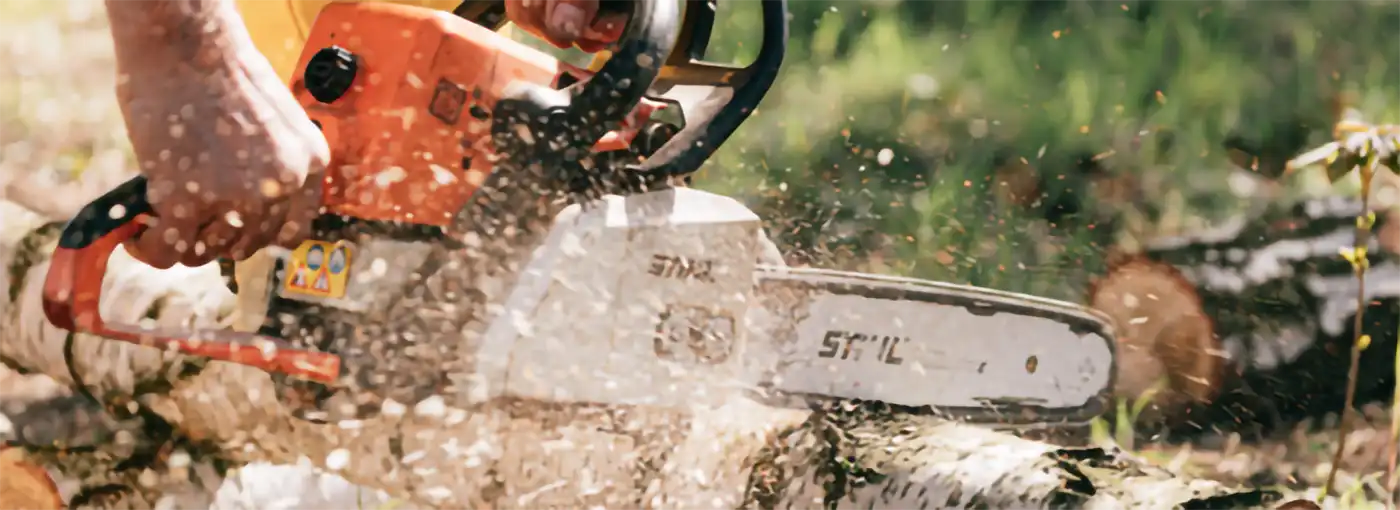
There are cases in which one property owner damages a neighboring owner’s tree. This could be done on purpose or through the failure to use reasonable care. The cause of damage might be a saw, a lawn mower, or chemical herbicides.
In such cases, the tree’s owner has the right to be made whole again. People with damaged trees may decide to sue for:
- Decreased property value.
- Tree replacement costs.
- Yard restoration, cleanup costs, and related expenses.
- The value of the owner’s time.
There can be other viable claims. In severe cases, a court will consider imposing punitive damages on the party who ruins someone else’s tree.
Formulating a legal action might start with checking your deed’s legal description, or calling a surveyor if needed, to be certain you own the tree in question. It also might involve calling in an arborist to verify that the tree was mishandled.
Tree damage or destruction can cause stress and anguish to deed holders. And it’s usually an irreversible kind of harm. But at least the courts can order the neighbor to provide a replacement or compensation for the damage.
Avoid “Timber Trespassing.” Plan Tree Work Mindfully
The first move in preventing disputes is to have an arborist check your trees for necessary pruning each year. This will help preserve the structural integrity of a tree. Towns may require their deed holders to attend to this key maintenance task. Why? Because it’s often a matter of public safety. A neglected tree may have dead branches that turn into physical hazards.
So, for safety’s sake, can you legally cut branches from a neighbor’s tree? Yes, you can—if the branches are overhanging your property. But your state law against “timber trespassing” may direct you to first get your neighbor’s consent. And you may not cut down your neighbor’s tree, or cut off branches in a way that jeopardizes the health of the whole tree. Watch out for penalties in local laws. They can be severe.
In some states, overreaching tree limbs themselves have been deemed a trespass. Tree roots moving into a neighbor’s property may also be considered, under some laws, a trespass. In such cases, the deed holder who’s being affected is allowed to have work done to address the issue.
If it’s the boughs that become a nuisance, the put-upon landowner is entitled to remove the branches over the boundary line. Check state law to know whether the owner of an overhanging tree must pay the neighbor back for limb removal. But avoid having work done that fatally damages the tree, or you could be the one held liable.
Is It Your Tree Overhanging the Boundary?
Your tree? You may have tree work done, including on the trees hanging over the neighbor’s land. Communicating your plans to have the work done is a reasonable move. Ignoring the problem is not. You could be liable for aprivate nuisanceif your tree becomes a problem for the adjacent deed holder. This is under tort law, which covers hazards between private actors.
To avoid legal action for negligence,address the situation with reasonable care. You don’t need the other landowner’s consent to perform tree work. Just use care not to damage the other person’s property, or you’ll be stuck paying for that.
Now, say the tree is on both sides of the property line. As a general rule, the one with the trunk (or most of the trunk) owns the tree. So, if your land has the tree trunk, you’re likely the owner of any fruit, and the one responsible for the overhanging limbs.
One more thing. If it’s your tree, you might think you’re allowed to remove it. That is not always true. Some local environmental ordinances prohibit the removal of a tree without planting a similar replacement tree.
A Word on Condo Unit Owners and Trees
Major tree work is outsourced by homeowner associations (HOAs). What about routine care that does not involve heavy equipment? The property’s maintenance and/or landscaping teams are typically responsible for that.
Condo owners share the rights to the property’s outdoor commons. A deed holder on an association property is entitled to a nuisance-free and non-hazardous environment. Notify the office, which should in turn make sure the proper work is carried out.
If the condo management ignores or puts off necessary tree work, refer to the property’s governing documents and the state’s Condominium Act. The documents and the state law contain the guidance relevant to your property.
See Something? Say Something.
If your neighbor’s tree poses a hazard, say something. Put your neighbor on notice. Let them know it’s time to call an expert to sever the hazardous branches over your property. Don’t wait for an accident to happen.
And if it happens? The tree owner who reasonably should have known the tree was hazardous should pay for the damage done.
But if the damage was not foreseeable, it’s up to you to handle the cleanup work on your property. Your state’s law could say the tree owner is allowed to recover their fallen wood from your land.
Best Practices: Keeping Everyone Safe
Neighbors are well advised to talk to each other before touching each other’s trees. At the same time, it’s important to maintain trees. And it’s important to deal with a visible tree hazard promptly.
Rely on state and local laws and regulations to help clear up questions or arguments. Your home insurance company can also provide important guidance.
Important note: This website does not dispense legal advice. The articles on Deeds.com are offered as general information. In some cases, the assistance of a lawyer might be necessary.
Supporting References
Adam Denn for Delaware Online via Yahoo News: Can You Cut Branches Off a Neighbor’s Tree? What to Know (Mar. 9, 2026).
And as linked.
More on topics: Property surveys, Agreeing on property lines
Photo credits: Kaboompics.com and Phil Evenden, via Pexels.