

The manufactured housing industry is pretty excited about the 21st Century ROAD to Housing Act. The new law, effective as of July 2026, is federal. Yet it encourages new, affordable housing in towns across the country.
According to the Manufactured Housing Institute:
These provisions change the conversation. Removing barriers to manufactured housing is no longer simply an industry request. Congress has identified regulatory reform and increased housing production as national priorities.
Yes, indeed. In this milestone law, the federal government acknowledges factory-built homes as an answer to the U.S. housing supply question.
Manufactured Homes Get Their Due—With Carefully Crafted Support
The new federal law should make some waves in the market. These homes have true affordability benefits. Many sell for around half the price of a regular house in the same area.
The new law supplies a number of things to stimulate factory-built housing:
It’s a NIMBY Buster.
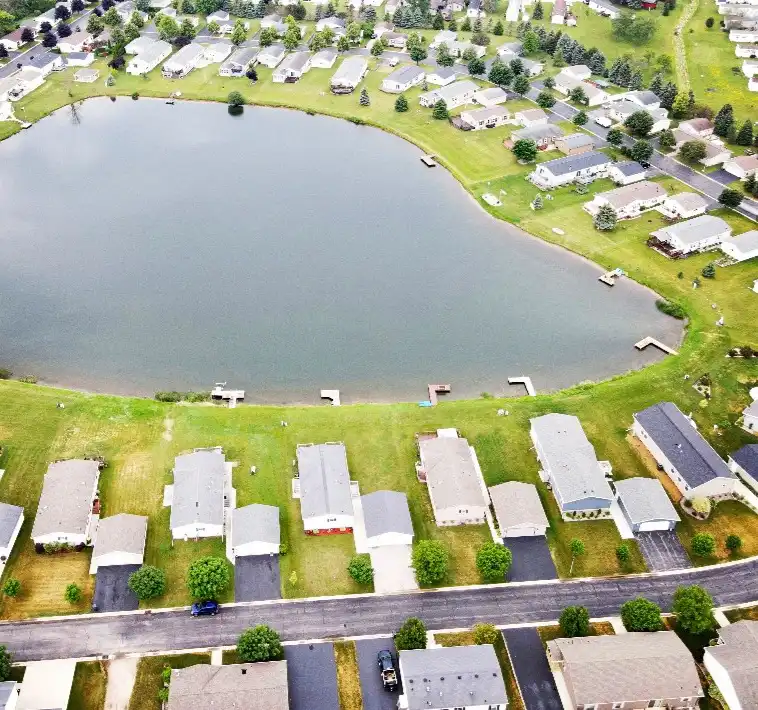
“Not in my backyard?” Well, if factory-built homes are to exist, they need to be allowed. There must be neighborhoods that accept the installation of these homes. There must be parcels of land where they’re allowed to be placed.
Therefore, communities need to make zoning allowances in order to welcome manufactured home buyers.
When zoning excludes a manufactured home from a town, it keeps lenders from working with people who could buy these homes. It keeps factories from producing them. It keeps various service providers who work with this type of housing out of the picture. It keeps potential buyers from having this choice where they want and need it.
The 21st Century ROAD to Housing Act is carefully crafted to address this. It doesn’t tell local government officials to rezone their cities and towns. But it gives them a nudge. It sets up a permission structure to allow these homes. It’s a call for locals everywhere to shout YIMBY! in the national interest.
To do this, the law requires the U.S. Department of Housing and Urban Development (HUD) to create templates that states and towns can adopt if they choose to do so. These templates will include factory-made homes. They will acknowledge that zoning prohibitions are connected with the U.S. housing shortage.
It’s a significant boost to the producers of manufactured homes. They can now press that much more effectively for the easing of zoning where the need exists, and local governments get financial incentives for getting on board. Of course, participation also enables the state to say it’s doing something to deal with housing needs.
States that step up might even claim that they’re boosting a job market. The Manufactured Housing Institute offers licensing for professional installers of manufactured homes—suggesting that the field offers job prospects.
It’s a Red-Tape Cutter.
The point is clear. U.S. housing policy endorses a more predictable approval process.
Some parts of this new law aim to speed up the whole process of manufactured home development, construction, and placement. They target red tape and the typical costs of getting the installations approved. They target environmental assessment barriers that might be overkill in some potential developments.
As for the homes themselves, a part of the law called the Housing Supply Expansion Act ends a longstanding federal rule about the design of manufactured homes. Before this new law, U.S. manufactured homes had to have a permanent chassis. That’s a heavy frame for transporting the structure. Why, after all, should this be mandatory? Many buyers don’t need or want a movable house. Deleting the chassis requirement could make these homes thousands of dollars cheaper.
So, that change begins now! The homes can now be made with a more modular approach, with parts of the home able to be brought in separately and put together on site. Watch for a lot of innovation ahead in the factory-built home sphere: multi-story homes and other variations. New, chassis-free designs may make adding these homes easier in a variety of places, too.
It’s a Boost for Affordable Homes—And Loans, Too.
It’s crystal clear. Hopeful buyers want and need attainable homes. It’s just not helping the ordinary working person when the median price of an existing U.S. home reaches $440,600—a number the National Association of REALTORS® announced in June.
Well, good for Congress for putting a provision in the ROAD to Housing Act that tells federal regulators to consider allowing small-dollar mortgages. It’s about time. The law’s new FHA loan minimums are easier to meet. Good start. But will those loans be available for manufactured home purchases?
As we all know, buying real estate can be done with a mortgage—which comes with better rates and terms than other kinds of loans. So, states should title all new manufactured homes as real estate, not as personal property.
Shout-out to New Hampshire—the one state to allow buyers to use mortgages to buy manufactured homes regardless of whether they’re buying the land. Also looking good? Washington State and New York. These states simply title these homes as real estate, so buyers can have deeds and mortgages.
Deeds.com has urged U.S. states to adopt regulations and local ordinances that will align state and local policies with the new federal law.
Legislate Federally; Act Locally
The 21st Century ROAD to Housing Act has become law. It’s good to see Congress getting it done. Now, for attainable housing to find its way to buyers, state and local government agencies, right down to your local zoning board, are going to have to get on the case.
Of the states already busy getting these badly needed homes to their residents, the top three are Mississippi, Kentucky, and Louisiana. In each of the three, around a third of all new homes are manufactured homes.
Across the United States, only one in ten new housing units is a manufactured home at this point. But Mississippi, Kentucky, and Louisiana are including factory-built homes at a much faster rate. Other states welcoming manufactured homes include New York, New Mexico, South Carolina, West Virginia, Alabama, Oklahoma, North Dakota, Michigan, Wyoming, Arkansas, Maine, and Missouri. Now, we can see with hindsight that these states were forward-thinking.
Federal law is not a magic wand over non-federal levels of government. Local standards didn’t change when this federal law came into being. They need to be changed to match the federal law. Be sure your politicians and policymakers are prepared to step up and change them.
Need practical information? If you’re thinking of buying a manufactured home, there’s an online tour offered by the Manufactured Housing Institute to tell you more about this alternative route to homeownership.
Supporting References
Manufactured Housing Institute (MHI): New MHI Resource Shows How the 21st Century ROAD to Housing Act Can Expand Manufactured Housing Opportunities (2026).
Cavco Homes News Room: ROAD to Housing Act Becomes Law – Landmark bipartisan legislation takes effect after president declines to sign or veto (Jul. 13, 2026).
Deeds.com: States Investing in Manufactured Homes – Why, Where, and How the Deeds Work (Mar. 25, 2026).
Deeds.com: Time to Make Financing a Manufactured Home Easier. Meanwhile, What a Difference Holding the Deed Makes! (Jun. 4, 2025).
And as linked.
Read more from Deeds.com on: Affordable housing
Photo credits: Marian Florinel Condruz and Andy Bergstrom, via Pexels/Canva.