

Aspiring deed holders are backing off from the market in droves. Prices are high. Mortgage approvals aren’t easily had. The economic outlook is still uncertain. And most would-be buyers (one new survey says three-fourths of renters!) think they’ll never be able to get their own deeds.
All of that is very much real. But yes, there are still homes to be had for under $250K.
Where Are the Homes?
Let’s look at some cities and towns. And then let’s look at the wonderful advantages of a modest home.
Modestly priced homes are hard to find. Across the country, just one in four for-sale homes would be possible for the typical household.
It’s no easy feat to get a mortgage at the going rates. And another thing. The higher the home price, the higher the real estate taxes.
But there are homes being sold for under $250K.
Able to choose among locations?
Realtor.com® looked at places where younger buyers are finding traction. It listed some cities and towns where monthly housing costs could be kept to a reasonable level. Here are some spots the National Association of REALTORS® views as worth a look. In each of these cities and towns, the typical home price (the median, which is the middle price of all listed home prices) comes in under $250K:
- Look up Baltimore, Maryland, and also Rochester and Syracuse, New York, if you’re searching in the east.
- And what about Harrisburg and Pittsburgh, Pennsylvania? Both are worth a look. According to Axios, more than half of Pittsburgh homes for sale are attainable for median-income households. Contrast the homes in Miami, where fewer than 1% are!
- Try Granite City, Illinois. Or Garfield Heights, Ohio. The midwestern region of the United States is still much less expensive than coastal areas. Typical households can afford to buy half the homes for sale in St. Louis, making that a balanced market. They’d be able to afford a good number of the homes for sale in Detroit, and Cincinnati, too. In contrast, Los Angeles and San Diego are two cities where not even 1 in 50 homes would be within the reach of a typical U.S. household.
- Birmingham, Alabama or North Little Rock, Arkansas? Both affordable. The country’s southern and western regions have done a good deal of building.
Even if you’re not able to look in NAR’s highlighted areas, it’s good to know homes under $250K are definitely not just a thing of the past.
Can’t Really Think About a Long-Distance Move?
Run a search on a popular real estate site for “homes for sale under $250,000” and the name of a county or town. See what comes up.
Many, in all likelihood, will be manufactured homes. There are condos, duplexes, townhomes, and modular subdivisions that do not charge homeowner association fees. Axios says “builders are leaning into townhomes” to market to younger generations of hopeful homeowners. Townhomes are being built at double the speed as they were ten years back.
You might even go for a duplex and rent out half. And some pairs or groups of friends are going in on home purchases together.
Some homes with low price tags will be fixer-uppers. (Granted, fixing up is pricey!) And in some “low cost of living” areas, it’s no problem to find a traditional house for under $250K. Look for an area with enduring desirability. A good agent and inspection pro can help guide your decision, so you find a home that lives up to your hopes in a general way—not only in its price.
So as not to get into the “money pit” situation, get the home inspected before closing. Research the costs to make adjustments the inspector recommends. Look out for foundation or roof issues. Check out the state of the heating and air conditioning system. Get major fixes taken care of during the negotiating phase.
Top Ten Reasons to Enjoy a Modest Home
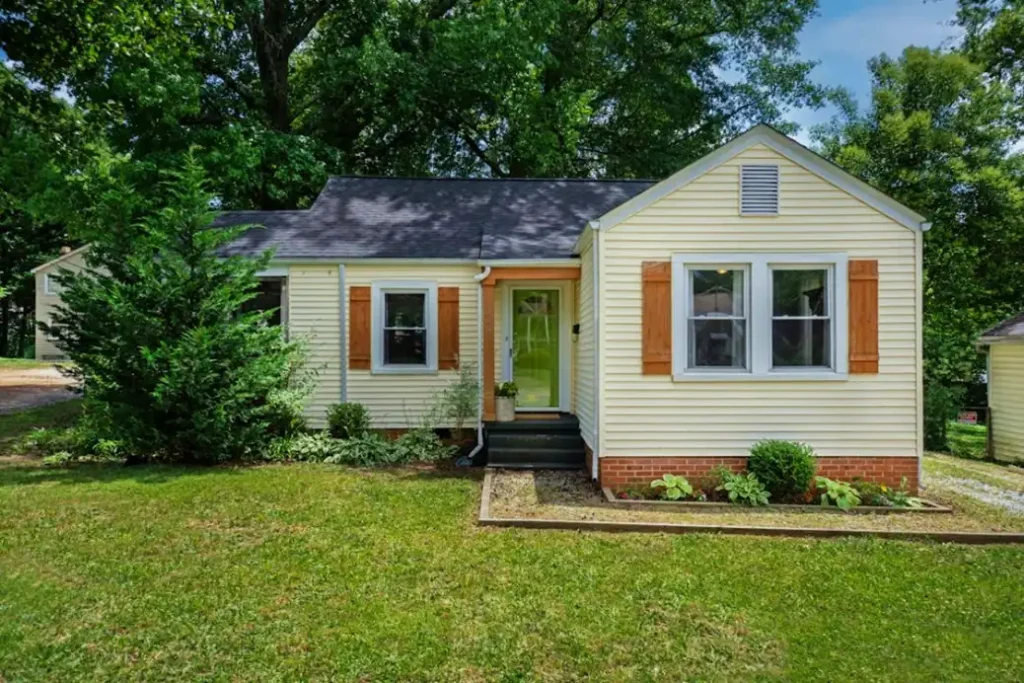
Even if you can afford more house, consider these perks of buying a modestly priced one:
- You give up a lot of options and opportunity in your life the more you spend on your property. Paying off a smaller mortgage won’t take as long as paying off a super-sized debt.
- If there’s any risk at all of a job loss or a salary drop, you and your loved ones will worry less with lower debt.
- You won’t accumulate so much stuff. There’s something to be said for buying sparingly, because you’ve only got so much space. Plus, having lots of stuff will make it hard to move again.
- Speaking of moving, you might even spare yourself the trouble of downsizing a decade down the road if you buy a home with the space you need, and not more.
- You won’t be spending so many hours a week cleaning the house if its size is modest.
- You may have a decent shot at paying it off early, saving for a retirement, and even retiring a few years earlier than you’d have otherwise managed to do.
- Compact homes are less likely to eat their owners alive with electricity bills, insurance, and local taxes.
- Maintenance and outdoor work makes up a lighter load, financially and time-wise, for a smaller home. No matter what you may need to renovate, replace, or redesign, there’s less of it. And materials and workers don’t come cheap these days!
- In general, modestly priced homes are in high demand out there.
- When you buy at the lower end of the range for which your loan is approved, you’ll have funds for other things. A mortgage shouldn’t eat up everything you have each month. That’s stressful.
The counterpoint? If you believe your household is about to expand, you might have a different take. But starter homes with two or three bedrooms can be had at modest prices, depending on location.
Living Large in a Compact Home
Here are some ways to maximize the bang for fewer bucks:
- Some households rent storage space. There may be no reason to take up a room in the home with gear you only use now and then.
- Look for a floor plan that makes the most of the square footage you’ll have.
- Look for a property next to woods or other undeveloped land.
A U.S. household has to be earning a six-figure income to pull off a purchase of the typical home for sale. But keep in mind that the path to a deed can be easier to navigate, depending where you look.
Important note: Deeds.com is not a financial adviser. As always, this post is not intended as financial advice.
Supporting References
Melissa Dittmann Tracey forREALTOR® Magazine, from the National Association of REALTORS®: 10 Best Markets for First-time Home Buyers in 2026 (Jan. 7, 2026).
Sami Sparber for Axios: Where Homes Are Most (and Least) Affordable (Jan. 19, 2026; citing data from the National Association of Home Builders, Bankrate, the U.S. Census, and other sources).
And as linked.
More on topics: If your home’s measurements differ from the description on the deed, Outlook for buyers and sellers in 2026
Photo credits: Jeswin Thomas and Arshad Khan, via Pexels/Canva.