
This month, the 21st Century ROAD to Housing Act became law. It happened quietly, automatically, ten days after congressional approval, in the absence of a presidential veto.
The massive new law includes:
- Streamlined environmental review and approval requirements for certain redevelopment work.
- Flexible grant programs for use by local governments, including support for workforce housing and housing-related infrastructure.
- Incentives for local governments to amend local ordinances, so housing can become more available and attainable.
- A permanent Community Development Block Grant Disaster Recovery program. Funds will be administered by a new Office of Disaster Management and Resiliency within the Department of Housing and Urban Development.
- A test program offering grants and forgivable loans to deed holders with modest incomes and small investor-owners needing assistance with safety hazards and repair needs.
The 21st Century ROAD to Housing Act is careful not to commandeer local zoning processes. Instead, it brings an array of incentives such as access to grant money for cities and towns. Local governments will generally be better funded if they strive to meet affordability goals. In this way, federal lawmakers are stepping up with support for state and local bodies “in a manner that fits their communities’ needs.”
Tired State Lawmakers Revive Their Hopes for the Minnesota Starter Homes Act
Costs for first-time homeowners continue to be out of control. And not just in California and New York. The number of U.S. cities and towns where starter homes are priced at $1 million plus (What?) has nearly tripled since 2020. Rightly, some states are taking action to help people become homeowners.
For a few years running, lawmakers in the Minnesota capital of St. Paul have been working to make housing easier to find and afford. For example, they hope that cities could:
- Allow for “gentle density” residential housing, making room for tiny homes, basement flats, added cottages and so on.
- Allow for homes where they’ll fit into certain commercial spaces.
- Create flexibility in the local design rules that have mandated porches, garage sizes, and so on.
- Drop requirements for amenities that require management by homeowners’ associations.
- Welcome more multi-family and multi-generational homes.
- Speed up the pace of construction and all the work that makes buildings into homes.
Together with several others involved in housing policy, Representatives Spencer Igo, Mike Howard, and Larry Kraft have repeatedly pushed for the enactment of the Minnesota Starter Homes Act.
Despite bipartisan support, this affordable housing bill has yet to overcome all the pushback. Now, though, Minnesota affordable housing champions are pointing out the obvious. The new federal law has much in common with the bill these Minnesotans want to pass. And so, the new federal law renews their hopes for the Minnesota bill.
Pushback Involves Local Governments’ Discomfort With State Control
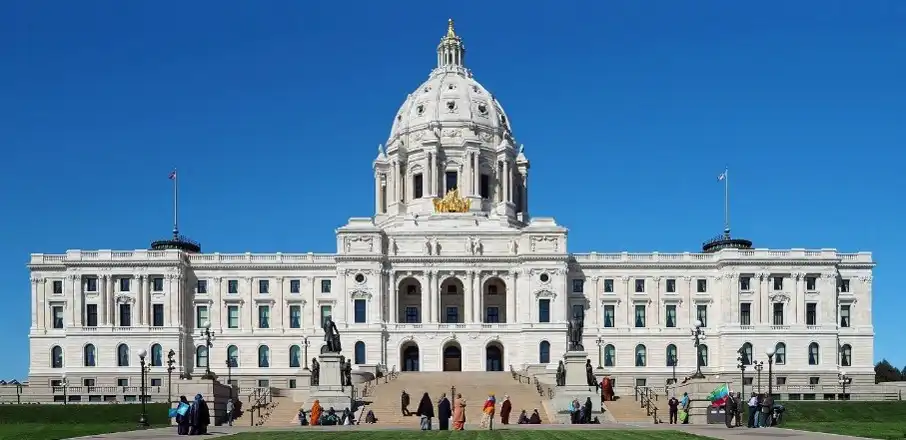
No way to get around it—addressing Minnesota’s housing shortage involves changing local regulations. Pushback involves local governments’ discomfort with state control.
Town governing bodies dislike following rules from the Capitol. Some say the Minnesota bill, if passed, would let corporations essentially usurp local zoning powers.
All things considered, local governments just aren’t thrilled with housing policies that aren’t tailored to their circumstances or to the comfort level of their residents.
Responding to this, the current version of the Minnesota Starter Homes Act has taken local needs and wants seriously. Its language offers a buffet of choices that towns can consider and implement:
- Removing minimum parking requirements.
- Allowing multi-unit residences, including 8-plexes.
- Providing subsidies to make affordable homes available.
The larger the town, the more methods it would need to adopt. Will towns step up? Now, given the federal law that’s in place, it’s time for another try at the state level. As Representative Igo puts it:
The federal government’s trying to reward communities that are doing the things that we’re trying to put into law. We can either do it individually, or we can do it together.
The bill was designed to go into effect on the first day of 2028. There’s still time.
Meanwhile, What’s Up With Illinois “BUILD” Zoning Reform?
Cue the sad trombones. Momentum in Illinois has stalled out. Along the way, though, $250 million in funding has been secured and will be used.
BUILD stands for Building Up Illinois Developments. It’s a serious effort to legislate more affordable housing into reality. High-profile real estate industry players like it.
The Illinois BUILD plan has proposed to:
- Allow deed holders to install accessory dwelling units on their residential properties.
- Set timelines throughout Illinois to speed up inspections and reviews in advance of development.
In an energetic effort to promote BUILD, the governor talked up the bill through social media on a near-continual basis. He published opinion pieces to persuade towns, cities, and the public in general. He hosted discussions and boldly proclaimed “Yes in my backyard!” (YIMBY) in paid commercials.
No one can deny the housing shortage is real. And yet, the governor’s YIMBY turned out to be a tough sell. Towns pushed back against a proposed zoning change that would allow multi-unit housing—two, three, or four units—on nearly all Illinois residential properties. Local governments bristled at the idea of recognizing the addition of units as a residential deed holder’s right. Labor leaders opposed a provision in the bill under which work normally performed by government workers would be outsourced.
So, the bill ground to a halt in the General Assembly this year. But the struggle continues. The governor promises to keep working to make BUILD happen, adding that its provisions, if anything, need to be bulked up “to do even more about housing in this state.” Again, Governor Pritzker has managed to obtain $250 million in funding for housing initiatives. These include grants that will:
- Help builders install and connect utility, sewer, and stormwater systems.
- Fund housing that’s attainable for younger generations of working people.
- Help with down payments and closing costs for members of groups that have faced institutional discrimination.
Another key change? The Illinois Department of Insurance now has the legal authority to regulate homeowners’ insurance premiums. The governor first called for legislation to this effect in 2025, when State Farm Insurance (based in Bloomington, Illinois) announced a 27% average rate hike for homeowners throughout the state.
In a Nutshell…
The existence of the new federal law bodes well for housing across the states. And it proves that Congress can act when the people have had enough inaction. Progress may be slow, but the people are speaking—and being heard.
Supporting References
League of Minnesota Cities via LMC.org: Federal Update – Bipartisan 21st Century ROAD to Housing Act Becomes Law (Jul. 13, 2026).
Brenden Moore for Capitol News Illinois / NPR Illinois: All Things Considered – Pritzker’s Spring Wins Come With Caveats as BUILD, Megaprojects Bills Stall (Jun. 9, 2026).
Minnesota Office of the Revisor of Statutes, HF 3895 Introduction – 94th Legislature (Mar. 2, 2026).
Quinn Gorham for KTTC St. Paul (a Gray Local Media Station): Minnesota Housing Leaders Optimistic Federal Housing Bill Can Help Pave Path for State-Level Reform (Jul. 17, 2026).
And as linked. Photo credits: Binqian Li, via Pexels/Canva; McGhiever, via Wikimedia Commons, licensed under CC BY-SA 4.0 International.