
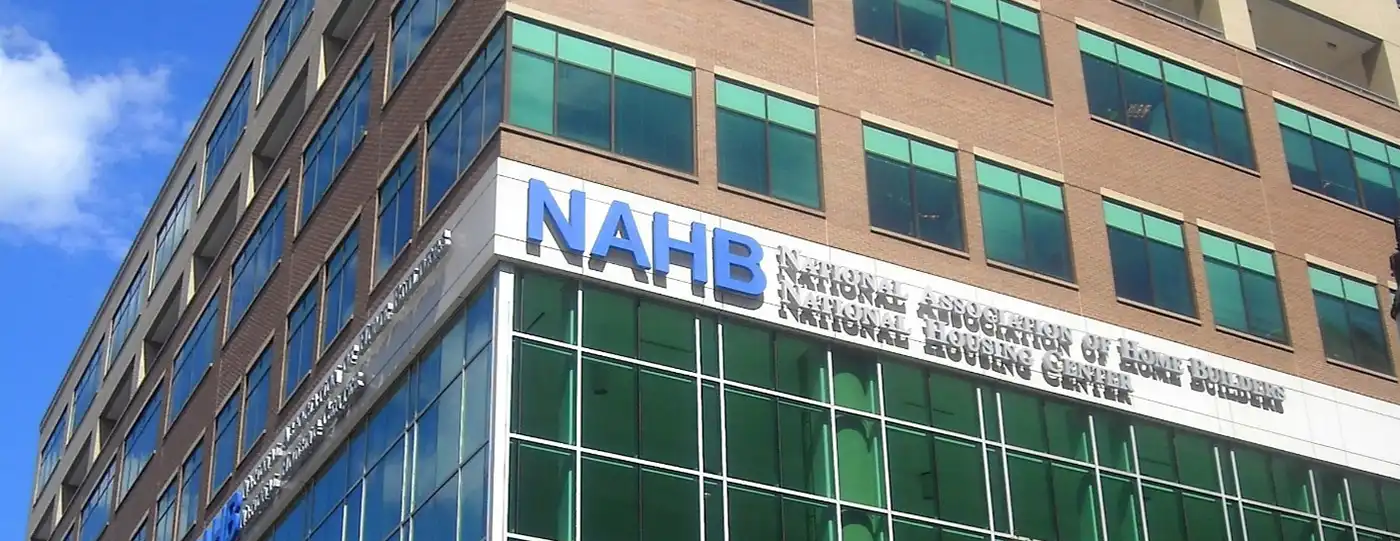
Jim Tobin is the CEO of the National Association of Home Builders. Speaking to television audiences in October, Tobin acknowledged mortgage rates continue to sideline many would-be homeowners.
And yet, said Tobin, the American Dream of homeownership is “absolutely not dead.”
Builders’ Group CEO: Don’t Give Interest Rates the Last Word
Jim Tobin of NAHB spoke with Fox Business viewers about the industry and how construction has been slowing down lately. Why? What’s the holdup? It’s the high rate of borrowing.
Mortgage rates have hit 7.5%. This makes buying a house very costly for first-time buyers. So, they’re hanging back. The higher the cost of taking out a home loan, the fewer people are in a position to apply for one. Of course, this slows down the rate of U.S. home sales.
Look at the context, and it’s crystal clear why we’re seeing a shortage of buyers. Monthly mortgage payments on the typical home have gone up 97% (not a typo) since January 2020. Incomes have only risen 33% since then.
Does this mean the American Dream of owning a home is dying out? Not at all, says the building expert. Acquiring a deed, according to Tobin, “will always be the gateway to the middle class in this country.”
Tobin says home builders do need to focus on the households of modest means. Lawmakers can do their part, Tobin says, by cutting some red tape for builders.
All well and good, but hopeful buyers are still facing mortgage interest rates above 7%. If a deed is the key to the middle class, something’s got to give here.
Historically speaking, rates could be worse, hopeful buyers are told. Remember the early 1980s, when mortgage rates reached 18%? But that comparison just doesn’t hold up. For today’s buyer, things are different. Today’s buyer is dealing with home prices that have outpaced income growth at a staggering rate. Back in the 1980s, interest rates peaked and came down. People could refinance—and did.
Our current market shows no likelihood of rate drops.
Peter Schiff Sounds Off, Blasting White House Policy Moves
Economist Peter Schiff has also been commenting on the state of our current housing market. The cost of building and renovating is soaring, Schiff says, “as rising mortgage rates make higher-priced homes even more expensive to buy.” We know. But Schiff adds a zinger—that we’re headed for “the worst housing market in U.S. history.”
Here’s why. Faced with a lack of able buyers, sellers will inevitably need to reduce their prices. That will set off a ripple effect, pushing home values down.
But isn’t that what buyers want?
Yes and no. In the worst scenarios, a drop in property values can put new mortgage borrowers at risk of carrying a debt that’s more than their homes are worth on the market.
And right now, says Schiff, mortgage companies are already in a worse position than they were during the 2008 financial crisis. There’s around $8.5 trillion worth of debt in fixed-rate mortgages today, with about $2 trillion in losses—a serious situation. Schiff isn’t the only one to express such concerns. According to JP Morgan, U.S. housing affordability has hit its worst level since the financial crisis nearly two decades ago. JP Morgan observes: “Recent U.S. policy actions such as the passage of the 21st Century ROAD to Housing Act and the purchase of agency mortgage-backed securities (MBS) have provided limited relief.”
Schiff is blunt about why current relief efforts aren’t more effective. Mortgage rates keep rising because of the inflation that is plaguing the economy. The interrelated causes for this latest wave of frustration involve tariffs, inflation, and severe immigration policies. (Peter Schiff is neither Republican nor Democrat; he is known for critical commentaries of both major parties.)
When in Doubt, Zoom Out: Deeds Offer Long-Term Stability
This situation has a backstory. Zoom out, and we can take stock of it. Automation is cutting into the job market. Young people, concerned about the future of work, are waiting until later in life to acquire deeds. And yes, some are asking whether the “American Dream” has been displaced.
But it hasn’t. That’s because the alternative, generally, is renting. An indefinite plan to keep renting will not build wealth—at least it won’t build yours. Your deed is the better path to financial security, judging by the long timeline of equity building in the United States.
Once a household acquires a deed, that household begins to accumulate property value. Deed holders who have fixed-rate mortgages are experiencing a sense of predictability right now, regardless of where inflation may be heading.
Granted, becoming a homeowner when interest rates are over 7% makes the calculus much tougher. This is why the market is stalling and economists are concerned.
We can’t, and won’t, sugarcoat this. Getting a deed today means making high monthly payments, holding cash reserves, and settling in for the long haul. It will take many years for most current buyers to build equity that stands up to the other costs of maintaining ownership and to break even on the deed. If Peter Schiff’s assessment is right, there are no guarantees that they will.
And so, a deed continues to be the key to financial autonomy—but there’s an asterisk. The deed holder will need the capacity to keep that deed.
A Dream Deferred?
Pending home sales have already reached a record low as buyers back off. We hope you can now see the big picture in which this is happening.
To hopeful buyers, Jim Tobin of the National Association of Home Builders recommends going ahead when ready—not when the interest rate situation somehow goes right. Trying to time the market is “always” a mistake, he says.
That tracks. As always, consult with your own financial professional for individualized advice that takes your goals, family situation, and personal finances into account. The decision to acquire a deed is best based on a household’s circumstances and objectives—not market timing.
Supporting References
Tanya Rawat for Benzinga.com via Yahoo Finance: Mortgage Rates Are “Eating Up All the Good News” on Housing, Says NAHB CEO — Peter Schiff Warns of “Worst Housing Market in US History” (Oct. 21, 2026; citing an appearance by Stuart Varney of Varney & Co. on Fox Business).
Namrata Sen for Benzinga.com via Yahoo Finance: Trump Announces $4.3 Billion Fannie Mae, Freddie Mac Housing Push in Kansas to Help 15,000 Homebuyers Achieve “American Dream” (Nov. 3, 2026; citing John Burns Research & Consulting on the drastic rise in monthly U.S. mortgage payments).
Tanya Rawat for Benzinga.com: Peter Schiff Warns Home Prices Could Plunge as Mortgage Lenders Face $2 Trillion In Losses – “Already In Worse Shape” Than During 2008 Crisis (Nov. 5, 2026; citing an appearance by Schiff on The Land Development Podcast, hosted by Ryan Glick).
Deeds.com: A New Century’s American Dream – Holding a Deed, or Retiring Early? (Jan. 20, 2026).
And as linked.
More on topics: Achieving financial freedom, Home loans when interest rates are high
Photo credit: APK, via Wikimedia Commons, licensed under CC-BY SA 3.0 Unported.