

The scout’s motto works well for the homeowner. Be prepared. Know where you can receive the kinds of services and support that enable deed holders to rebound after a disaster.
You might like to bookmark this page for future reference. You might also wish to go through its content with other members of your household.
Preparing for Potential Disasters
A disaster can happen anywhere. Major risks to homes, depending on the region, could be fires, strong winds, sea level or tidal river rise, floodwaters, erosion or landslides. Regardless of the type of challenge you could face, here are some general tips for planning purposes:
- Take photos of everything, inside and out—including your home’s foundation. Email them to yourself to keep accessible copies.
- Also, snap photos of your IDs and important papers. Make sure IDs are current and show your correct home address.
Put the important papers in a safe place. But don’t spend extra time retrieving them if your safety or other household members’ safety is at risk. Move to safety.
The Importance of Counseling
Post-disaster counseling focuses on what a household can do to get back into a safe, financially stable situation. It’s offered by certified housing professionals (for example, with the Department of Housing and Urban Development). Find HUD-approved counseling by calling 800-569-4287.
Households that connect with post-disaster counseling tend to see dramatic rises in credit scores, in contrast with households without counseling. And on a practical level, counselors help households:
- Submit insurance claims.
- Apply for government assistance.
- Plan for future disasters.
Experienced support personnel can break through confusing or frustrating scenarios. If you have flood insurance coverage in addition to a standard homeowner’s policy, for example, it’s not unusual for each insurer to point to the other as responsible for handling a flood damage claim. A condo may say its insurance policy doesn’t cover something that you can’t get your individual condo unit’s insurance policy to cover. And so forth.
How to Seek Mortgage Help
First, know that people with government-backed loans who have lost their homes in a disaster have recourse to reconstruction or replacement insurance. The FHA, for one, insures new mortgages in these circumstances. Fannie Mae and Freddie Mac servicers have helplines for borrowers with conventional mortgage loans.
Borrowers who cannot afford their mortgages after a disaster hits should contact their mortgage company to head off a possible foreclosure. Federally backed mortgages can be suspended or modified to assist borrowers after a disaster.
If you obtain forbearance, you can hold off repaying your loan for a certain time without penalty. Eventually, you’ll still have to pay back the principal and interest. Ask your loan company not to report any negative information during forbearance.
Learn more about how a disaster impacts your mortgage account.
How to Seek Insurance Coverage
If your home is physically damaged, call your homeowner’s insurance company to begin the claim process. Ask if you can get an estimate and hire contractors or buy replacement systems. If major work is being ordered, be sure to have a written contract in place. It should address code inspections and who pays for these. If the home has flooded, know that engineering work may be required by your local ordinances.
Deal with safety hazards right away. Call the insurance company. Explain what you need to do. Insurers will tell you to put safety first. In other words, they do understand the need to get the emergency fix done quickly, and should work with you.
For fixes or replacements that will take time, insurers send adjusters out to make records of the damage.
Is the company balking when you believe it should work with you? Note that your state could require your company to pay on your claim for specific disasters. For serious issues, the deed holder might want to get state officials involved.
Helpful References and Contact Information to Keep in Case You Need It
After a presidential disaster declaration, watch for federal funds that may be distributed to states and towns. Here’s a reference list with other resources.
- National Consumer Law Center: Disasters and mortgage modification rights.
- Disaster recovery support: 211.org.
- Local Voluntary Organizations Active in Disaster, referenced by state.
- The Federal Emergency Management Agency helpline: 1-800-621-FEMA. The disaster regulations lay out the types of household assistance that’s given. Apply promptly to DisasterAssistance.gov, to be assigned a case number in case it’s needed.
- For deed holders in floodplains: National Flood Insurance Program.
- The American Bar Association, for legal resources and help.
The Trouble With Unsolicited Assistance
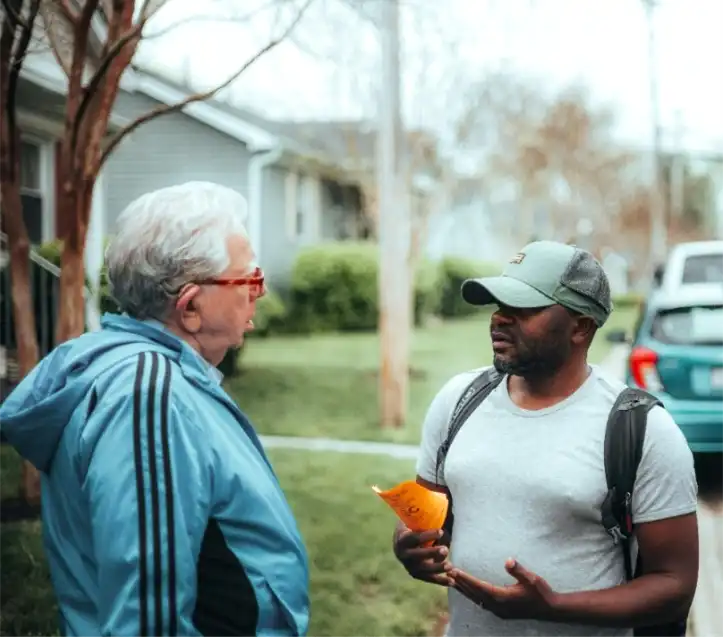
Like clockwork, firms show up almost immediately after disasters. They offer to inspect damage, repave driveways, repair roofs, and so on. Watch out for:
- Unlicensed appraisers. Before allowing valuations or repair estimates, insist on proof of identification, insurance, and licensing. Be sure you have verified who you’re dealing with. Even scam operators put liens on homes when the homeowner doesn’t pay as agreed!
- Attorneys who charge fees for drafting applications to government agencies or insurance companies. Be on the lookout for the “ambulance chaser” types who take fees and make themselves scarce.
- People who falsely suggest they’re connected with government. Government officials who come in person wear ID badges. People calling from the government don’t ask for payments.
- Anyone who has you fill out a form on the spot. Application forms can actually be stealing your data. If you believe someone who’s not above board has taken personally identifying information, don’t dismiss your own concerns. Protect your credit and your identity. Report a possible Social Security scam here.
Today’s climate-driven weather events are richly rewarding to swindlers. These people descend on deed holders in vulnerable circumstances. Protect yourself. Research experts and companies before signing up for their services. Copy the subjects of texts or emails that purport to be from disaster relief sources. Look up the subjects or the numbers. Be on the alert for messages that might be scams.
Planning Ahead Can Save a Deed
We hope this guide can help ease the burden of readers who might experience damage to their homes. It’s true that losing a deed can happen after a disaster. Consider this. A household recovering from a disaster can expect expenses to shoot up 30%.
And so, one year later, more than 60% of these households have nothing left in savings. Many can’t get all their monthly bills paid. And more than a third of such households seek out payday loans with exorbitant interest rates.
Statistics tell us something vital. Households that get counseling and support are far more likely to stay out of foreclosures. Help is at hand—be ready to ask.
Supporting References
Helene Raynaud of the nonprofit Money Management International, via HousingWire by HW Media LLC: Navigating Recovery – Counseling and Coaching Options for Homeowners After Natural Disasters (Jan. 23, 2026).
Steve Sharpe and Maryann Flanigan for the National Consumer Law Center (NCLC): Twelve Tips for Homeowners After Natural Disasters (Oct.1, 2024).
Deeds.com: Acquiring a Deed in Stormy Times – Consider the Contractors (Oct. 16, 2024).
And as linked.
More on topics: Insurance fraud, Untangling inherited titles, Disasters, titles, and mortgages.
Photo credits: Shvets Production and Samuel Peter, via Pexels.