

You’ve likely come across people with guest houses or garden suites on their properties. Housing policy people have a name for these extra living spaces: accessory dwelling units, orADUs.
Accessory dwelling units are the talk of the town these days in all regions of the United States. An ADU is one of the most popular options for adding affordable housing to neighborhoods. So, it stands to reason that an ADU can be a good investment for deed holders. It can increase a property’s value, generate rental income, and become part of the solution to the affordability problem.
How’s the Return on Investment in an ADU?
An ADU isn’t cheap to create. There are permit fees, construction costs, and the expense of readying the home for a resident to enjoy. A guest house of just 400 square feet can cost $80K or more to build. Yet it could all be worthwhile for a deed holder who wants to stay on the property for several years.
Assuming you can find a reliable renter, the income generated by the ADU could cover the mortgage payments on the main home and related housing costs. Breaking even may take time, but an ADU can generate profits for many years into the future. And the structure can become marketable to future buyers as a potential home office, as multigenerational housing, or as a continued income stream.
“By adding an ADU,” says Freddie Mac, “you can increase the value of your home by as much as 35%.”
But can you count on that? It all depends on local factors. So, consult an appraiser and a local real estate professional to learn how much the ADU could boost your property value. A real estate agent can also help you figure out whether an ADU will attract potential renters and how much rent it could command—and help you find them, screen them, and create the optimal rental agreement. Is your property near a bustling commercial hub, good schools, and/or reliable public transit? Then your market’s rental rates could be especially promising.
An ADU that’s a successful income generator stands out among home improvement projects. That’s because an ADU can provide continuous, long-term value, while other home upgrades do not generate value in this way and may even lose value.
As for paying for the building, you could consider refinancing your current mortgage to free up funds. There are also special borrowing options for renovations. Loans specifically for ADU construction projects are now a thing. What’s more, Section 303 of the new federal ROAD to Housing Act makes ADU construction eligible for FHA-backed home improvement loans.
But let’s not get ahead of ourselves.
First, Does Your Property’s Location Allow It?
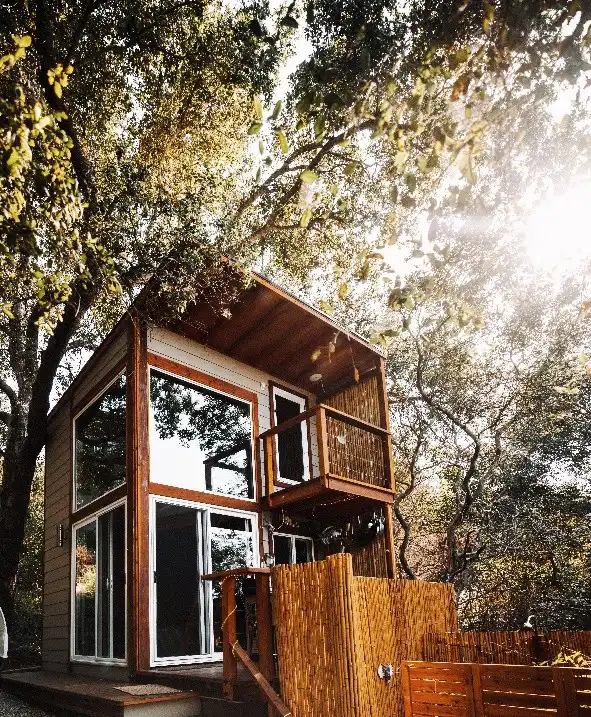
As a threshold matter, you’ll want to know if an extra rental unit can be built on your property. And you’ll want to make it official. An ADU that has passed the permitting process is insurable. That makes it less of a risk and more of a marketable asset.
You’ll be living on the property. You’ll be the sole deed holder. Your ADU will be home to an additional resident or multiple residents. To count as an ADU, the extra living unit has to be equipped with its own kitchen, bedroom, and bathroom.
Check with your town’s permitting rules to see if an ADU setup is an option for deed holders. Typically, a town that allows ADUs on residential properties has a list of specifications: size and height, the direction the entrance faces, setbacks from the property boundaries, possible parking requirements, and more.
Look for:
- Regulations that encourage or discourage ADUs. Read up on the building codes and local zoning ordinances affecting your property. Check your deed for any covenants or limitations on whether and where an ADU may be installed.
- Business regulations that support or hinder the use of your property to generate profits. An internet search for state law and local ordinances on rentals will lead you to the rules for managing an investment property. Again, check your deed for any covenants or restrictions on business use of your home.
Because ADUs can add significant value to properties, some town governments are happy to have them and supportive of deed holders who want to make such improvements. They have webpages on how to transform carports into carriage houses, basements into living spaces, and so on.
Where towns allow applications for ADUs, they generally expect the property owner to create a plan for the structure that meets local standards. There is an application to fill out and submit to the local government. Some towns charge fees, and some offer fee waivers. Attached and detached living units go through different procedures.
Depending on location, short-term home-sharing platforms like Airbnb might or might not be options for marketing an ADU.
No Division of Property—So There’s No Second Deed
ADUs are additional housing units. But they don’t have their own separate deeds. An ADU does not create an additional street address.
Your property deed might not describe the ADU, but your new living unit should still be documented with the county recorder of deeds. To be precise, your ADU needs to exist as a separately recorded deed restriction.
To make this happen, the local department approves and files your application together with the conditions pertaining to your new ADU. A declaration of restrictive covenants will lay out the conditions for the use of the ADU on your property, per the approving city or county.
Once the process is finished, there will be (a) your own deed and (b) a new deed restriction for the additional unit. Future owners of your property—whether buyers or heirs—will need to accept the deed restriction.
Renting out a unit on your property? Here’s what to know about filing Schedule E with your annual federal tax return.
In a Nutshell…
Yes, building an additional living space on the property can provide a steady source of rental income for a deed holder. It’s a big investment. It takes time. There are official hoops to jump through. But an accessory dwelling unit can add significant value to your home and offer an affordable housing option to someone who could use it.
Please note: This discussion is general, but ADU rules are detailed and location-specific. Deed holders in need of fact-specific advice should consult with local licensed professionals. It’s also important to speak with your insurance pro about insuring the structure and choosing a landlord policy. You might benefit from speaking with a local real estate attorney familiar with the relevant federal, state, or local laws applicable to ADU rentals.
Supporting References
The Federal Home Loan Mortgage Corporation, via FreddieMac.com:How to Manage Your ADU as a Rental Unit (last reviewed Nov. 4, 2025).
Dwelling Lab: ADU ROI – Calculating the Long-Term Financial Benefits (July 15, 2026).
Deeds.com: Is the Backyard Cottage Written Into the Deed, or Recorded Separately? (Feb. 21, 2025).
Deeds.com: Best Practices for Investor Owners – Screening Potential Renters (Feb. 10, 2023).
And as linked.
More on: Accessory dwelling units, Time to start a rental business
Photo credits: Martin Péchy and Roberto Nickson, via Pexels/Canva.