Navajo County Contract for Deed Form
Last validated September 28, 2026 by our Forms Development TeamFormatted for recording in Navajo County, for property anywhere in the county: rural and unincorporated areas as well as Blue Gap, Cibecue, Clay Springs, Fort Apache, Heber, Holbrook, Hotevilla, Indian Wells and 20 more.
- 6 documents included
- Immediate PDF download
- Formatting guarantee
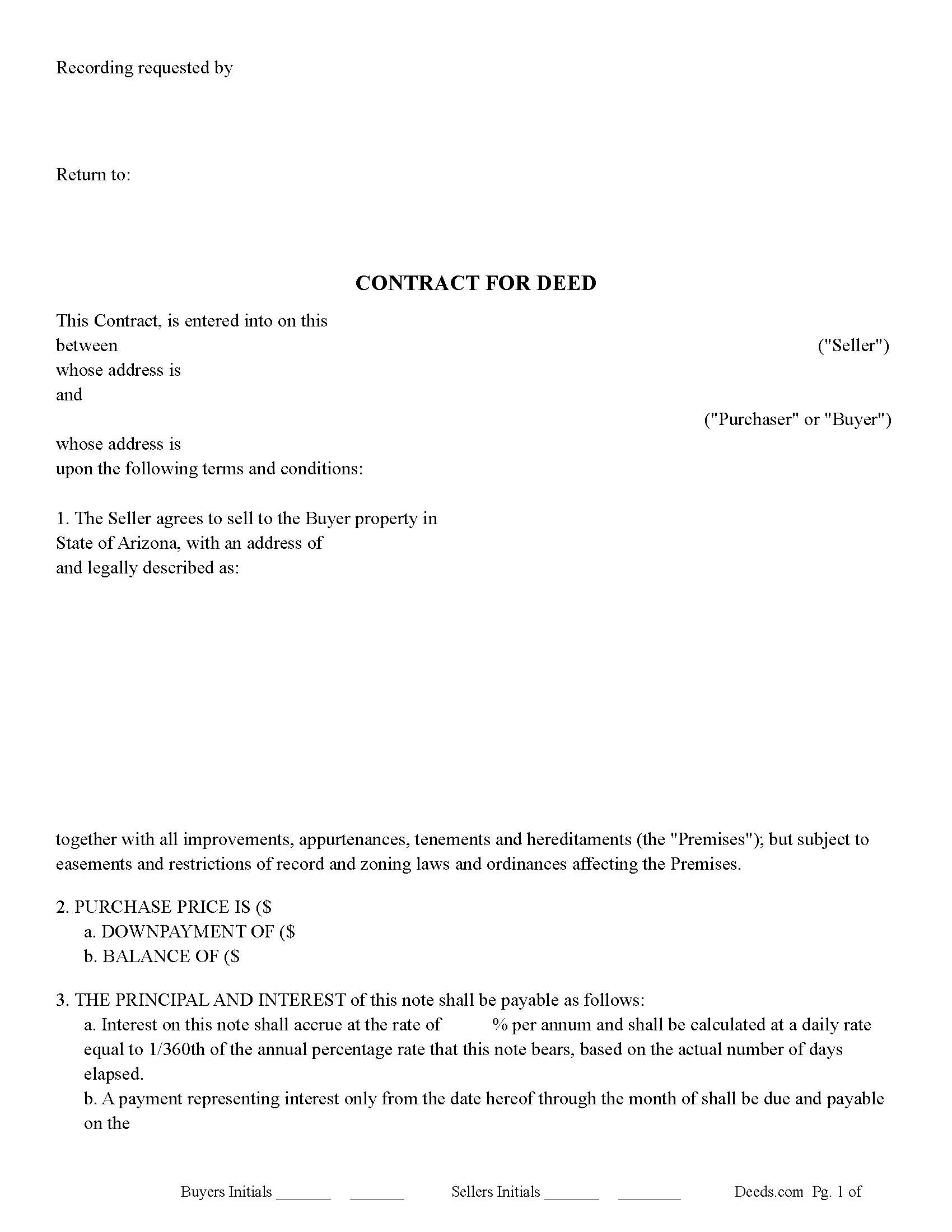
Navajo County Contract for Deed Form
Fill in the blank Contract for Deed form formatted to comply with all Arizona recording and content requirements.
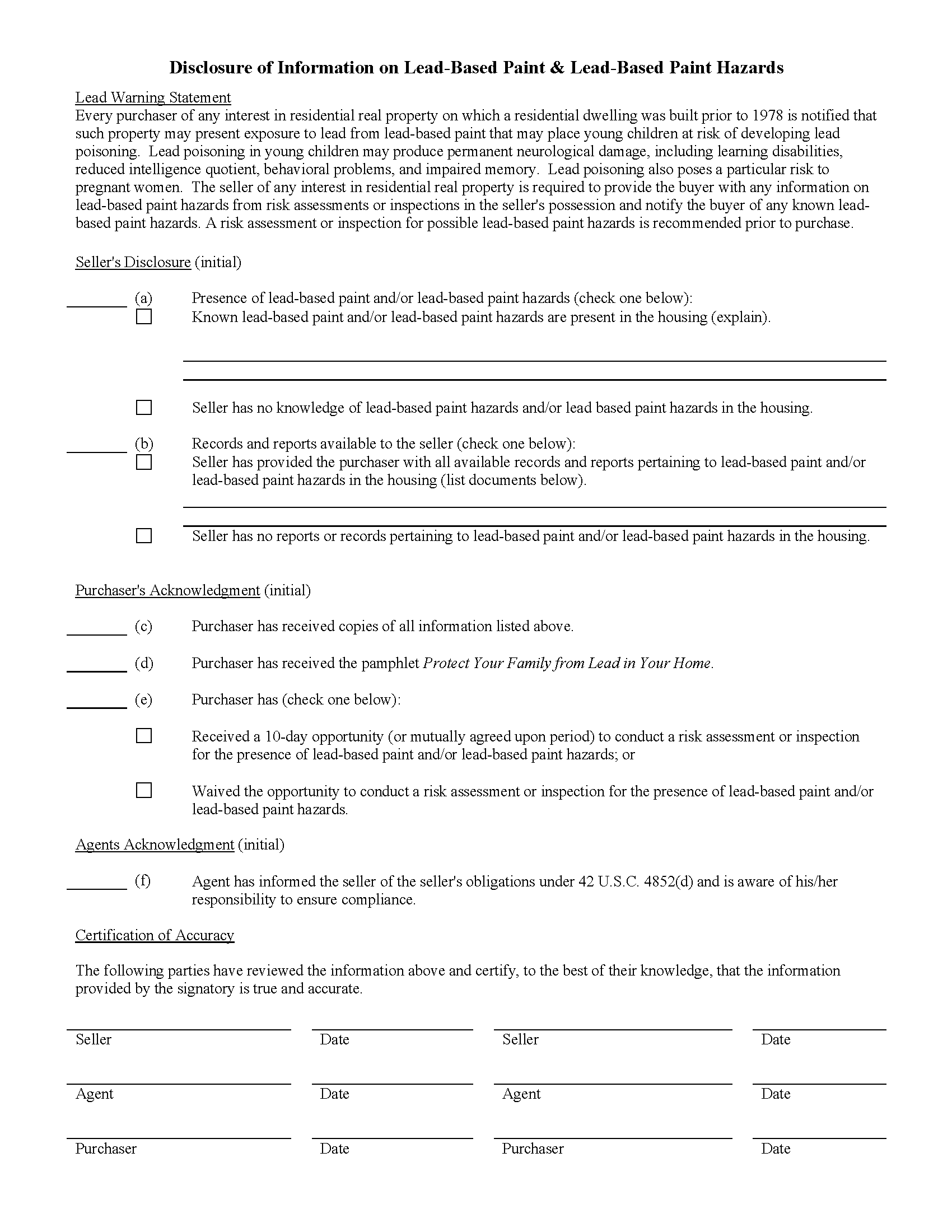
Navajo County Lead Based Paint Disclosure Form
Disclosure form issued to buyer if applicable, typically residential property built before 1978
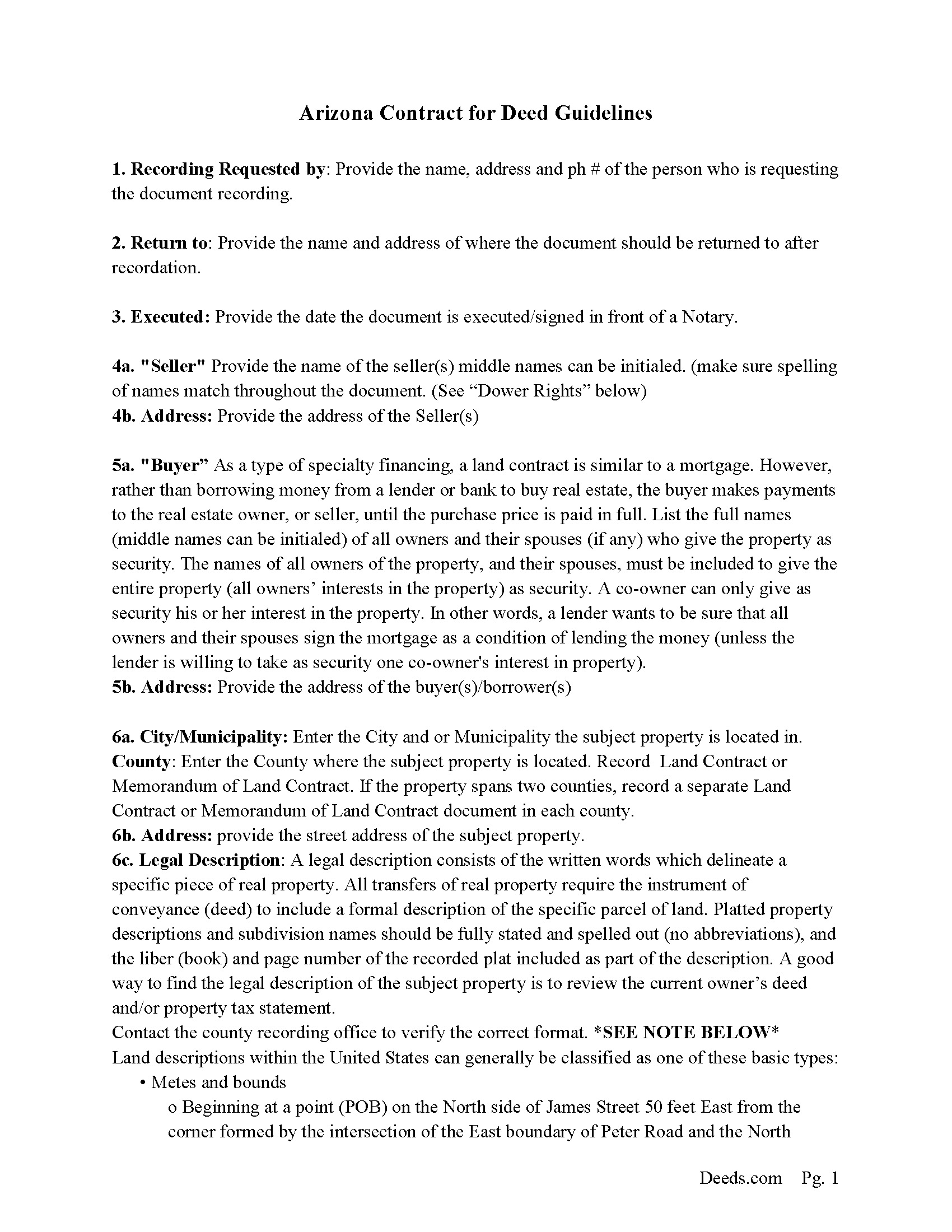
Navajo County Contract for Deed Guide
Line by line guide explaining every blank on the Contract for Deed form.
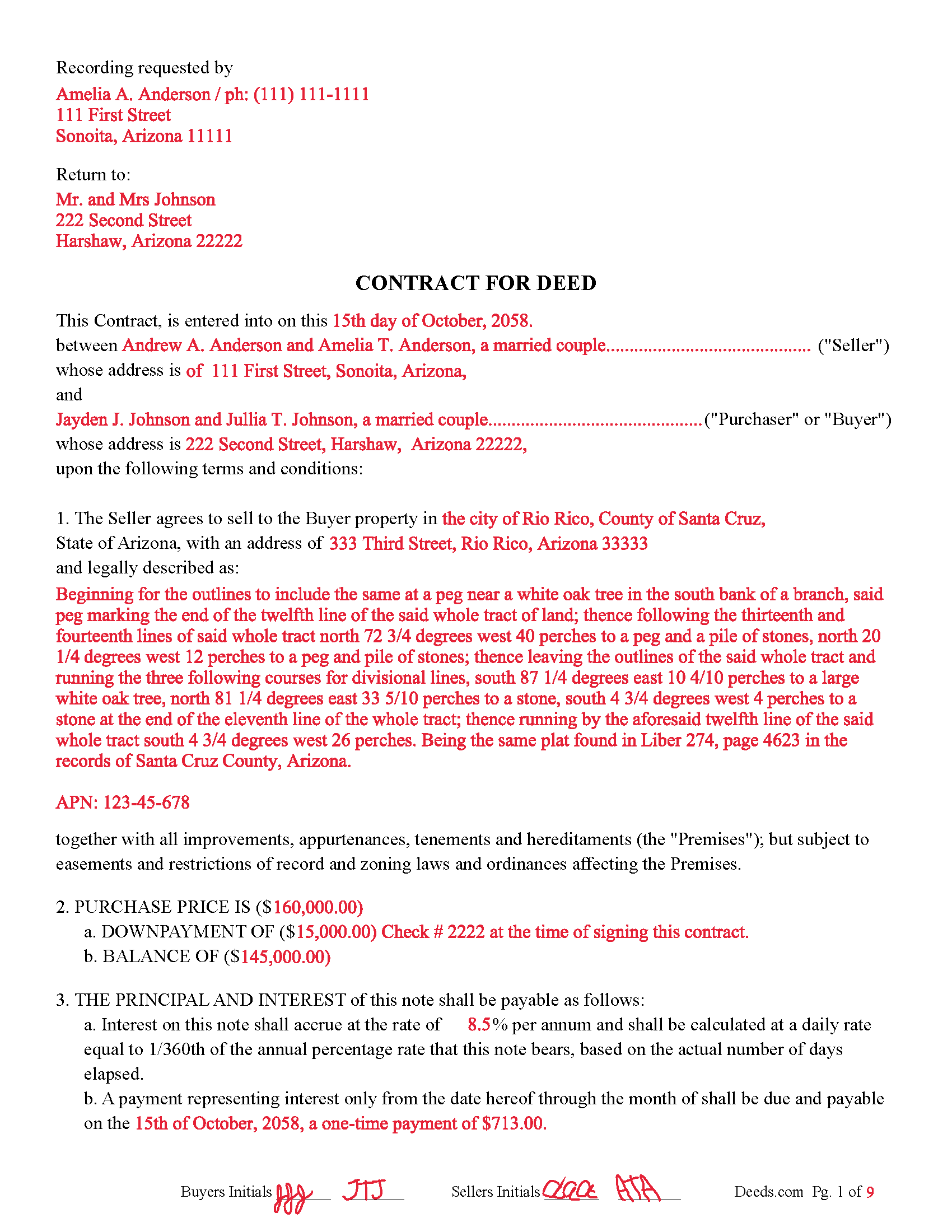
Navajo County Completed Example of the Contract for Deed Document
Example of a properly completed Arizona Contract for Deed document for reference.
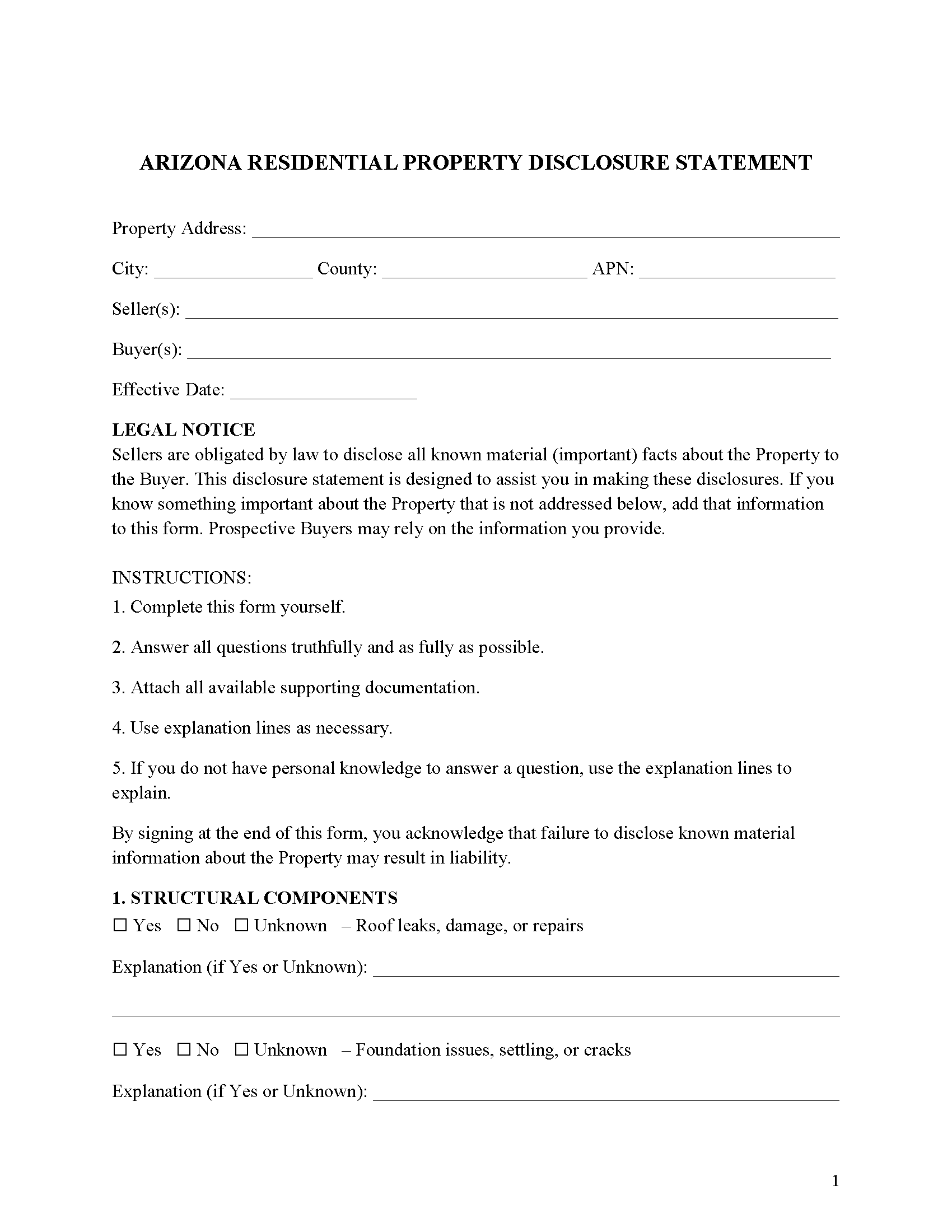
Navajo County Sellers Residential Property Disclosure Form
Required with residential sale.

Navajo County Protect your family from lead based paint
If applicable issue to buyers
All 6 documents above included • One-time purchase • No recurring fees
Immediate Download • Secure Checkout
Additional Arizona and Navajo County documents included at no extra charge:
Where to Record Your Documents
Recorder's Office
Holbrook, Arizona 86025
Hours: Monday thru Friday 8:00 am until 4:30 pm
Phone: 928-524-4194
Recording Tips for Navajo County:
- Bring your driver's license or state-issued photo ID
- Ensure all signatures are in blue or black ink
- Ask for certified copies if you need them for other transactions
- Ask if they accept credit cards - many offices are cash/check only
- Check that your notary's commission hasn't expired
Cities and Jurisdictions in Navajo County
Properties in any of these areas use Navajo County forms:
- Blue Gap
- Cibecue
- Clay Springs
- Fort Apache
- Heber
- Holbrook
- Hotevilla
- Indian Wells
- Joseph City
- Kayenta
- Keams Canyon
- Kykotsmovi Village
- Lakeside
- Overgaard
- Pinedale
- Pinetop
- Pinon
- Polacca
- Second Mesa
- Shonto
- Show Low
- Snowflake
- Sun Valley
- Taylor
- White Mountain Lake
- Whiteriver
- Winslow
- Woodruff
Hours, fees, requirements, and more for Navajo County
How do I get my forms?
Forms are available for immediate download after payment. The Navajo County forms will be in your account ready to download to your computer. An account is created for you during checkout if you don't have one. Forms are NOT emailed.
Are these forms guaranteed to be recordable in Navajo County?
Yes. Our form blanks are guaranteed to meet or exceed the applicable formatting requirements used for recording in Navajo County, including margin requirements, font requirements, and other layout standards. This guarantee applies to formatting, not to the legal sufficiency of information entered by the user or the suitability of a form for a particular transaction.
Can I reuse these forms?
Yes. You can reuse the forms for your personal use. For example, if you have multiple properties in Navajo County you only need to order once.
What do I need to use these forms?
The forms are PDFs that you fill out on your computer. The free Adobe Acrobat Reader is recommended, and most PDF apps also work. You do NOT enter your property information online - you download the blank forms and complete them privately on your own computer.
Are there any recurring fees?
No. This is a one-time purchase. Nothing to cancel, no memberships, no recurring fees.
How much does it cost to record in Navajo County?
Recording fees in Navajo County vary. Contact the recorder's office at 928-524-4194 for current fees.
Questions answered? Let's get started!
The Arizona Contract for Deed — also called an agreement for sale or a contract to convey — is an installment-sale instrument in which the seller retains legal title to real property while the purchaser takes equitable title, occupies the property, and pays the purchase price over time. On final payment, the seller delivers a "payoff deed" conveying the remaining legal title. Arizona's statutory framework at ARS 33-741 et seq. gives this instrument one of the most developed structures in the country, most notably the graduated forfeiture schedule at ARS 33-742(D) that ties the seller's default remedy period to how much of the purchase price the buyer has paid. That schedule — thirty days at the low end, nine months at the high end — is the single most consequential Arizona-specific feature of the form and the one that most often catches sellers assuming the contract's own stated cure period controls. It does not. The statute does.
When the Arizona Contract for Deed Is Used
Contracts for deed are used where conventional financing is unavailable, undesirable, or economically impractical, and the seller is willing to act as the financing party. Typical Arizona uses include owner-financed sales of raw or semi-improved land where institutional lenders will not lend, sales of rural and recreational parcels to buyers who cannot qualify for conventional mortgages, sales of residential property, condominiums, rental property, and planned-unit-development units where the seller and buyer prefer seller financing, intra-family sales where a parent is financing a sale to a child at terms more favorable than a bank would offer, and investor exits where the seller wants ongoing payments rather than a lump sum. The form can be used for vacant land, single-family residential, condominiums, rentals, and planned unit developments alike — what it should not be used for are simple executory contracts like purchase contracts, receipts, and escrow instructions pending a conventional closing, which Arizona law explicitly excludes from the 33-741 framework.
Equitable and Legal Title
The contract for deed splits title between the seller and purchaser in a way that does not occur in a conventional closed sale. The seller keeps legal title — the title recorded in the county's real property records shows the seller as the fee owner. The purchaser takes equitable title — the right to occupy the property, the right to all of the benefits and burdens of ownership, the right to enforce the contract against the seller, and the absolute right to receive the remaining legal title once the purchase price is paid in full. This split has practical consequences that both parties need to understand before signing. The seller bears the risk of holding record title to a property someone else is using, including the recording of any liens against the seller that could cloud the title the buyer is entitled to receive. The buyer bears the risk that the seller may lose legal title through the seller's own problems — bankruptcy, divorce, tax liens, judgment liens — before the contract is satisfied.
The Payoff Deed
ARS 33-741 specifically defines the "payoff deed" as the deed the seller is obligated to deliver to the purchaser on payment in full of all monies due under the contract. The contract should specify what type of deed the seller must deliver — general warranty, special warranty, grant, or quitclaim — because the level of warranty materially affects the purchaser's protection. A prudent purchaser insists on a general warranty payoff deed, which is the industry norm in arm's-length Arizona sales; a seller may negotiate for a special warranty or grant deed, particularly in intra-family transactions. The payoff deed is typically pre-signed and held by an account servicing agent or escrow agent, so that delivery on final payment is a ministerial act rather than one requiring further action by the seller, whose availability and willingness to cooperate years later cannot be assumed.
Account Servicing Agents
Arizona practice makes heavy use of account servicing agents under ARS 33-741(1). The account servicing agent is a qualified joint agent of both seller and purchaser — a bank, trust company, escrow agent, savings and loan, insurance company, Arizona-licensed real estate broker, federally regulated institution, or Arizona bar member — who holds the contract documents, collects monthly payments, tracks the amortization, and holds the pre-signed payoff deed for delivery on final payment. Using a qualified account servicing agent accomplishes several things: it provides a neutral collection party who can track and apply payments accurately, it eliminates disputes about when payments were received and what principal balance remains, and it ensures the payoff deed is delivered promptly on satisfaction. ARS 33-742(C) specifically addresses the servicing relationship: receipt of monies by an account servicing agent does not count as "acceptance by the seller" for purposes of waiving a time-is-of-the-essence provision, which is a protection for sellers who want to preserve strict-performance remedies while still using a servicing arrangement.
The Graduated Forfeiture Schedule
ARS 33-742(D) is the provision that dominates Arizona contract-for-deed practice. Forfeiture of a purchaser's interest for failure to pay monies due under the contract cannot be enforced until after a statutory period that depends on how much of the purchase price has been paid: thirty days if less than twenty percent has been paid, sixty days if at least twenty percent but less than thirty percent has been paid, one hundred twenty days if at least thirty percent but less than fifty percent has been paid, and nine months if fifty percent or more has been paid. These periods run from the date the unpaid monies were due. They are statutory minimums — the contract cannot shorten them, and private cure periods in the contract that are shorter than the statute are ineffective to the extent of the conflict.
The policy behind the schedule is that as a buyer accumulates more equity in the property, the buyer has more to lose in a forfeiture and therefore deserves more time to cure. Arizona treats a nine-month cure period as appropriate once the buyer has paid half the price, which is a materially different framework from states that allow a thirty- or sixty-day cure regardless of equity accumulated. Sellers who do not account for this schedule in their default planning can find themselves locked out of any prompt remedy against a buyer who has made substantial payments and then defaulted.
Calculating the Percentage Paid
ARS 33-742(E) defines narrowly what counts as "payment on the purchase price" for determining which forfeiture period applies. Only three categories count: down payments paid to the seller, principal payments paid to the seller on the contract, and principal payments paid to third-party lienholders where the underlying debt is part of the purchase price and the payments were required by the contract. Interest payments, insurance premiums, property taxes, late fees, and penalty payments do not count toward the percentage, even when the buyer has faithfully paid them. Sellers and buyers both have to track principal application carefully, because the buyer who has paid substantial total dollars but relatively little principal may actually be in the 30-day or 60-day category rather than the nine-month category, and vice versa.
Notice of Election to Forfeit
ARS 33-743 requires that the seller serve a formal notice of election to forfeit after the statutory cure period has expired and before the forfeiture can be completed. The notice has specific content and service requirements that must be followed precisely — service on the purchaser and the account servicing agent, recording in the county where the property is located, and preservation of any redemption rights the contract or statute grants. A forfeiture attempted without a compliant notice of election is ineffective, and the seller who then takes possession risks counterclaims from the purchaser for wrongful forfeiture, conversion, and lost equity. The forfeiture process itself is then completed under ARS 33-744 or 33-745, which set out the specific steps required to finalize the taking back of the property and the extinguishment of the purchaser's equitable interest.
Forfeiture Versus Foreclosure
ARS 33-742(A) gives the seller a choice of remedies on a monetary default. The seller may pursue forfeiture under 33-742 through 33-745 (the statutory process described above), or the seller may accelerate the remaining balance and foreclose the contract as a mortgage under ARS 33-748. The two paths have different consequences. Forfeiture keeps the seller in a relatively fast track — after the statutory cure period and the notice of election, the purchaser's equitable interest ends and the property returns to the seller free of the contract. Foreclosure treats the contract as a mortgage, which means judicial foreclosure procedures, a period of redemption, and the possibility of a deficiency judgment — subject to Arizona's strong anti-deficiency protections for certain purchase-money transactions. For defaults on grounds other than failure to pay monies due — for example, a breach of a covenant not to waste the property or failure to maintain insurance — forfeiture is not available, and the seller's only remedy is foreclosure under 33-748. The election between forfeiture and foreclosure is consequential and generally not reversible once commenced.
Time Is of the Essence
ARS 33-742(C) provides a specific statutory framework for time-is-of-the-essence clauses. A waiver occurs only when the seller has accepted monies due in an amount less than the total then owed; the seller's delay in exercising a remedy, by itself, does not waive the clause. Once waived, the seller can reinstate the clause by serving a written notice on the purchaser and the account servicing agent at least twenty days before the date strict performance will be required. The notice does not need to be recorded and does not need to be served on anyone other than the purchaser and the servicing agent. This is a useful Arizona-specific mechanism that allows sellers to accept a partial payment without permanently losing the strict-performance remedy, provided the reinstatement notice is properly served.
What "Monies Due Under the Contract" Includes
ARS 33-741(3) defines "monies due under the contract" more broadly than just principal and interest payments. It includes principal and interest currently due to the seller, principal and interest payments the seller has made to third-party lienholders on the buyer's behalf when the underlying debt is part of the purchase price, delinquent taxes the seller paid to protect the seller's interest when the contract made taxes the buyer's obligation, and unpaid insurance premiums the seller paid when insurance was the buyer's obligation. In practice, a seller who has covered taxes or insurance to protect the property during a period of buyer default can include those amounts in the total due — and the cure required to avoid forfeiture includes paying back the advances as well as the missed installments.
Community Property and Spousal Joinder
Arizona is a community property state, and the rules apply on both sides of the transaction. When the seller is a married individual and the property is community property, both spouses should sign the contract and the ultimate payoff deed; a conveyance by one spouse alone is voidable by the other under ARS 25-211. When the purchaser is a married individual and the property will become community property of the marriage, the contract typically names both spouses as purchasers and both sign. When one spouse is taking title as sole and separate property — possible, for example, if the purchase is funded entirely from separate property or the other spouse is disclaiming — the deed and contract should reflect that vesting clearly, and a disclaimer from the non-taking spouse is common practice to preserve the separate-property character.
Recording and Priority
The contract for deed — or a memorandum of it — should be recorded in the county where the property is located, both to protect the purchaser's equitable interest under Arizona's race-notice rule at ARS 33-412 and to put subsequent purchasers and creditors of the seller on notice that the seller's record legal title is encumbered by the buyer's equitable interest. An unrecorded contract for deed is effective between the parties but is void as against a subsequent purchaser for value who records first without notice of the prior agreement. Recording a full contract rather than a memorandum is sometimes preferred by title companies; recording a memorandum is more common when the parties want to keep the pricing and payment terms confidential while still putting the world on notice that the property is under contract. The duty-to-record rule at ARS 33-411.01 — requiring the transferor to record documents evidencing a sale within sixty days — applies by its terms, though compliance practice varies in the contract-for-deed context.
Formatting
ARS 11-480 sets the formatting requirements for every recordable instrument: legible type of at least ten points, white paper no larger than 8.5 by 14 inches, a caption identifying the document (for example, "Contract for Deed" or "Agreement for Sale"), a top margin of at least two inches on the first page reserved for the recorder's stamp, and minimum half-inch margins elsewhere. A contract or memorandum that is otherwise validly executed but not formatted for recording has to be conformed before it can be indexed. County recorders reject non-conforming documents, and several counties enforce the first-page margin rule strictly.
What's Included in the Download Package
The Arizona Contract for Deed package includes the contract form drafted around the ARS 33-741 et seq. framework, with attention to the graduated forfeiture schedule, the payoff deed obligation, and the account servicing agent structure, detailed guidelines covering the Arizona-specific drafting and default-remedy requirements, and a completed example showing how the contract should look for a typical owner-financed sale. The form is suitable for residential property, vacant land, condominiums, rental property, and planned unit developments. All files are available for instant download after purchase.
Important: Your property must be located in Navajo County to use these forms. Documents should be recorded at the county recording office listed above.
This Contract for Deed meets all recording requirements specific to Navajo County.
Our Promise
The documents you receive here are guaranteed to meet or exceed the applicable Navajo County recording format requirements. If there is a rejection caused by our formatting, we will correct the issue or refund your payment. This guarantee applies to document formatting only and does not extend to information entered by the user, the selection of the form, or the legal effect of the completed document.
Save Time and Money
Get your Navajo County Contract for Deed form done right the first time with Deeds.com Uniform Conveyancing Blanks. At Deeds.com, we understand that your time and money are valuable resources, and we don't want you to face a penalty fee or rejection imposed by a county recorder for submitting nonstandard documents. We constantly review and update our forms to meet rapidly changing state and county recording requirements for roughly 3,500 counties and local jurisdictions.
4.8 out of 5 - ( 4,823 Reviews )
David H. 5 out of 5 stars
Rapid, excellent service. This definitely beats the old way of trying to obtain public documents from LA County. Great improvement!
Thank you!
Steve C. 5 out of 5 stars
Everything I had hoped for. Easy and formatted correctly.
We welcome your positive feedback and are thrilled to have met your expectations. Thank you for choosing our services.
leslie w. 5 out of 5 stars
Easy to use! Thanks for saving the time and expense of an attorney!
Thank you for your feedback. We really appreciate it. Have a great day!
John H. 1 out of 5 stars
Re: Idaho Affidavit of Successor: Decedent's residence may be a state other than Idaho. Death certificate documnet# field is too small.
Thank you for your feedback. We have emailed you an amended document to address your specific needs outlined in your feedback, hope this helps. Have a wonderful day.
Jessica P. 5 out of 5 stars
Quick and easy to use and with the provided instructions and example it took a lot of the guess work out.
Thank you for your feedback. We really appreciate it. Have a great day!
Charles D. 5 out of 5 stars
Good product!! I highly recommend.
Thank you!
Sylvia Y. 5 out of 5 stars
Fantastic forms! So nice to have them formatted correctly for our county, the recorder here can be very picky with the margins. No issues at all.
Thank you for your feedback. We really appreciate it. Have a great day!
Charlotte A. 4 out of 5 stars
This information gave me enough to complete a quit claim deed yesterday
Thank you for your positive words! We’re thrilled to hear about your experience.
Jose G. C. 4 out of 5 stars
It was OK but unfortunately useless. The jurisdictions are now requesting that documents such as Notices of Commencement not only be recorded at their offices, but also certified. This last service is not provided by Deeds, or at least I could not find it in your website and did not receive a response when I asked if you did. Thus, we are going back to traditional means of recording/certifying
Thank you for your feedback Jose. We do hope that you find something more suitable to your needs elsewhere. Have a wonderful day.
John M. 5 out of 5 stars
Easy to use site with a good selection of documents
Thank you!
Tracey P. 5 out of 5 stars
As always, amazing forms and information. A must have for anyone doing it themselves. Everything is available to make it happen but if you need a lot of hand holding you might want to look into a more full service option.
Thank you for your feedback. We really appreciate it. Have a great day!
Joyce F. 5 out of 5 stars
The forms are simple to follow. I was hoping I would be able to add my personal info. That would make the forms even more simple.
We appreciate your business and value your feedback. Thank you. Have a wonderful day!
Kevin M. 4 out of 5 stars
Thought I knew what I was doing but it turns out I was in way over my head. Thankfully customer service pointed me in the right direction to get the help I needed.
Glad to hear you are seeking the assistance you need. Have a wonderful day.
Roy S. 5 out of 5 stars
The website is easy to maneuver and information needed was readily available. Thanks so much!
Thank you!
Imari E. 5 out of 5 stars
QUICK SERVICE
Thank you!