New Jersey Affidavit of Title (Seller)
County Specific Legal Forms Validated as recently as September 11, 2026 by our Forms Development Team
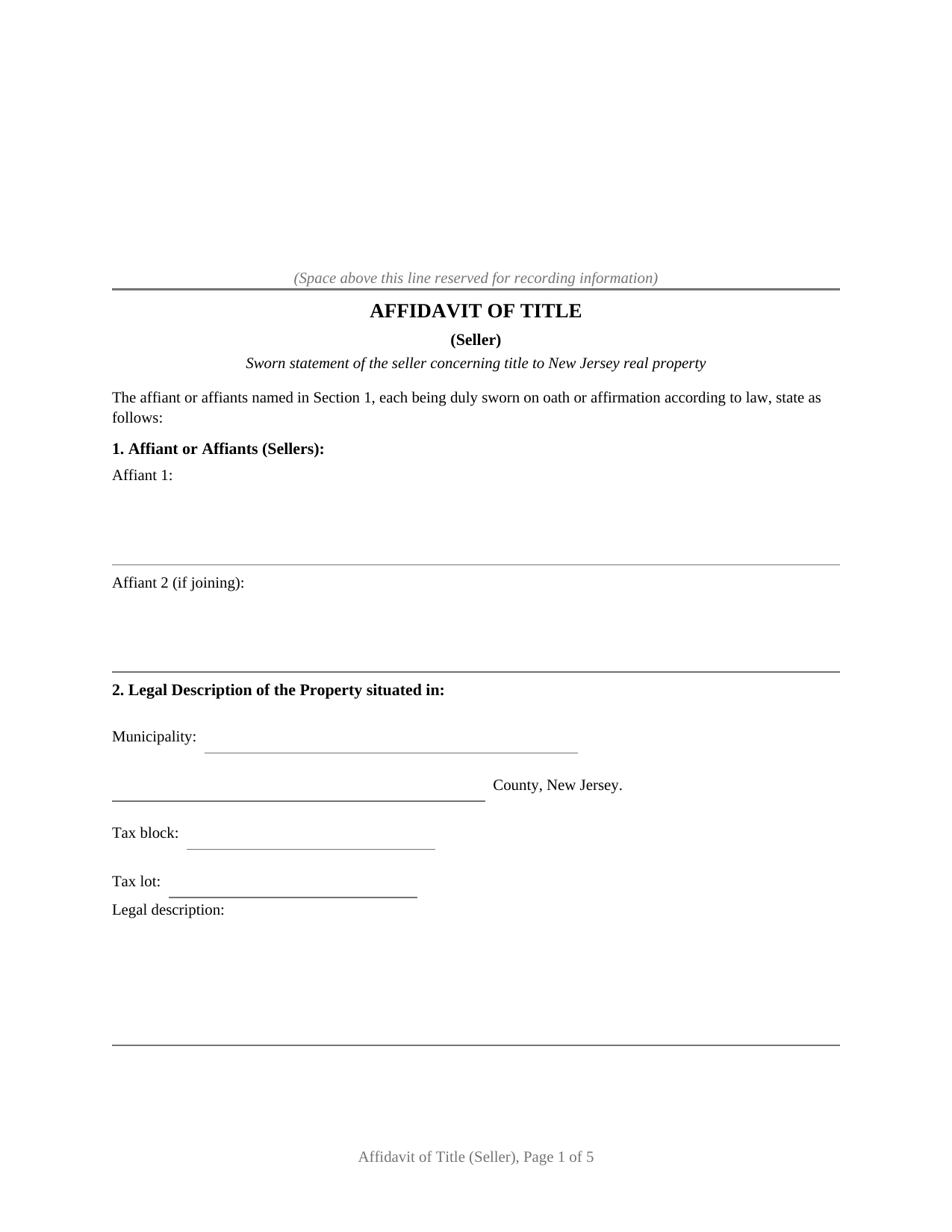
About the New Jersey Affidavit of Title (Seller)
How to Use This Form
- Select your county from the list
- Download the county-specific form
- Fill in the required information
- Have the document notarized if required
- Record with your county recorder's office
What Others Like You Are Saying
"Exellent and easy! Thqanks!"
"Hopefully filling out and filing the paperwork is as easy as this was."
"Thank you for making a difficult time a little easier. The forms are easy to download and complete a…"
"Old document deeds were not available and my cost was returned. Was referred to another location and…"
"Every thing worked perfectly."
4.8/5 from 4,827 reviews. Read all
New Jersey closings run on a deed and a sworn statement. The customary New Jersey conveyance, a bargain and sale deed with a covenant against the grantor's acts, carries one narrow promise: that the grantor has done nothing to encumber the property. The factual assurance a purchaser and a title insurance company actually examine at the closing table, who holds title and possession, what has happened with the sellers' marriages, judgments, and contractors, travels in the seller's affidavit of title. This form prepares that affidavit for one or two individual New Jersey sellers.
Representations Beyond the Deed Covenants
New Jersey's Appellate Division recognized in Somerset County v. Durling, 174 N.J. Super. 52 (App. Div. 1980), that a seller's affidavit can create representations independent of the covenants in the deed. That is this instrument's legal engine. The affiants swear to record title and actual, peaceable possession; to the absence of undisclosed deeds, mortgages, leases, options, and easements signed since they took title; to the state of their judgments, lawsuits, and bankruptcies; to paid taxes and municipal charges; and to the absence of recent construction activity that could ripen into a lien. The statements are sworn, so a willfully false one is punishable as false swearing under N.J.S.A. 2C:28-2, a statute that reaches sworn documents outside any courtroom.
Twenty Years of Judgments, 120 Days of Construction
Two New Jersey clocks shape the affidavit's content. Docketed Superior Court judgments bind a debtor's real estate statewide under N.J.S.A. 2A:16-1 and remain liens for twenty years, so title companies search judgments for twenty years against every name a seller has used; the affidavit collects those other names and addresses what the search returns. Under the Construction Lien Law, a contractor or supplier can lodge a lien claim for record within 90 days after the last work, services, materials, or equipment, or within 120 days on residential construction, and a Notice of Unpaid Balance and Right to File Lien can preserve priority for a coming claim. The affidavit's construction statement covers exactly that window, which is why a question about recent work appears in every New Jersey closing package.
Exceptions Keep a True Affidavit True
Every statement in the form is qualified by the phrase except as stated in this affidavit. The exceptions section is where reality goes: the sellers' own mortgage to be paid and discharged from the closing proceeds, a tenancy, an unpaid assessment. A disclosed matter qualifies the affidavit instead of contradicting it; the completed example shows a typical entry, an open mortgage identified by its recording reference and marked for payoff at closing.
Delivered at the Closing, Not Recorded
In New Jersey practice the affidavit of title is handed to the purchaser and the title insurance company at closing rather than recorded with the county. It is not among the deed-recording prerequisites of N.J.S.A. 46:26A-3, and it is distinct from the RTF-1 affidavit of consideration that is annexed to certain deeds under N.J.S.A. 46:15-6. The form provides blocks for one or two affiants, with a separate jurat for each so two sellers can swear before different officers, and a non-recorded instructions page rides in front of the document. The package includes the blank fillable PDF, the completed example, and a plain language guide that walks through every numbered section; the materials are informational and are not legal advice.
Important: County-Specific Forms
Our affidavit of title (seller) forms are specifically formatted for each of the 21 counties in New Jersey.
After selecting your county, you'll receive forms that meet all local recording requirements, ensuring your documents will be accepted without delays or rejection fees.