North Carolina Personal Representative Deed of Distribution
County Specific Legal Forms Validated as recently as October 9, 2026 by our Forms Development Team
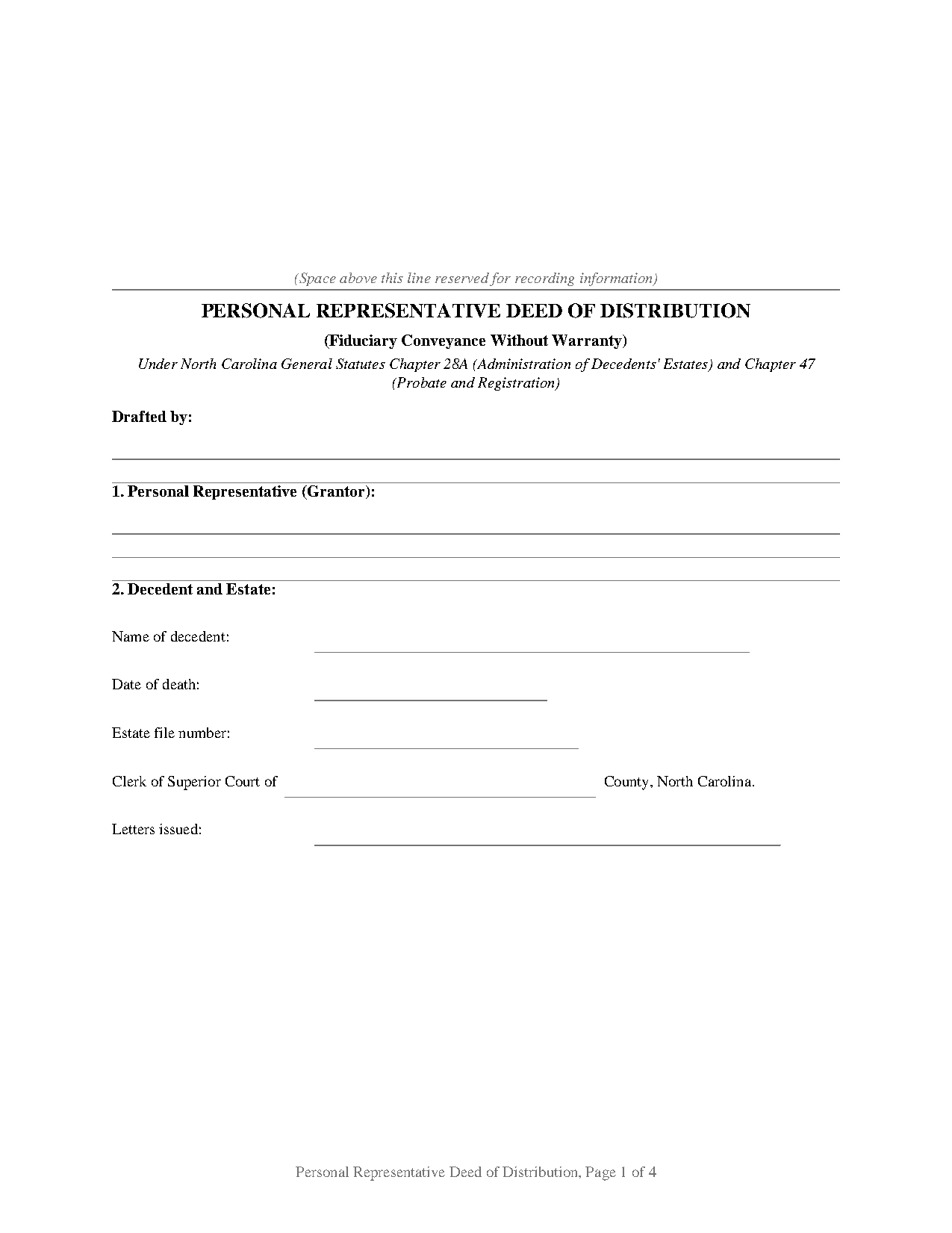
About the North Carolina Personal Representative Deed of Distribution
How to Use This Form
- Select your county from the list
- Download the county-specific form
- Fill in the required information
- Have the document notarized if required
- Record with your county recorder's office
What Others Like You Are Saying
"Excellent Service I was looking for a copy of deeds on a few properties. Researched online and ended…"
"Excellent and easy process to use the online fill in the blank sections, especially when you provide…"
"This platform made electronic filing of a lien easy and quick. I was able to accomplish everything f…"
"Received exactly what you said I would get. Good Quick Service"
"Good & friendly software, complete & clear instructions & guidance, generates proper for…"
4.8/5 from 4,820 reviews. Read all
When a North Carolina estate includes land, the deed the personal representative signs is not an ordinary conveyance. A Personal Representative Deed of Distribution is a fiduciary instrument: an executor or administrator signs it in a representative capacity, conveying the estate's interest in real property to the person entitled to receive it, and signing for the estate rather than as an individual.
Why real property needs a deed at all
North Carolina treats a decedent's land differently from cash and personal property. Under N.C. Gen. Stat. Section 28A-15-2(b), title to real property vests in the heirs at the moment of death when there is no will, and in the devisees, relating back to the date of death, when the land passes under a probated will. The land does not flow automatically into the personal representative's hands the way personal property does. Because of that direct vesting, a deed signed by the personal representative alone fits a defined set of circumstances rather than every estate, and the form is built around recording which circumstance applies.
The authority the deed recites
Section 4 of the form is the heart of the instrument. North Carolina title practice recognizes several authority bases for a deed the personal representative executes without the heirs or devisees joining: a will that specifically devises the property to the personal representative, a will that directs a sale with the proceeds passing to the beneficiaries, a will that grants a power of sale and devises the property to the estate, and an order of the Clerk of Superior Court in a proceeding to create assets under Article 17 of Chapter 28A. The deed conveys under the distribution authority of N.C. Gen. Stat. Section 28A-22-1, and the authority blank records the specific source relied on.
A fiduciary conveyance without warranty
The operative language has the grantor grant, convey, and distribute the estate's and the decedent's interest to the grantee, while stating that the grantor acts solely as personal representative and not individually. The deed is made without warranty of title: it does not promise seisin, freedom from encumbrances, or quiet enjoyment, and the grantee takes the property subject to existing liens and to the rights of estate creditors. An optional section accommodates a statement of consideration or an express limited fiduciary warranty.
Recording and the excise tax question
The deed is recorded with the register of deeds in the county where the land lies, where N.C. Gen. Stat. Section 47-18 makes registration the point that fixes priority against later interests. The documentary excise tax is one of the more useful points for an estate: N.C. Gen. Stat. Section 105-228.29 exempts transfers by will, by intestacy, by operation of law, and by gift, so a distribution to the entitled heir or devisee without consideration carries no excise tax, while a conveyance for value is taxed on the consideration conveyed.
The download includes the blank fillable deed, a completed example built on a realistic Wake County fact pattern, and a guide that walks the form section by section and sets out the statutory framework in Chapter 28A and Chapter 47. Where heirs or devisees hold vested title and convey while the personal representative joins to bind creditors during administration, that conveyance is the separate Beneficiary and Executor Deed. The materials are informational and are not legal advice.
Important: County-Specific Forms
Our personal representative deed of distribution forms are specifically formatted for each of the 100 counties in North Carolina.
After selecting your county, you'll receive forms that meet all local recording requirements, ensuring your documents will be accepted without delays or rejection fees.