Ohio Lis Pendens
County Specific Legal Forms Validated as recently as October 12, 2026 by our Forms Development Team
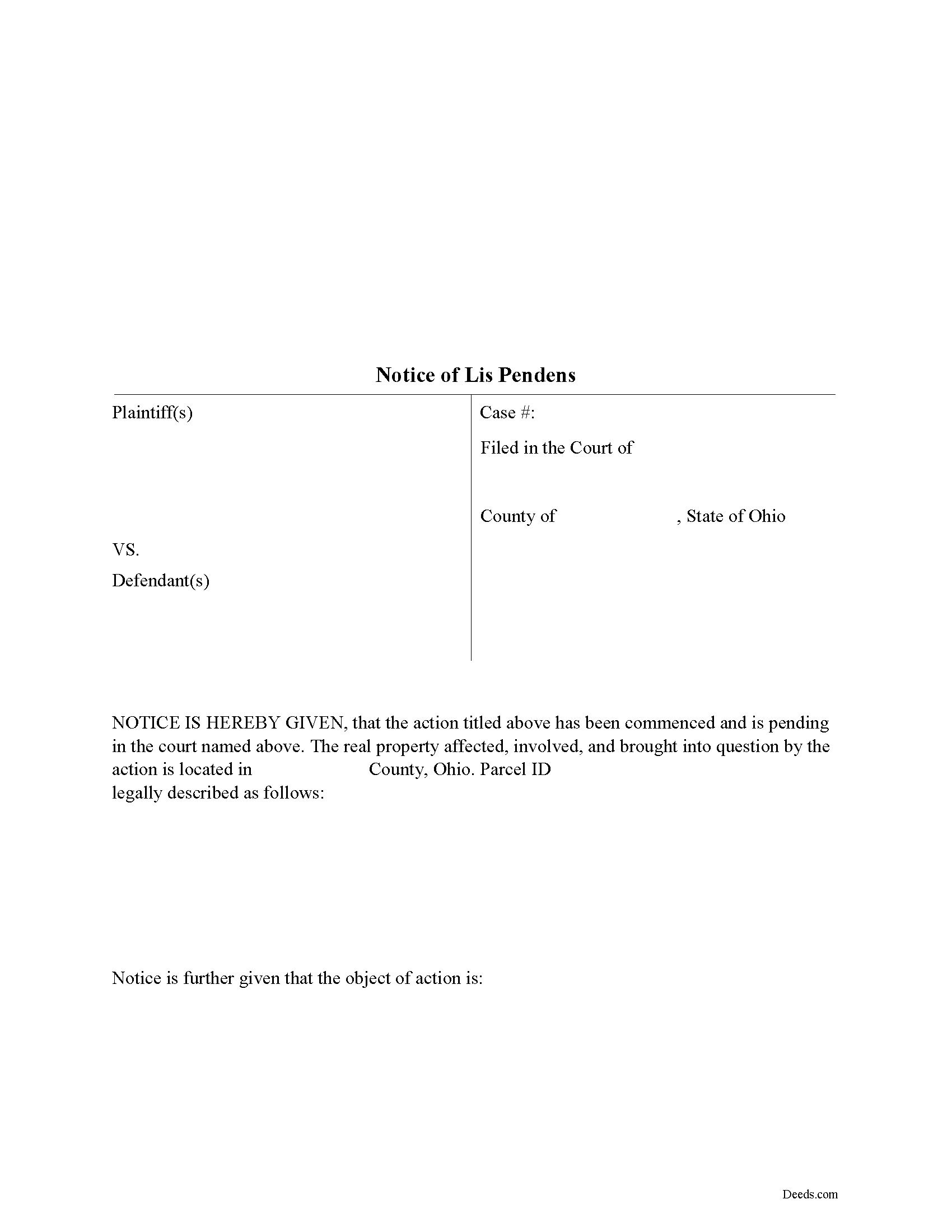
About the Ohio Lis Pendens
How to Use This Form
- Select your county from the list
- Download the county-specific form
- Fill in the required information
- Have the document notarized if required
- Record with your county recorder's office
What Others Like You Are Saying
"My deed has now been recorded. Thank you so very much. I saved about $120.00 by doing this with your…"
"All documents were site specific and up-to-date. Not recorded yet but have high hopes."
"Quick service!"
"Very easy to use. Straightforward and informative"
"Love this site. The form directions are easy and I finished in less than an hour! Totally recommend …"
4.8/5 from 4,828 reviews. Read all
Lis pendens, Latin for "suit pending," is written notice that a lawsuit has been filed which concerns the title to, or interest in, a specific parcel of real property. The notice alerts potential lenders or buyers that the title to the property has come into question because of the pending legal action.
Ohio's statutes do not provide much guidance regarding lis pendens. Sections 2703.26-27 of the Ohio Revised Code discuss recording locations for the notice and restrict property transfers while the title is subject to lawsuit. Section 5309.58 clarifies the same details for registered land. Be aware that even in jurisdictions (like Ohio) where lis pendens is a common law doctrine, many disputes concern whether the notice is sufficient for any effect. Take time to understand the rules, get a comprehensive title search before purchasing any real estate, and please speak to an attorney for clarification.
If the property is unregistered land, and the lawsuit is filed in the same county in which all of the property is located, lis pendens attaches upon the initial filing of a complaint relating to the ownership of real property and a description of the property in the complaint. Any interest in the property recorded after the filing of the lawsuit is subject to the judge's final ruling.
For registered (Torrens) land, lis pendens does not attach until after the complaint is filed with the court and a notice of lis pendens is filed with the County Recorder. Civil Rule 3(F) also applies where the suit is brought in a county other than that in which all of the property is located. A small percentage of land is registered in Ohio; of the 88 counties, 48 never had registered land. Of the 40 counties that have had Torrens parcels, 26 have chosen to abolish the system in a manner consistent with the dictates of ORC 5310.31 et seq. This includes all of the counties in northeastern Ohio that surround Cuyahoga County.
If the suit is brought in a county other than that in which the property is located, file a certified copy of the complaint with the Common Pleas Court in which the property is located (this also applies to property that straddles two or more county lines). See Civil Rule 3(F) and (G).
A notice of lis pendens is only available after initiating a valid claim (lawsuit) against the title to real property. The claim might relate to a foreclosure, a divorce, or something else, but in many cases, it involves a contractor suing to enforce a recorded claim of lien. Note, however, that the lis pendens must refer ONLY to the property identified in the suit. For example, a contractor may have a legitimate claim to place a lien against the owner, but only on the property where the contractor completed the project; if the owner has multiple parcels of land, the notice should not mention them. The court may penalize the individual or entity filing a spurious (invalid) lis pendens, and that party may be obligated to pay attorney's fees, court costs, and/or other penalties, as deemed appropriate by the court.
Submit the completed notice to the local recording office. It should identify the parties, the subject property, details about the lawsuit, including the court, case number(s), relevant dates, and other information as needed for the situation. The form may also be required to meet the state and local standards for recorded documents. Contact the agency responsible for maintaining land records with questions about filing the lis pendens.
The notice of lis pendens is a useful tool for protecting contested property interests, but it can be tricky. Please contact an attorney with questions about lis pendens, or for any other issues related to real estate in Ohio.
(Ohio Lis Pendens Package includes form, guidelines, and completed example)
Important: County-Specific Forms
Our lis pendens forms are specifically formatted for each of the 88 counties in Ohio.
After selecting your county, you'll receive forms that meet all local recording requirements, ensuring your documents will be accepted without delays or rejection fees.