Rhode Island Memorandum of Trust
County Specific Legal Forms Validated as recently as October 13, 2026 by our Forms Development Team
About the Rhode Island Memorandum of Trust
How to Use This Form
- Select your county from the list
- Download the county-specific form
- Fill in the required information
- Have the document notarized if required
- Record with your county recorder's office
What Others Like You Are Saying
"I am so glad I found this resource! As the Executor of a family members estate I wanted to save mone…"
"good format, helpful instructions"
"OUtsdtanding. Quick and easy, both of which are a huge plus"
"very simple to use"
"This was super easy and fast!"
4.8/5 from 4,825 reviews. Read all
Rhode Island Affidavit or Memorandum of Trust
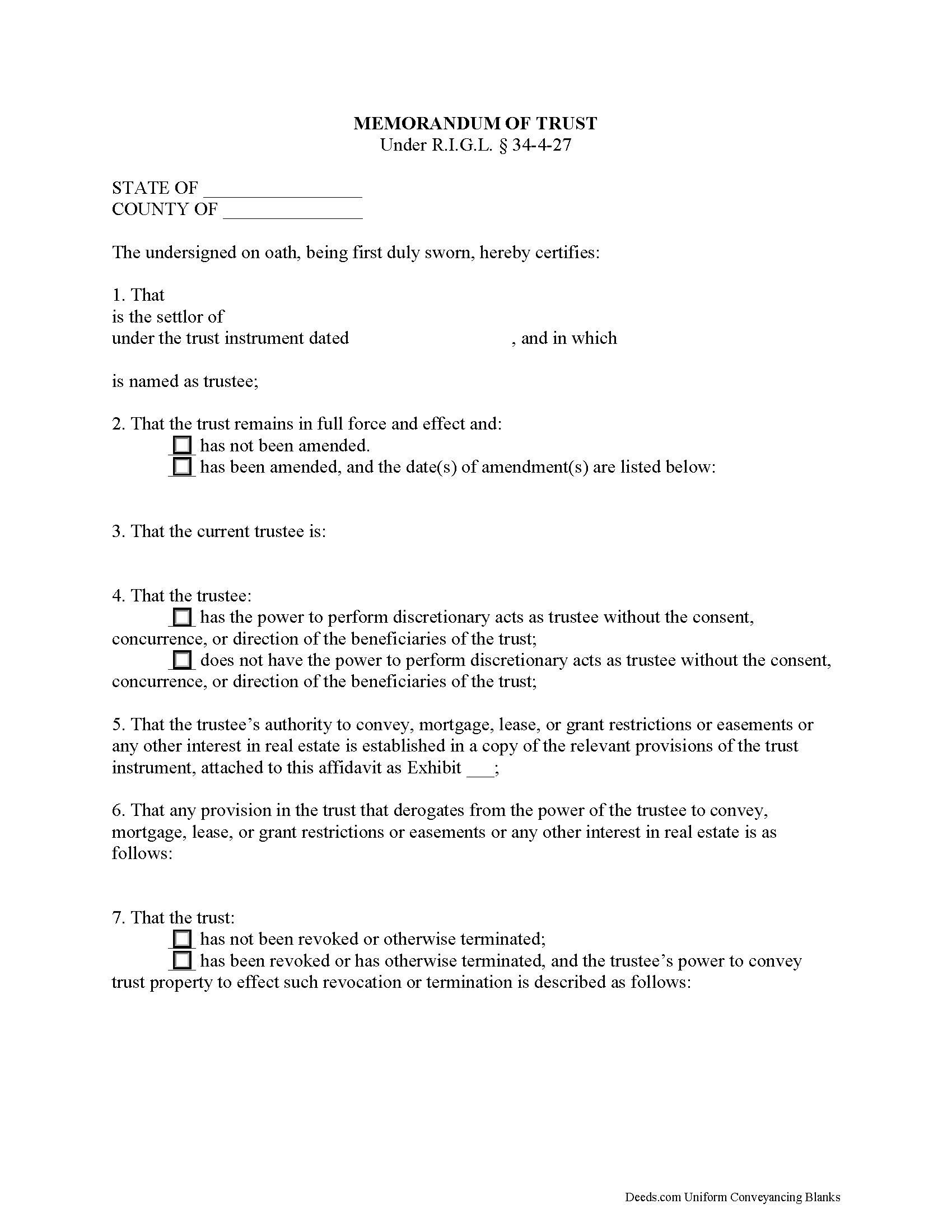
R.I.G.L. 34-4-27 requires that either the trust agreement or a memorandum of trust be recorded when a trustee conveys real property held in trust. Prior to the ratification of this statute, trustees were required to record the trust instrument -- the document executed by the settlor that designates the trustee, the trust beneficiaries, and the provisions for the trustee's management of trust assets. Now, trustees in Rhode Island have the option to record an affidavit or memorandum of trust, allowing the trust instrument to remain off-record (thereby keeping the settlor's estate plans private to nonessential parties). Third parties (that is, neither the settlor nor the trustee) entering into transactions with a trustee may rely on the statements provided in the affidavit or memorandum of trust as fact.
The affidavit evidences the trustee's authority to convey title to real property held in the trust and acts as a summary of essential terms of the trust instrument. It contains such information as the name, date, settlor, and original trustee of the trust. In addition, it names all currently acting trustees and contains statements as to (1) the trustee's authority regarding real property transactions and (2) the ability of the trust to be revoked or terminated.
In addition, the instrument details the conditions under which the trustees may be replaced and a successor trustee appointed. It also shares the conditions upon which the trust terminates and, if the trust is revocable, the conditions upon which the trust becomes irrevocable. For example, the affidavit might state that the trust becomes irrevocable upon the settlor's death, as is the case with living trusts. If applicable, the affidavit should include the date and place of the settlor's death.
A memorandum of trust must be executed "either by each settlor of the trust, or by each current trustee" and notarized before being recorded in the municipality where the subject property is situated (R.I.G.L. 34-4-24(a)).
Consult an attorney with questions about Rhode Island trusts and the affidavit/memorandum of trust.
(Rhode Island MOT Package includes form, guidelines, and completed example)
Important: County-Specific Forms
Our memorandum of trust forms are specifically formatted for each of the 5 counties in Rhode Island.
After selecting your county, you'll receive forms that meet all local recording requirements, ensuring your documents will be accepted without delays or rejection fees.