Delaware Trustee Deed
County Specific Legal Forms Validated as recently as October 9, 2026 by our Forms Development Team
About the Delaware Trustee Deed
How to Use This Form
- Select your county from the list
- Download the county-specific form
- Fill in the required information
- Have the document notarized if required
- Record with your county recorder's office
What Others Like You Are Saying
"Top 10 experience, Easy-Fast-Affordable"
"very good. got my info in minuetes. thank you"
"Good find, provides guide to use."
"Information found, thank you. I own Ground Rent on property and needed to know name of property owne…"
"Excellent Service"
4.8/5 from 4,823 reviews. Read all
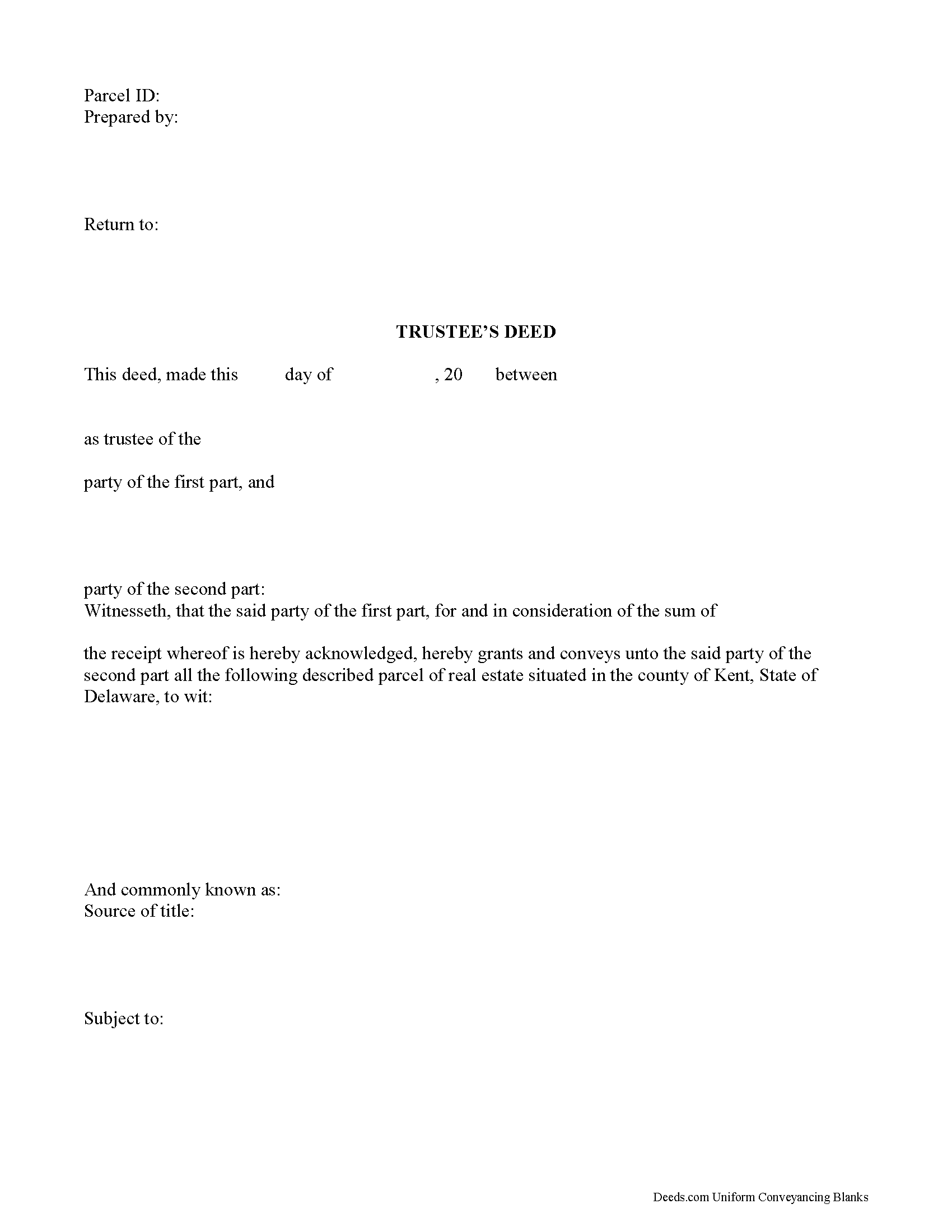
Used in trust administration, a trustee's deed conveys real property out of a trust and vests title in the name of a grantee. Unlike other instruments of conveyance, this deed is named for the person executing the deed rather than the type of transfer it is.
A trustee is the person who holds legal title to trust property in the name of the trust. The trustee is appointed in the trust instrument, an unrecorded document executed by a trustor, who funds a trust with assets. The powers of the trustee relevant to the conveyance of real property are also enumerated in the trust instrument.
The trustee's deed follows the statutory form for conveyances of real property in Delaware (Del. Code tit. 29, 121(a)). Pursuant to Del. Code tit. 29, 121(b), the deed functions like a special warranty deed, meaning it carries a warranty of title only for the duration of the current grantor's ownership of the property.
Under a trustee's deed, the trustee is named as the grantor, and basic information about the trust under which the trustee is acting also appears. As with all instruments affecting real property, the trustee's deed requires a legal description of the subject property. All acting trustees named under the trust instrument as required to sign must sign the deed in the presence of a notary public for a legal transfer. The deed is then recorded in the county in which the subject property is situated. Also, note that each of Delaware's three counties specify different deed format requirements, so make sure to use the correct layout for the property's location.
Each case is unique, so consult an attorney with any questions or for complex situations.
Important: County-Specific Forms
Our trustee deed forms are specifically formatted for each of the 3 counties in Delaware.
After selecting your county, you'll receive forms that meet all local recording requirements, ensuring your documents will be accepted without delays or rejection fees.