New Hampshire Fiduciary Deed
County Specific Legal Forms Validated as recently as October 7, 2026 by our Forms Development Team
About the New Hampshire Fiduciary Deed
How to Use This Form
- Select your county from the list
- Download the county-specific form
- Fill in the required information
- Have the document notarized if required
- Record with your county recorder's office
What Others Like You Are Saying
"Very Fast and simple process for finding documents and downloading"
"Was easy to use the eRecording service."
"Easy, simple and fast. I am familiar with deeds in my state and these looked correct. The common mis…"
"Quick and easy with great instructions and accurate documents. I plan to make this site a part of ou…"
"They deliver!"
4.8/5 from 4,823 reviews. Read all
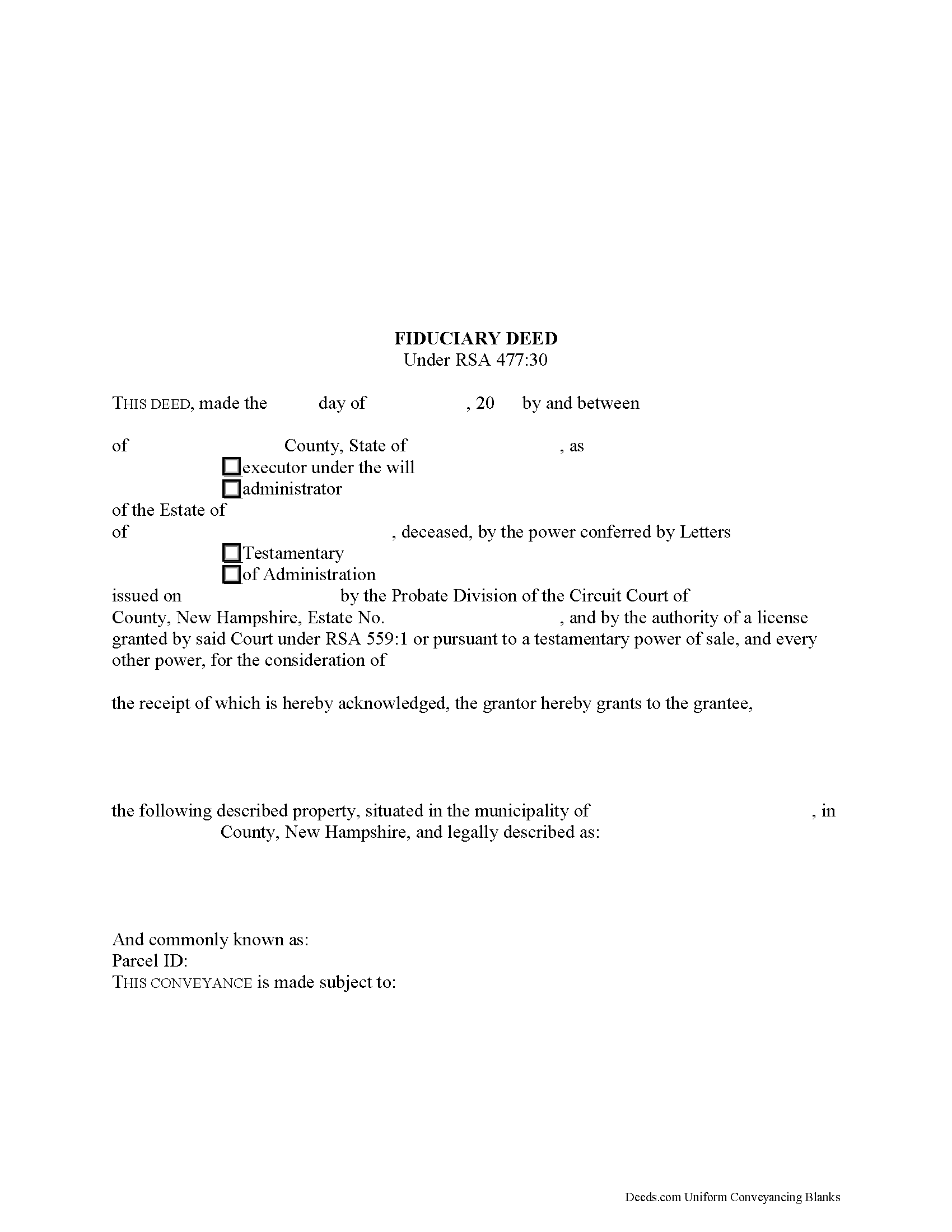
The fiduciary deed is a statutory form under RSA 477:30. In the context of estate administration, a fiduciary is either an executor of a will or a court-selected administrator appointed when the decedent dies without a will or an executor cannot serve.
Execute a fiduciary deed to convey realty from an estate to a purchaser following a sale of real estate. The executing fiduciary must have a license to sell real property granted by the court, or granted a power of sale by the decedent's will.
Alternately, use a fiduciary deed to distribute property to a person entitled by will or by law to receive it from the decedent's estate, pursuant to a decree for distribution by the court.
Fiduciary deeds convey realty in fee simple to their named grantee with the following covenants: that the grantor was duly authorized to make the sale of the premises; that the grantor has complied with statutory requirements of sale; and that the grantor will warrant and defend the title against the lawful claims of persons by, from, or under him or her in his or her representative capacity.
The deed identifies the capacity of the grantor (in this case, either executor or administrator) and names the decedent and probate information. The deed also recites any consideration given for the transfer, and contains a legal description of the subject property. The document must meet all requirements for form and content of documents affecting title to real property in the State of New Hampshire. The acting fiduciary must sign the deed in the presence of a notary public before recording in the registry of deeds in the county wherein the property is located.
Consult an attorney licensed in the State of New Hampshire with questions regarding probate procedures in the state.
(New Hampshire FD Package includes form, guidelines, and completed example)
Important: County-Specific Forms
Our fiduciary deed forms are specifically formatted for each of the 10 counties in New Hampshire.
After selecting your county, you'll receive forms that meet all local recording requirements, ensuring your documents will be accepted without delays or rejection fees.