New Mexico Affidavit of Facts as to Death
County Specific Legal Forms Validated as recently as September 21, 2026 by our Forms Development Team
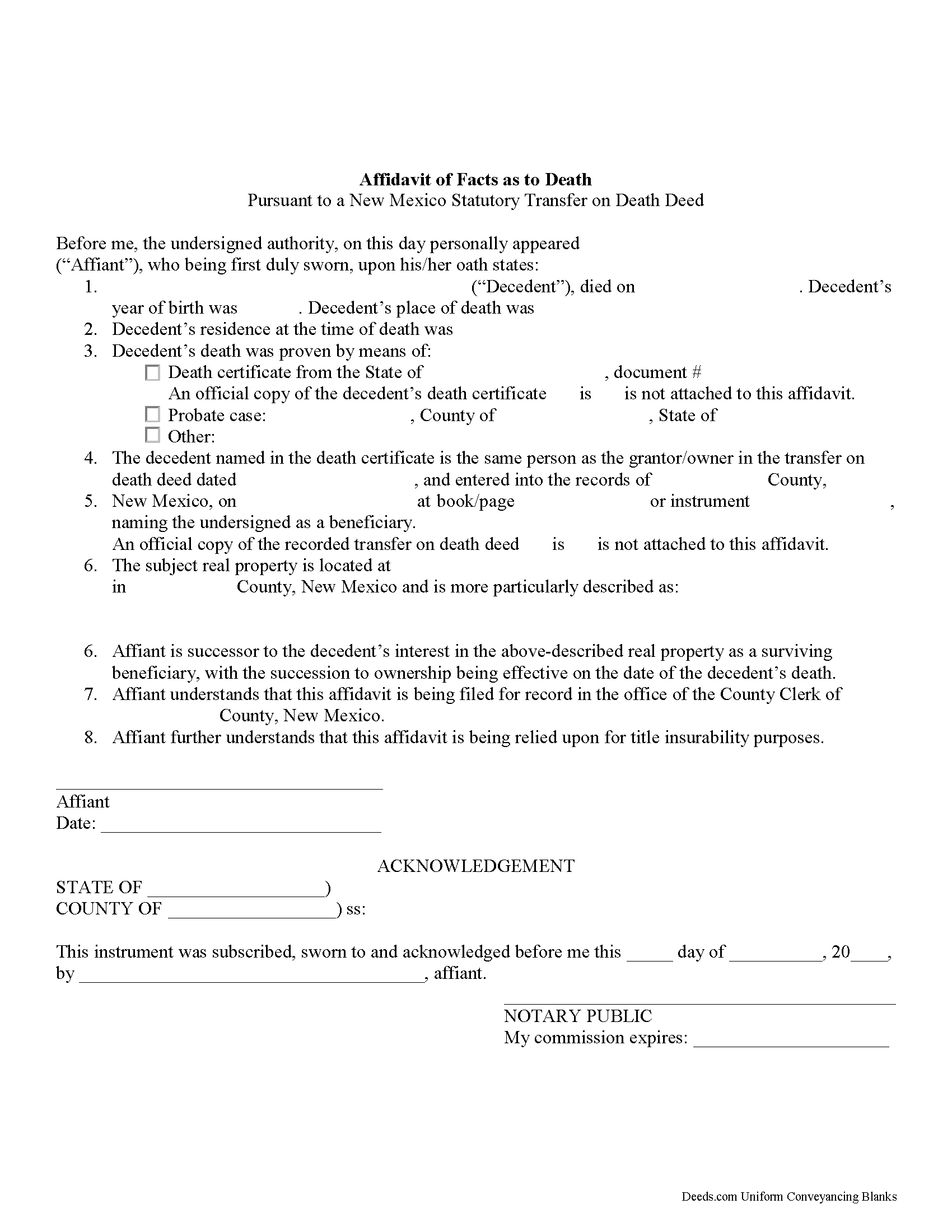
About the New Mexico Affidavit of Facts as to Death
How to Use This Form
- Select your county from the list
- Download the county-specific form
- Fill in the required information
- Have the document notarized if required
- Record with your county recorder's office
What Others Like You Are Saying
"SIMPLE, THAT IS GOOD"
"Absolutely great. The staff is responsive and knowledgeable. The online interface is excellent. The …"
"I was fine. But I don't like surveys."
"Very user friendly. Glad I found your site."
"Very fast and professionally handled."
4.8/5 from 4,819 reviews. Read all
Completing the Transfer under a New Mexico Transfer on Death Deed
In January 2014, New Mexico updated its statutes relating to transfer on death deeds (TODD). This new information is codified at Sections 45-6-401 through 45-6-417 NMSA 1978.
The law for transferors is specific about executing and revoking TODDs, but offers almost no guidance to beneficiaries who wish to accept the real estate after the owner's death. Technically, the transferor's death triggers a change in ownership to the beneficiary, but how does that happen?
One way to formalize the title transfer is to file an <b>affidavit of facts as to death</b>. This document usually contains details about the recorded transfer on death deed as well as identification of the subject property. By submitting the affidavit to the recording office for the county where the land is situated, the beneficiary has protected his/her interest in the real estate and maintained a clear chain of title.
In addition to the affidavit itself, the beneficiary might submit an official copy of both the deceased transferor's death certificate and the recorded transfer on death deed, naming the beneficiary as the intended recipient of the interest in real property. Not all New Mexico counties require these documents; some refuse to accept death certificates for recording at all, citing privacy concerns.
Overall, even though the transfer of title rights to the beneficiary happens as a function of law, it makes sense to formalize it by recording an affidavit of facts as to death. Before submitting the affidavit for entry in the public record, check with the local recording office to verify the correct supporting documentation.
Remember that each circumstance is unique, so contact an attorney with specific questions or for complex situations.
(New Mexico Affidavit Package includes form, guidelines, and completed example)
Important: County-Specific Forms
Our affidavit of facts as to death forms are specifically formatted for each of the 33 counties in New Mexico.
After selecting your county, you'll receive forms that meet all local recording requirements, ensuring your documents will be accepted without delays or rejection fees.