Ohio Termination of Easement
County Specific Legal Forms Validated as recently as October 28, 2026 by our Forms Development Team
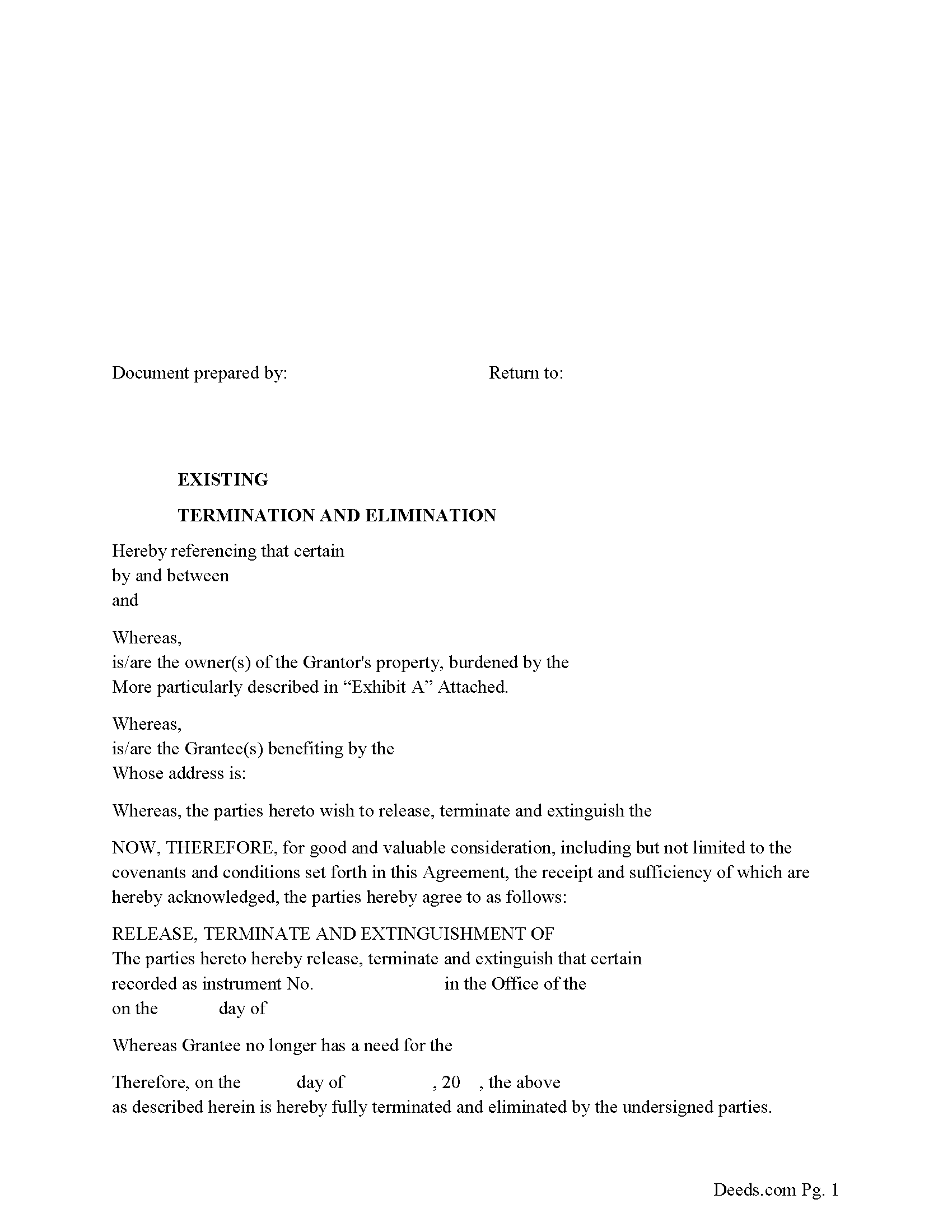
About the Ohio Termination of Easement
How to Use This Form
- Select your county from the list
- Download the county-specific form
- Fill in the required information
- Have the document notarized if required
- Record with your county recorder's office
What Others Like You Are Saying
"It turned out that I was able to search for what I needed on the local county website, which is what…"
"Easy Process! Realy recommend them for E-Recording!"
"Thank you for your excellent service"
"You're a creditable company that performs well and provides what I requested."
"The entire process was simple and easy, from purchasing, downloading and saving the documents."
4.8/5 from 4,837 reviews. Read all
An Ohio easement with no stated end date does not simply expire. The Supreme Court of Ohio put the rule plainly in Garlick v. Pittsburgh and Western Railroad Co., 67 Ohio St. 223 (1902): where the grant contains no limit as to time, the easement is perpetual unless terminated by release or abandonment. Abandonment has to be proved; a release is written, signed, and recorded. This Ohio Termination of Easement form prepares that release: the holder of a recorded easement releases, terminates, and extinguishes it in favor of the owner of the land it burdens.
Perpetual until released
Ohio has no statute that prescribes a form of easement release, so the instrument is built from the rules that reach every written transfer of an interest in land. The Statute of Frauds, Revised Code Section 1335.04, requires an interest in land to be granted or assigned by a deed or note in writing signed by the party granting it, and Section 5301.01 supplies the execution pattern: the signer acknowledges the instrument before a notary public or another officer the section names. In Hills and Hollers v. Ohio Gathering Co., 2018-Ohio-2814, a pipeline right-of-way holder ended its easement exactly this way, by recording a release to the current owner of the burdened land, and the court quoted Garlick for the rule.
What the release identifies
This form identifies the easement by the document that created it, its date, its original grantor and grantee, its recording reference, the county of recording, and its purpose. It then describes the burdened land as the easement instrument or the current deed describes it, with the permanent parcel number and the municipal corporation or township; Section 5301.46 asks a release made by separate instrument, in a county that keeps sectional indexes, to carry those items so the recorder can index it. A further section records the land the easement benefited, or states that the easement was in gross.
The termination is stated in full: the easement holder releases, terminates, and extinguishes the easement in its entirety, and remises, releases, and forever quitclaims to the servient owner all right, title, and interest in the easement and in the burdened land under it. The same paragraph says what the instrument does not do: it terminates only the identified easement, conveys no land, and touches no other easement, restriction, lien, or interest of record.
One or two easement holders, and no signature from the servient owner
The form recites one or two natural persons who hold the easement in their own names. The easement holder block and the servient owner block are open text with no preprinted status, ownership, or capacity language, so the entries carry the names and status recitals as the record shows them. Two signature blocks and two acknowledgment certificates let two holders acknowledge on different dates or before different officers, and the second block simply stays blank when one holder signs. The servient owner receives the release and has no signature line, because the writing Section 1335.04 describes is signed by the party granting the interest. Two siblings releasing a driveway easement across the neighbor's land, and a single owner releasing an easement in gross, present the pattern this form recites. An easement held by a company, a utility, a trust, or a public body, a holder signing through a power of attorney or as a fiduciary, three or more holders, and a partial release or relocation are not configurations this form is set up as.
Recording it where the burden lives
The instrument is recorded with the county recorder where the burdened land is situated. Section 5301.25 makes recording the notice mechanism: an unrecorded instrument is fraudulent as to a later bona fide purchaser without knowledge of it. The form is drawn to Section 317.114, with a three-inch blank top margin on the first page for the recorder's indorsement, and carries the preparer's name Section 317.111 requires. Whether a county auditor stamps a release of easement before the recorder takes it is a county question, and the guide walks through the practice the largest recorders publish.
The package includes the fillable Ohio Termination of Easement form, a completed example filled in for a Franklin County fact pattern, and the guide that walks through every section, the signing and notarization rules, and recording. The form, the example, and the guide describe the instrument and the governing Ohio law in general terms; they are not legal advice.
Important: County-Specific Forms
Our termination of easement forms are specifically formatted for each of the 88 counties in Ohio.
After selecting your county, you'll receive forms that meet all local recording requirements, ensuring your documents will be accepted without delays or rejection fees.