Utah Complaint for Amount Owed
County Specific Legal Forms Validated as recently as September 9, 2026 by our Forms Development Team
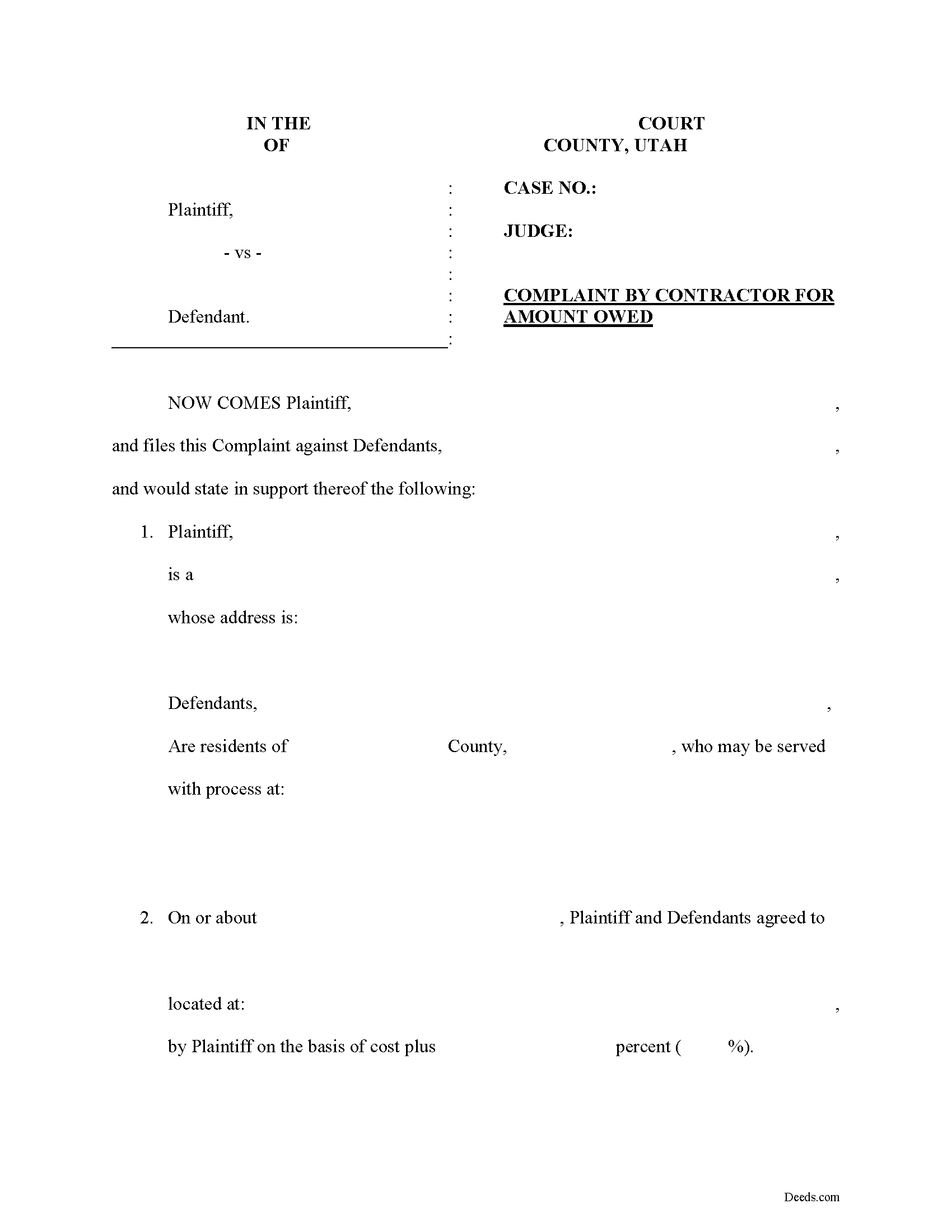
About the Utah Complaint for Amount Owed
How to Use This Form
- Select your county from the list
- Download the county-specific form
- Fill in the required information
- Have the document notarized if required
- Record with your county recorder's office
What Others Like You Are Saying
"This is the best service. It has made my life so easy when I have to record things with the county! …"
"Fabulous service team. VERY responsive with any issue I encountered. Preparing forms out of state to…"
"Pretty good stuff, not exactly clear on the deed transfer costs and all"
"The site was easy to use and find what I needed. The purchase and download were very easy."
"Experience was very positive. It's very easy to use and I like the chat/feedback feature. It almost …"
4.8/5 from 4,829 reviews. Read all
Suing to Enforce a Utah Construction Lien
In Utah, mechanic's liens are governed under Title 38, Chapter 1A of the Utah Code.
Once a construction lien is in place, lien claimants must sue to foreclose on the lien in order liquidate any assets (turn them into cash). The lawsuit is a last resort, used after the claimant has exhausted all other options to induce payment or action on the contract.
Lawsuits are started by filing a complaint. A complaint sets forth the cause of action and specific allegations by way of a short and plain statement outlining the facts that make up the claim (such as a breach of contract, use of services without payment, etc.). It identifies the parties; the location and nature of the work or improvement; relevant dates, fees, and payments; and any other information necessary for the specific case. The complaint also asks the court for the type of relief (usually money but other grounds such as cancelling a contract because the other party failed to live up to their part are acceptable remedies).
Contact an attorney before filing a complaint. View this as money well spent, because lawsuits involve multiple steps, and mistakes could be fatal to the case and reduce any potential recovery.
File the complaint in the court of the county where the property is located (and where the lien was originally filed). Ensure all applicable costs are paid and any other forms such as a summons are properly completed as well.
This article is provided for informational purposes only and should not be relied upon as a substitute for advice from an attorney. Please contact a Utah attorney with any questions regarding construction liens or suing to enforce a lien.
Important: County-Specific Forms
Our complaint for amount owed forms are specifically formatted for each of the 29 counties in Utah.
After selecting your county, you'll receive forms that meet all local recording requirements, ensuring your documents will be accepted without delays or rejection fees.