Colorado Mineral Deed with Quitclaim Covenants
County Specific Legal Forms Validated as recently as September 18, 2026 by our Forms Development Team
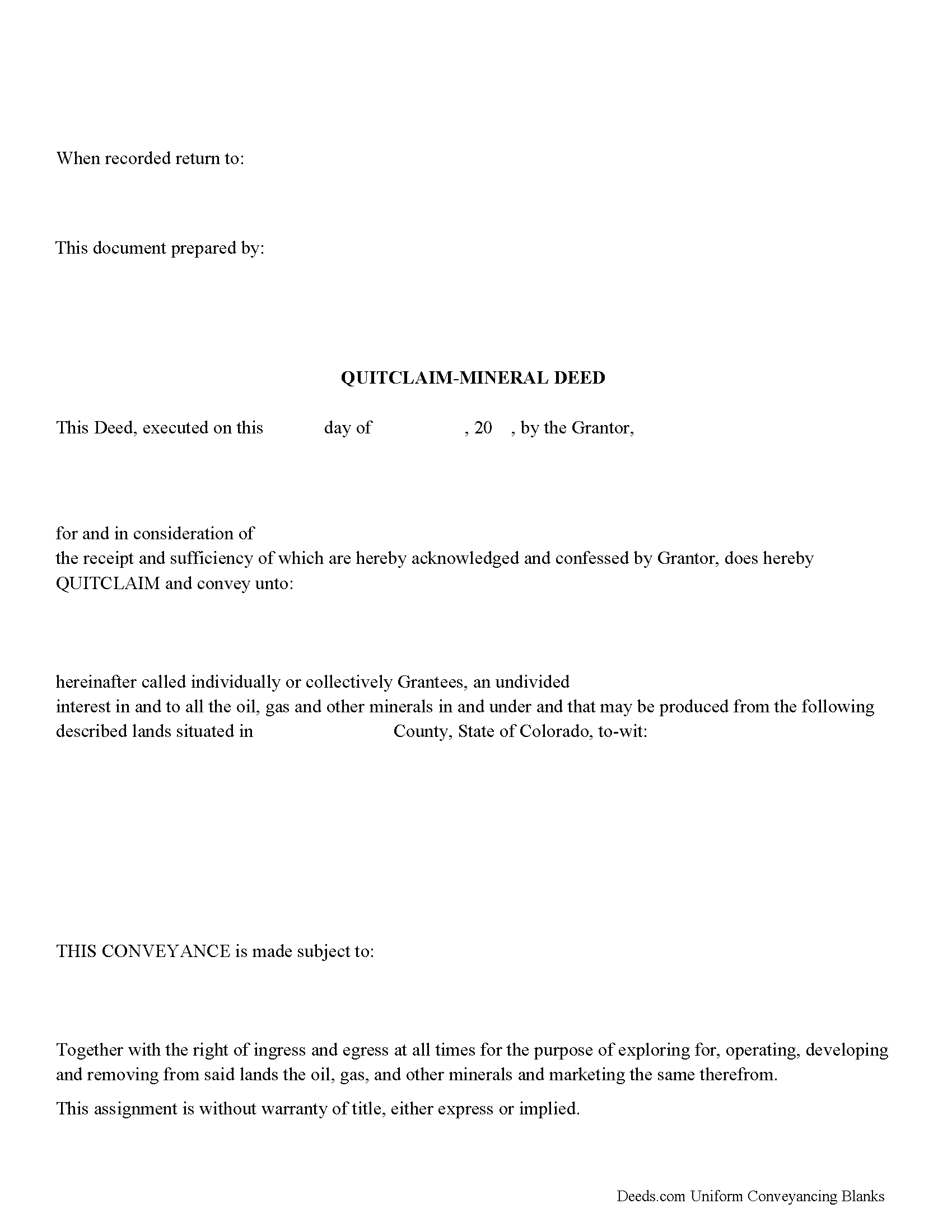
About the Colorado Mineral Deed with Quitclaim Covenants
How to Use This Form
- Select your county from the list
- Download the county-specific form
- Fill in the required information
- Have the document notarized if required
- Record with your county recorder's office
What Others Like You Are Saying
"It was easy, affordable and I appreciate this service."
"Excellent, easy to use. Technically accurate in all information offered."
"It just a little disconcerting that I was not able to preview any of the forms prior to purchasing t…"
"I was able to get all the Forms I required and it was straight forward and easy. Thank you , Walt R."
"Easy to download, form very user friendly, and its customized to our county. Very much worth the mon…"
4.8/5 from 4,828 reviews. Read all
In Colorado, a Mineral Quitclaim Deed is used to transfer oil, gas, and mineral rights from the grantor to the grantee. It is a form of property transfer, not a lease agreement (CO Rev Stat § 38-30-113).
Transfer Details: The deed includes the transfer of a variety of mineral rights, such as oil, gas, and other minerals, without exceptions or reservations. The grantor specifies the percentage of mineral rights the grantee receives.
Rights and Access: The grantee is granted rights to access the land for activities like mining, drilling, exploration, operation, and development of these minerals, including their storage, handling, transportation, and marketing.
No Title Warranty: The grantor quitclaims the mineral rights without any warranty of title, either express or implied, meaning the grantee accepts the title as it is, including any discrepancies (§ 38-30-116).
Uses: Mineral deeds with quitclaim are often used in situations where the grantor wants to quickly release any interest they might have in mineral rights, such as in settling estates, resolving disputes, clearing up uncertainties about ownership in a title's history or when mineral rights have previously been severed or fragmented from surface rights and cloud a title, making it difficult to transfer property. Resolution often involves the holder(s) of the mineral rights, quit-claiming any rights he/she/they have or might have in the subject property.
Legal Requirements and Recording: The deed must include the name, address, and county of both the grantor and grantee, consideration paid, a formal legal description of the property, the assessor's ID number (if available), and an acknowledged signature of the grantor (C.R.S. 38-30-113, 114, 116; C.R.S. 38-35-122).
Recording Process: According to C.R.S. 38-35-109, after execution, the quitclaim deed must be recorded in the office of the county clerk where the land is situated. Colorado follows a "race-notice" recording statute, meaning the first bona fide grantee to record the deed generally retains the rights to the property.
Permanent Impact and Legal Advice: The use of a quitclaim deed can have lasting implications on property rights. It is advisable for individuals to seek legal counsel to fully understand the document's implications before executing it.
(Colorado Mineral Deed with Quitclaim Package includes form, guidelines, and completed example)
Important: County-Specific Forms
Our mineral deed with quitclaim covenants forms are specifically formatted for each of the 64 counties in Colorado.
After selecting your county, you'll receive forms that meet all local recording requirements, ensuring your documents will be accepted without delays or rejection fees.