Colorado Beneficiary Deed Revocation
County Specific Legal Forms Validated as recently as October 9, 2026 by our Forms Development Team
About the Colorado Beneficiary Deed Revocation
How to Use This Form
- Select your county from the list
- Download the county-specific form
- Fill in the required information
- Have the document notarized if required
- Record with your county recorder's office
What Others Like You Are Saying
"Couldn't be happier, great documents, easy to understand and complete."
"So far it's been good & informative. I have not chosen forms for download but I like the site. T…"
"Just as advertised."
"Very satisfied with the PDF documents that I purchased. Will be able to transfer property without hi…"
"Very responsive. I was notified very quickly if the deed I was looking for was available."
4.8/5 from 4,828 reviews. Read all
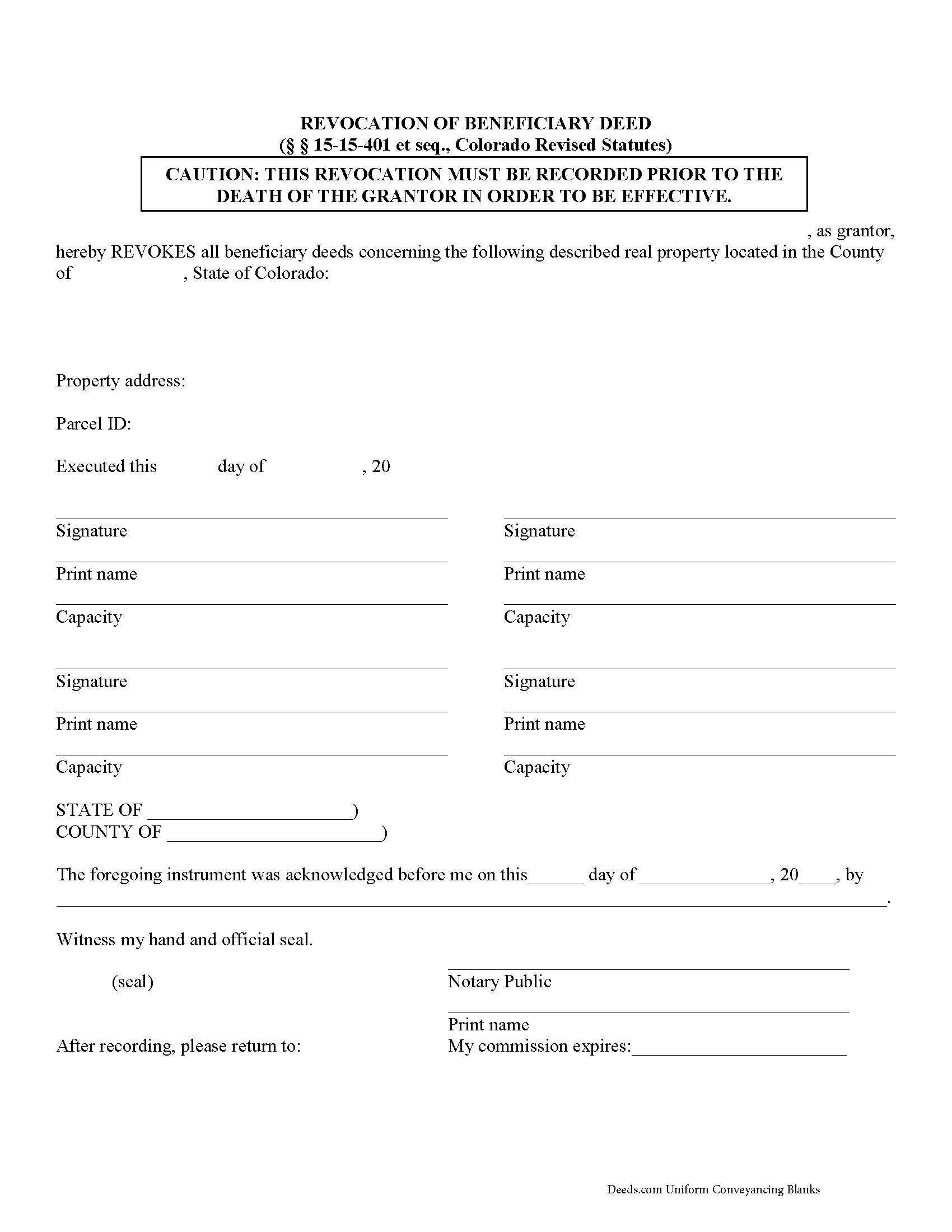
Colorado's beneficiary deeds are governed by C.R.S. 15-15-401 et seq. Revocations are specifically discussed in 15-15-405, which also defines the requirements for a basic form.
Revocability is one of the many useful features of a Colorado beneficiary deed. There are two primary ways for a land owner to revoke a recorded beneficiary designation: executing and recording a revocation, or executing and recording a new beneficiary deed that changes the original designation or distribution (15-15-405(1), (2)).
Neither a modification nor a revocation requires notifying beneficiaries because they only have a potential future interest in the property; nothing is promised or owed to them until the grantor's death. Note, however, that Colorado beneficiary deeds may NOT be revoked or changed by any provisions of the owner's will (15-15-405(4)).
Valid revocations identify the grantor, the property, make reference to the recorded beneficiary deed, and include any other information necessary for the specific situation. The form must also meet state and local standards for recorded documents.
A revocation, when correctly completed and filed for record with the appropriate local agency (generally the recorder or register of deeds for the county where the real estate is located), cancels all prior beneficiary deeds.
IMPORTANT: Any modifications or cancellations to a previously recorded beneficiary deed must be submitted for filing while the grantor is alive. Any changes attempted after the grantor's death are void.
Contact an attorney with questions about revoking beneficiary deeds, or for any other issues related to real property or estate planning in Colorado.
(Colorado Beneficiary Deed Revocation Package includes form, guidelines, and completed example)
Important: County-Specific Forms
Our beneficiary deed revocation forms are specifically formatted for each of the 64 counties in Colorado.
After selecting your county, you'll receive forms that meet all local recording requirements, ensuring your documents will be accepted without delays or rejection fees.