Nebraska Grant Deed
County Specific Legal Forms Validated as recently as October 12, 2026 by our Forms Development Team
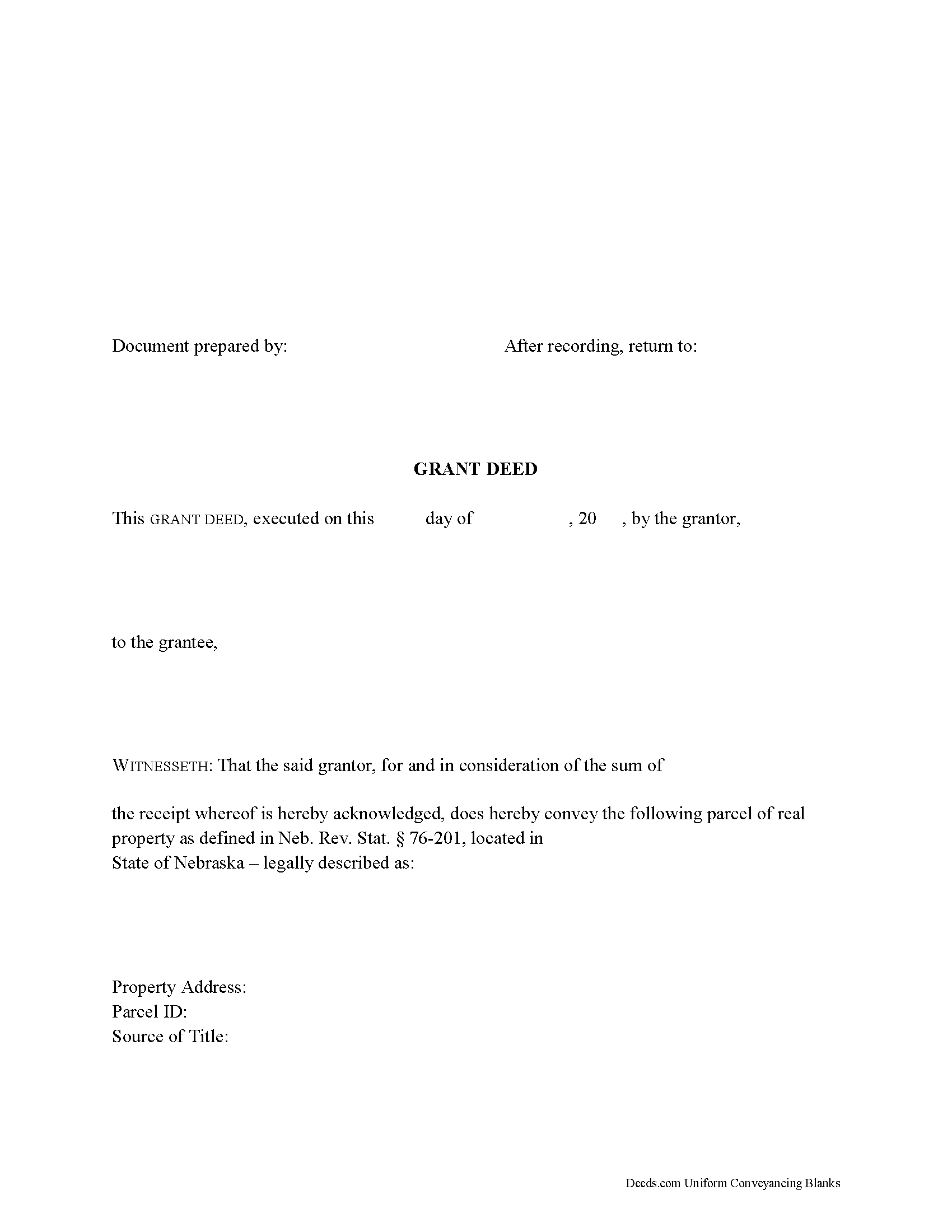
About the Nebraska Grant Deed
How to Use This Form
- Select your county from the list
- Download the county-specific form
- Fill in the required information
- Have the document notarized if required
- Record with your county recorder's office
What Others Like You Are Saying
"Easy to navigate through. Documents were in orderly fashion. Highly recommend. Step by step instruct…"
"First time using this service and was totally happy with the results. Very user friendly and easy si…"
"So happy to have found this site. It’s just what I was looking for."
"Forms are as advertised and easy to access."
"I recieved my document in a reasonable amount of time. I thought being a member i would be able to l…"
4.8/5 from 4,825 reviews. Read all
Real property can be transferred from one party to another by executing a grant deed. Nebraska's statutory grant deed includes a covenant that the grantor has good title to the estate in quantity and quality which he purports to convey (Neb. Rev. Stat. 76-206).
A lawful grant deed includes the grantor's full name, mailing address, and marital status, and the grantee's full name, mailing address, marital status, and vesting. Vesting describes how the grantee holds title to the property. Generally, real property is owned in either sole ownership or in co-ownership.
For Nebraska residential property, the primary methods for holding title are tenancy in common and joint tenancy. A grant of ownership of real estate to two or more persons is presumed to create a tenancy in common, unless a joint tenancy is expressly stated (Neb. Rev. Stat. 76-118).
As with any conveyance of realty, a grant deed requires a complete legal description of the parcel. Recite the prior deed reference to maintain a clear chain of title, detail any restrictions associated with the property, and indicate whether the property is a homestead. The deed must meet all state and local standards of form and content for recorded documents.
Sign the deed in the presence of a notary public or other authorized official. Note that if the owner is married, both spouses must sign the form to release any potential marital rights to the land. For a valid transfer, file the deed at the recording office in the county where the property is located. Contact the same office to confirm accepted forms of payment.
All transfers of real property are subject to a documentary stamp tax. The tax is due at the time of recording. If the transfer is exempt under Neb. Rev. Stat. 76-902, note the reason on the face of the deed and fill out a certificate of exemption.
This article is provided for informational purposes only and is not a substitute for legal advice. Contact an attorney with questions about grant deeds, or for any other issues related to transfers of real property in Nebraska.
(Nebraska Grant Deed Package includes form, guidelines, and completed example)
Important: County-Specific Forms
Our grant deed forms are specifically formatted for each of the 93 counties in Nebraska.
After selecting your county, you'll receive forms that meet all local recording requirements, ensuring your documents will be accepted without delays or rejection fees.