New Mexico Quitclaim Deed (Corrective)
County Specific Legal Forms Validated as recently as October 8, 2026 by our Forms Development Team
About the New Mexico Quitclaim Deed (Corrective)
How to Use This Form
- Select your county from the list
- Download the county-specific form
- Fill in the required information
- Have the document notarized if required
- Record with your county recorder's office
What Others Like You Are Saying
"Thank you for an easy to use system. I was able to find all the information I needed."
"I could not be happier with the service afforded by Deeds.com. After having been directed to two oth…"
"Ordering and directions were easy. The only thing missing in the instructions was how to record by m…"
"So very easy to fill out, very satisfied."
"Was sort of complicated for this phone illiterate 70 year old 😂. Asked my daughter for help. She bre…"
4.8/5 from 4,832 reviews. Read all
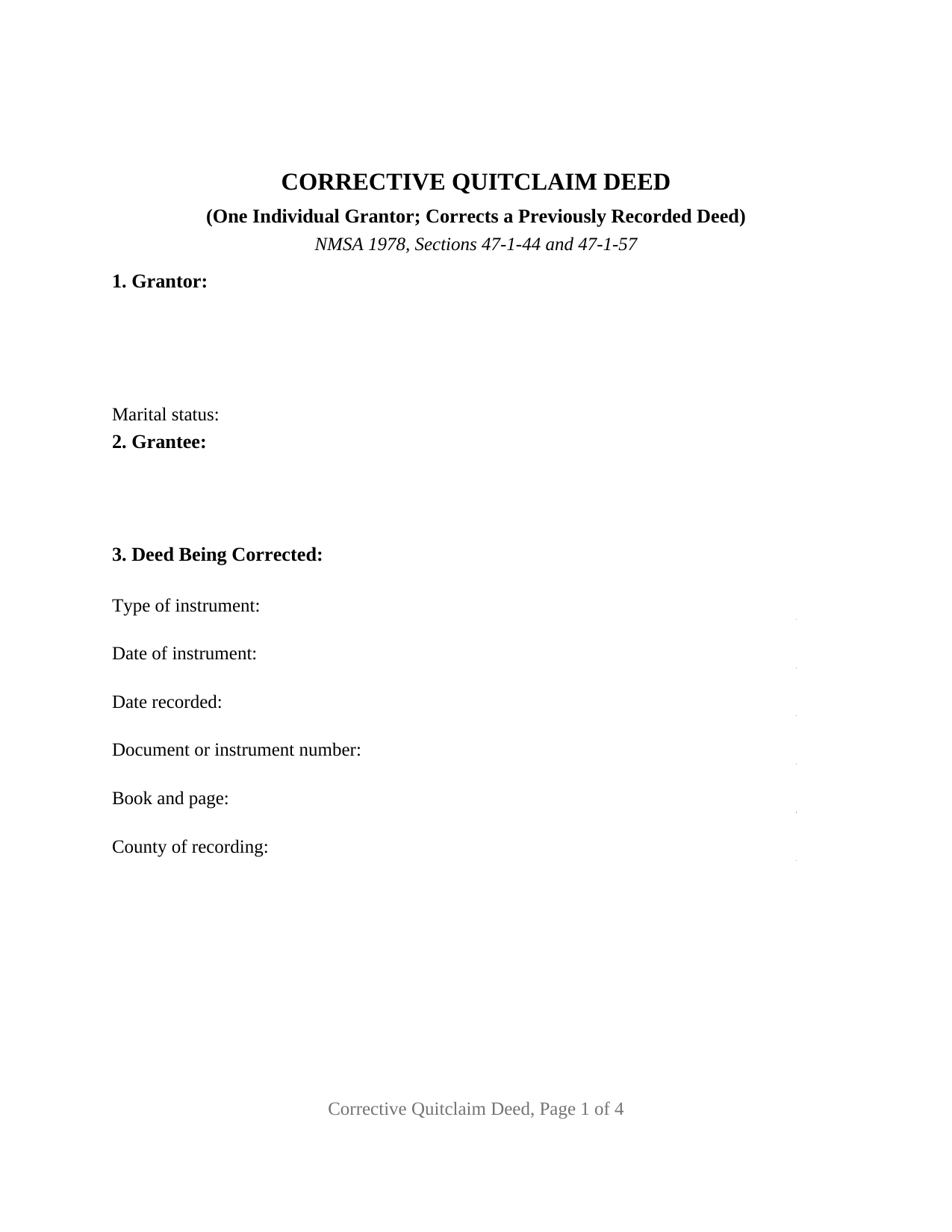
New Mexico wrote its deed correction rules into a statute that names who may use them, and the parties to the deed are not on the list. NMSA 1978, Section 47-1-57 hands the scrivener's-error affidavit to the attorney who drafted the instrument, the title agency employee who filled in the form, and the certified land professional who supplied the description. Subsection E(1) then leaves a second door open by name: corrective deeds. This New Mexico corrective quitclaim deed is that door, arranged for one individual grantor who signs again to put a correction of record.
Two correction routes, and the statute that sorts them
Section 47-1-57 reaches a minor drafting or clerical error or omission in a recorded instrument, and the 2023 amendment, effective June 16, 2023, made a complying affidavit effective as of the date of the instrument being corrected. Subsection B then names who may swear one out, and it names professionals only. A grantor whose deed was drawn at the kitchen table, or whose preparer is long gone, reaches the route the legislature preserved: any other lawful means, such as a corrective deed. The affidavit is its own sworn instrument, recorded separately, and sits outside this package.
A second instrument, not an edit of the first
Nothing is struck from the county records. The flawed deed stays exactly as filed, the correction is recorded beside it, and the index carries both. Three of this form's ten numbered sections belong to the correction: one identifies the earlier deed by type, date, recording data, and county; one states the error as that deed reads; one states the fix. Section 14-9-2 gives a recorded instrument constructive notice from the time of recording, and Section 14-9-3 marks the outer edge of that effect, protecting a good faith purchaser, mortgagee, or judgment lien creditor without knowledge.
One grantor, one signature, one certificate
One individual grantor, the person who signed the deed being corrected, with a marital status entry; one grantee; a single signature line; a single certificate in New Mexico's statutory short form wording. The defects it answers are those a grantor can fix by signing again: a block designation dropped from a legal description, a name spelled two ways, a wrong recording reference. An owner who found a description short a block number, and a party whose preparer cannot be reached, present the single-grantor correction pattern this deed recites. Two grantors on one instrument, a company or trustee as grantor, and an agent signing under a power of attorney present configurations it does not recite. A change that moves a boundary, adds land, or substitutes a grantee is a fresh conveyance, whatever the instrument is titled.
No covenants, and the description that carries the fix
Warranty in New Mexico is assembled from two defined phrases: Section 47-1-37 attaches the full implied title package to warranty covenants, Section 47-1-38 a narrower one to special warranty covenants. This instrument uses neither and says as much in capital letters. Section 47-1-30 is captioned quitclaim deed effective in fee simple without warranty; the granting sentence follows Section 47-1-44(3) and takes the corrected legal description as the description conveyed. Where the right description already sits on a recorded plat, Section 47-1-46 lets the deed reach that plat by reference.
At the clerk's counter, and at the assessor's
Recording runs to the county clerk where the land lies, at one statewide fee: twenty five dollars a document while index entries stay at ten or fewer. New Mexico imposes no transfer tax. A residential parcel brings one companion filing: Section 7-38-12.1 sends a confidential statement of the transfer terms to the assessor inside thirty days, and its exemption list names no corrective instrument, so a correction answers to the listed categories on its own facts. Section 7-36-21.2 speaks to corrections outright, defining change of ownership for the residential valuation cap so as to leave out a transfer that confirms or corrects a previous recorded transfer.
What the download prepares
Three files arrive: the fillable correction form, a completed example filled in for an Eddy County lot whose recorded deed dropped a block number, and a plain-language guide walking the numbered sections, both routes of Section 47-1-57, and the recording steps. Buyers search it as a correction deed, a corrective quit claim deed, or a quick claim deed to fix a mistake; the statutes spell it quitclaim. None of it is legal advice, and a New Mexico attorney can weigh a flawed deed against the chain of title.
Important: County-Specific Forms
Our quitclaim deed (corrective) forms are specifically formatted for each of the 33 counties in New Mexico.
After selecting your county, you'll receive forms that meet all local recording requirements, ensuring your documents will be accepted without delays or rejection fees.