New Mexico Quitclaim Deed (Two Grantors)
County Specific Legal Forms Validated as recently as October 12, 2026 by our Forms Development Team
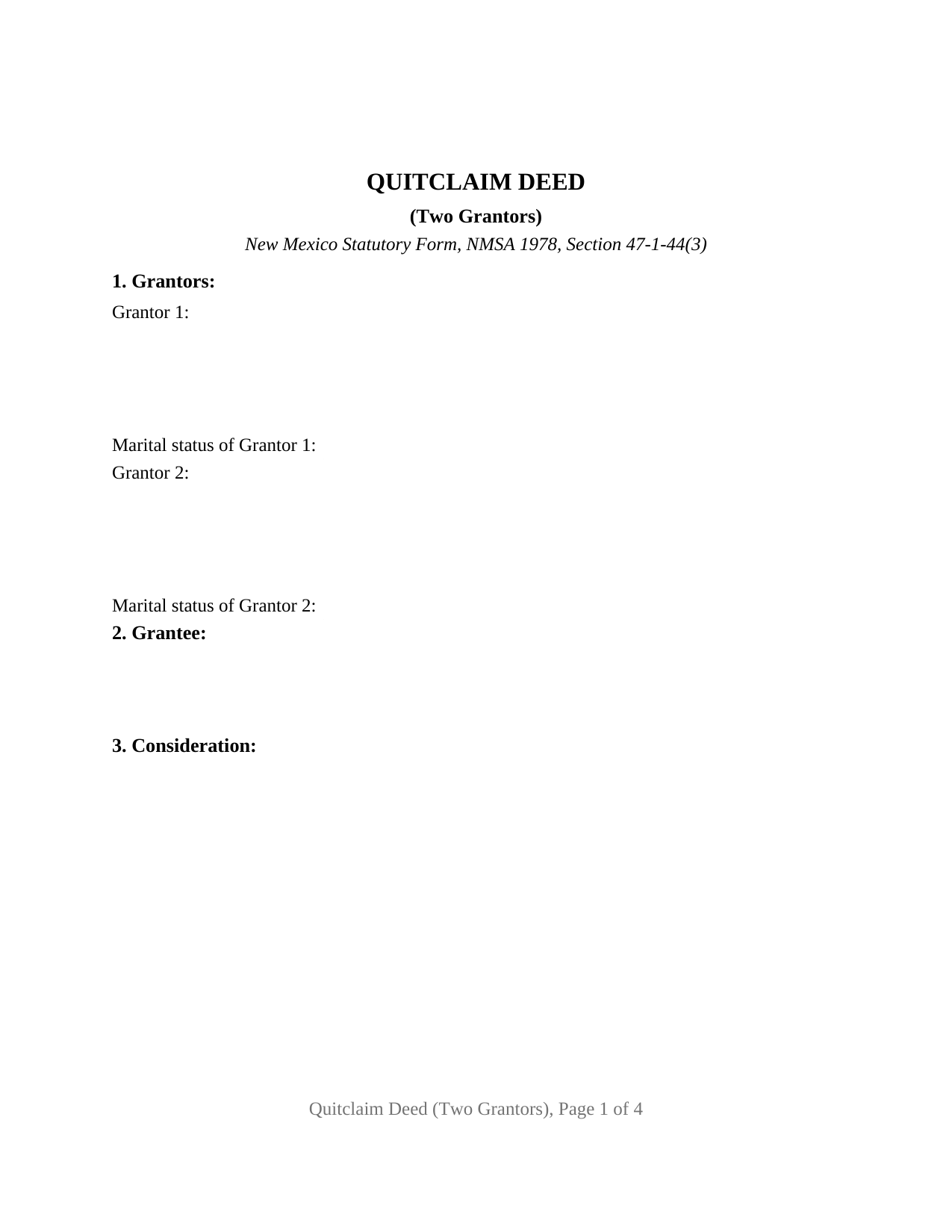
About the New Mexico Quitclaim Deed (Two Grantors)
How to Use This Form
- Select your county from the list
- Download the county-specific form
- Fill in the required information
- Have the document notarized if required
- Record with your county recorder's office
What Others Like You Are Saying
"Thank you, for help."
"Very nice!"
"The cost was well worth it. It was very easy to download, fill in the necessary information and then…"
"you are awesome never had such a great expriance will be back with other transfers you the best"
"worked great!!!"
4.8/5 from 4,829 reviews. Read all
Two record owners, one recorded instrument. This New Mexico quitclaim deed is built for exactly two grantors who together convey whatever right, title, and interest each of them holds in New Mexico real property to the grantee named in the deed. Both grantors sign the same NMSA 1978, Section 47-1-44 statutory form, and the deed carries a notary certificate for each of them.
One deed carrying two grantors
The grantor section recites two individuals, each with a name and mailing address block and a marital status line. Both sign, and the form closes with two acknowledgment certificates worded to the statutory short form of Section 14-14A-15, one per grantor, so the acknowledgments may happen on different days, in different counties, or in different states; in the completed example, the two grantors acknowledge four days apart. Several ownership patterns present this two-grantor architecture in the record: two siblings who inherited undivided halves of a family property and pass both halves to one relative in a single instrument; spouses who both join in conveying community real estate; and two co-owners who release their entire interest to a buyer taking title as it stands. The form recites exactly two grantors and one grantee entry; a release by a sole owner, or a conveyance that involves three or more grantors, follows a different party architecture than this deed recites.
Two signatures and the community property rule
The two-signature layout lines up with the strictest rule in New Mexico conveyancing. Under Section 40-3-13(A), a transfer, conveyance, mortgage, or lease of community real property takes the joinder of both spouses, and an attempt by one spouse alone is void and of no effect; New Mexico courts let anyone invoke that voidness, not just the spouse who never signed. The joinder rule even reaches separate real property that spouses hold together as joint tenants or as tenants in common, an extension most community property states never made. A married couple conveying their community home or land therefore presents exactly the configuration this form carries: both spouses as grantors, both signatures, and a marital status entry for each. The accompanying guide walks through the joinder statute, the presumptions that make property acquired during marriage community property, and the recorded-instrument paths New Mexico recognizes when one grantor's spouse is not a party to the deed.
What the deed conveys, and how it records
As a quitclaim deed, the instrument passes each grantor's present interest without warranty covenants and without special warranty covenants, the two defined phrases that generate title covenants under Sections 47-1-37 and 47-1-38 when a New Mexico deed uses them. The deed states its covenant posture on its face and conveys the interests the grantors hold at delivery, nothing more. Recording goes through the county clerk where the property sits: a single flat fee of twenty-five dollars covers a document carrying up to ten index entries, no transfer tax or documentary stamp exists anywhere in New Mexico, and the one statutory gate is acknowledgment, since an unacknowledged instrument cannot be placed of record. Where the property is classified residential, New Mexico routes the sale terms to the county assessor on a confidential transfer declaration affidavit filed within thirty days of recording, with exemptions covering gifts, title-clearing transfers, and other patterns common to quitclaim conveyances; the guide describes the affidavit and each exemption.
What arrives with the download
The download prepares this two-grantor conveyance as a fillable PDF, alongside a completed example showing the deed filled in for a Santa Fe County fact pattern, two siblings conveying an inherited house to their sister, and a plain-language guide covering every numbered section, the joinder rules, the vesting options open to the grantees, and the recording steps. The same instrument is often searched as a quit claim deed or a quick claim deed; New Mexico's statutes spell it quitclaim. These materials are informational only and are not legal advice; a New Mexico attorney can apply the statutes described here to a particular title or marriage.
Important: County-Specific Forms
Our quitclaim deed (two grantors) forms are specifically formatted for each of the 33 counties in New Mexico.
After selecting your county, you'll receive forms that meet all local recording requirements, ensuring your documents will be accepted without delays or rejection fees.