Oregon Easement Release or Termination
County Specific Legal Forms Validated as recently as October 5, 2026 by our Forms Development Team
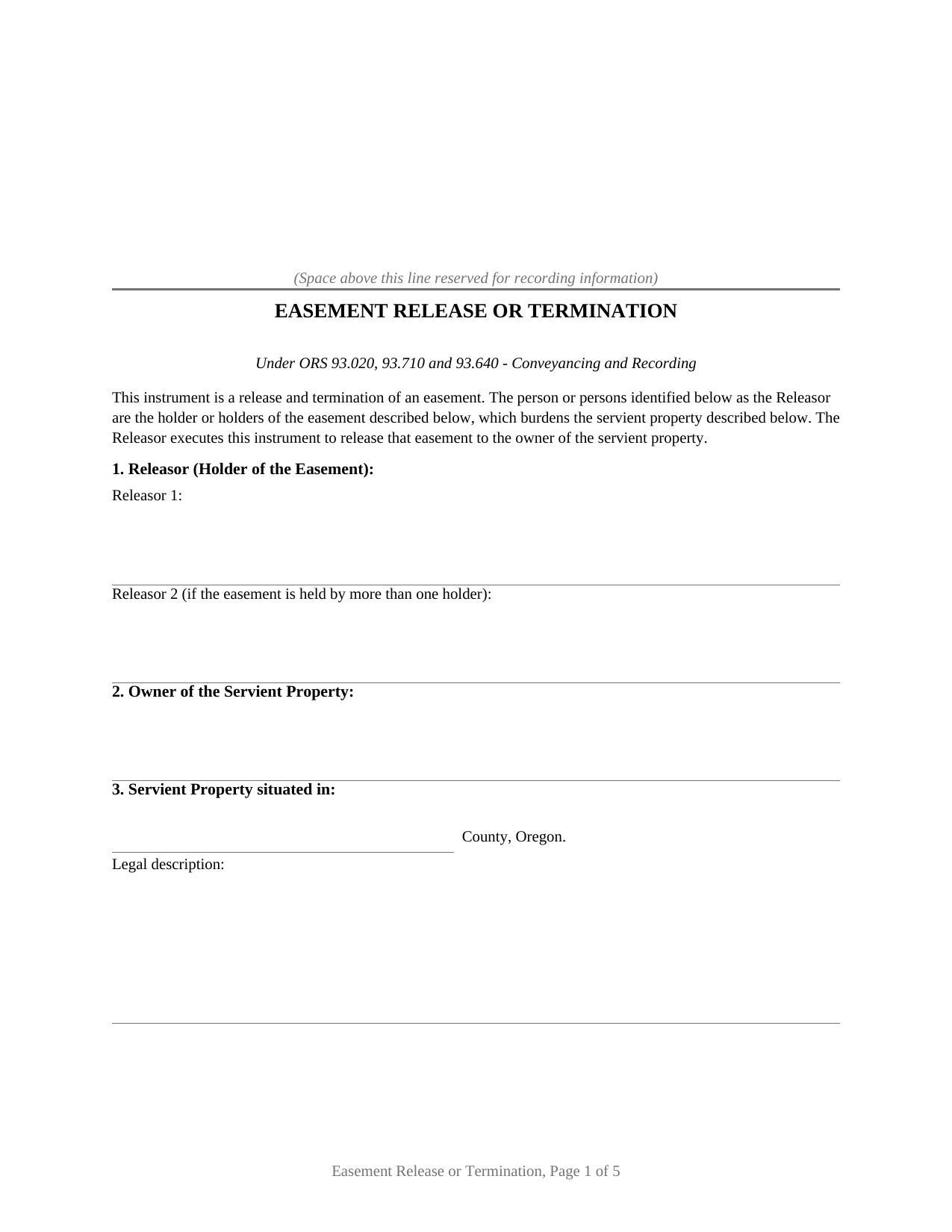
About the Oregon Easement Release or Termination
How to Use This Form
- Select your county from the list
- Download the county-specific form
- Fill in the required information
- Have the document notarized if required
- Record with your county recorder's office
What Others Like You Are Saying
"Fast, reliable, up to date service that I've used several times in the past and will continue to use…"
"Your site was very helpful."
"Exceptionally easy to use. Very user friendly. Would highly recommend."
"Quite simple and easy. Only one critique: It would be easier if the names of the PDF would reflect t…"
"It was convenient to be able to download the deed template, instructions, and a completed sample dee…"
4.8/5 from 4,823 reviews. Read all
An easement is an interest in someone else's land, and in Oregon an interest in land changes hands only through a signed writing. That single rule, set out in ORS 93.020 and echoed by the statute of frauds in ORS 41.580, is why an easement that the parties want to end is ended by a recorded release rather than by a handshake. The Oregon Easement Release or Termination is that recorded release: the holder of a previously recorded easement signs an instrument that releases, terminates, and extinguishes the easement as it burdens the servient property, and recording the instrument places the termination in the chain of title.
Release is the consensual way an easement ends
Oregon courts have mapped the ways an express easement can end. A release is the consent route: the holder of the easement, by a signed writing, gives the easement up. Other routes look different. Merger ends an easement by operation of law when the same person comes to own both the benefited and the burdened land, so there is no longer any other land to use. Abandonment and prescription turn on conduct over time and are usually proven through evidence rather than recorded on a single form. This instrument documents the consent route, where the holder agrees to release.
What the instrument identifies
A release works only if a later title searcher can match it to the easement it ends. The form identifies the holder as the Releasor, names the owner of the servient property, describes that property by its formal legal description, and pins down the recorded easement being released by its title, its dates, and its recording reference, the book and page or document number the county assigned. It carries operative language stating that the Releasor releases, terminates, and extinguishes the easement and quitclaims the Releasor's interest in it, so that on recording the easement is discharged of record. An easement held by more than one holder is fully released only when every holder joins, and the form provides a second Releasor block for that case.
Why fee-title statements are not on the form
Oregon's recording statutes attach several first-page statements, including the true and actual consideration statement of ORS 93.030, the tax statement address of ORS 93.260, and the land use statement of ORS 93.040, to instruments that convey or contract to convey fee title. An easement release discharges a nonpossessory interest and conveys no fee title, so those fee-title items are not required for it. The first-page items that do apply are the name of the transaction, the names of the parties for indexing under ORS 205.125 and ORS 205.160, and the return address under ORS 205.180. The form is built around that distinction, which keeps it from carrying statements that belong on a deed rather than on a release.
Signing and recording
The Releasor signs before a notary, since under ORS 93.410 and ORS 93.804 an instrument affecting an interest in land is entitled to recording when signed by the party from whom the interest passes and acknowledged before a qualified officer. The instrument is recorded with the county clerk of the county where the property sits, in the deed records described by ORS 93.710, where recording gives the constructive notice that the recording act in ORS 93.640 contemplates. The servient owner need not sign for the holder's release to operate, and an optional acknowledgment block records the servient owner's signature when the parties choose to have it.
The package includes the blank fillable form, a completed example filled with an Oregon fact pattern, a step-by-step guide to the statutes and the form, and product images. The materials are informational and are not legal advice.
Important: County-Specific Forms
Our easement release or termination forms are specifically formatted for each of the 36 counties in Oregon.
After selecting your county, you'll receive forms that meet all local recording requirements, ensuring your documents will be accepted without delays or rejection fees.