Oregon Utility Easement (In Gross)
County Specific Legal Forms Validated as recently as September 21, 2026 by our Forms Development Team
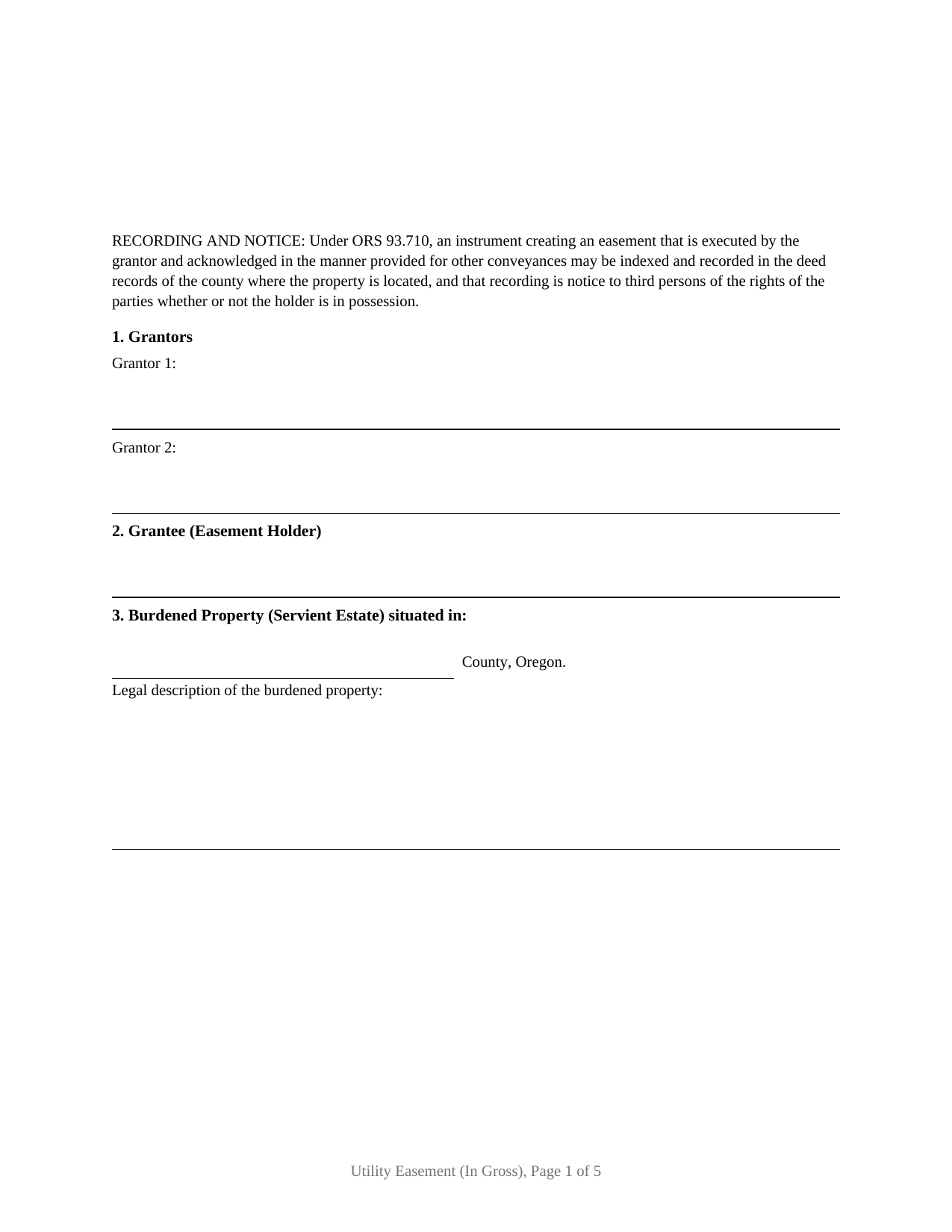
About the Oregon Utility Easement (In Gross)
How to Use This Form
- Select your county from the list
- Download the county-specific form
- Fill in the required information
- Have the document notarized if required
- Record with your county recorder's office
What Others Like You Are Saying
"I'm very impressed. We're a small nonprofit, and we usually walk our documents into our county offic…"
"The directions were clear, I typed the deed out and it was successfully recorded and mailed back to …"
"Thank You. Good Service. Questions were answered."
"A few parts are confusing'.Like sending Tax statements to WHO ?/ The rest is simple I hope.Have not …"
"I haven't used them yet. So far so good."
4.8/5 from 4,823 reviews. Read all
A utility easement in gross gives a utility a defined right to run and tend its lines across land it does not own, while the landowner keeps title to the property. This form grants that right under Oregon law, drafted for one or two owners of the burdened land and recordable under ORS 93.710.
What In Gross Means Here
Oregon sorts easements into two families by the intent the language shows. An appurtenant easement benefits a particular neighboring parcel and passes with that land. An easement in gross belongs to a holder rather than to a benefited tract, and a utility company that owns no land receiving a benefit from the easement holds its right in gross. This form states that intent plainly: it names a utility holder as grantee, describes a utility purpose, and grants the right to that holder, its successors, and assigns rather than to any dominant estate. The classification matters because Oregon does not favor reading an easement as in gross when it could fairly be read as appurtenant, so the in gross grant is spelled out rather than left to inference. The leading Oregon decision on the question is Menstell v. Johnson.
A Grant, Not a Conveyance of Title
An easement passes a right of use, not the land. The word choice in the operative section reflects that: the owner grants the easement and states that no fee title passes, so the instrument is not read as transferring the property itself. That line also keeps the form clear of the fee-title machinery in Oregon's recording statutes. The true and actual consideration statement of ORS 93.030 and the land use statements of ORS 93.040 attach to instruments that transfer fee title, so they are not recording prerequisites for an easement. The form still states the consideration as a term of the grant, where Oregon practice favors stating it with particularity.
Recording and Notice
ORS 93.710 is the recording statute for an easement. An easement signed by the owner and acknowledged the way other conveyances are acknowledged may be recorded in the deed records of the county where the property sits, and that recording is notice to third persons of the parties' rights whether or not the holder is in possession. Recording also positions the easement under Oregon's recording act, ORS 93.640, which can void an unrecorded interest against a later good faith purchaser who records first. The form reserves space at the top of the first page for the county clerk's recording label and uses 10 point body text, within the format that ORS 205.232 and ORS 205.234 describe.
The Terms That Shape the Right
The right a utility holds is measured by what the instrument says, so the form gives each term its own section: the easement area within the burdened property, the purpose that fixes the permitted use, the duration, exclusivity and the use the owner reserves, assignment, and maintenance. Where the easement is silent on exclusivity, Oregon treats the holder's right as nonexclusive and leaves the owner free to use the area in ways that do not unreasonably interfere. Where it is silent on maintenance, ORS 105.170 to 105.185 share repair costs in proportion to use. A commercial easement in gross is transferable under Oregon law unless the grant says otherwise, and the assignment section is where any limit on transfer goes.
One or Two Grantors
The form provides for one owner or two co-owners of the burdened land. Where two owners hold the property, both grant the easement and both sign, each before a notary on a separate acknowledgment certificate, so they can sign on different days or in different places. Where one owner holds title alone, that owner signs and the second block is left blank. Oregon does not add a non-titled spouse's signature as a recording prerequisite for a lifetime grant, so joinder follows title rather than marital status.
The package includes the blank easement as a fillable PDF, a completed example filled in for a realistic Deschutes County fact pattern, and a plain language guide that walks through every section, explains where each entry comes from, and describes how the easement is signed and recorded. The materials are informational and are not legal advice.
Important: County-Specific Forms
Our utility easement (in gross) forms are specifically formatted for each of the 36 counties in Oregon.
After selecting your county, you'll receive forms that meet all local recording requirements, ensuring your documents will be accepted without delays or rejection fees.