Oregon Easement Deed (Ingress and Egress)
County Specific Legal Forms Validated as recently as September 23, 2026 by our Forms Development Team
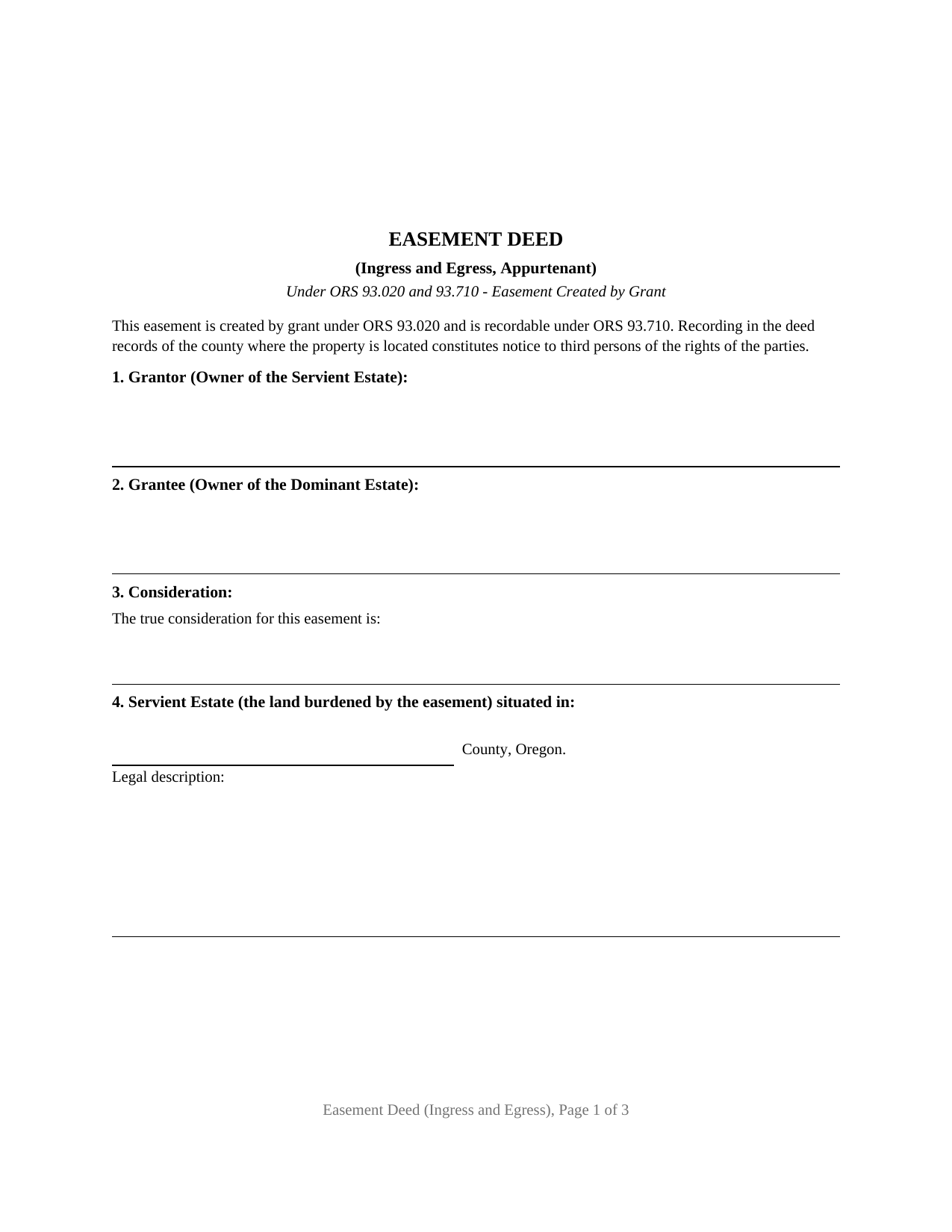
About the Oregon Easement Deed (Ingress and Egress)
How to Use This Form
- Select your county from the list
- Download the county-specific form
- Fill in the required information
- Have the document notarized if required
- Record with your county recorder's office
What Others Like You Are Saying
"Everything I needed plus more. Great service!!!"
"Recording deeds from the comfort of my office has never been simpler thanks to Deeds.com. The servic…"
"The cost was well worth it. It was very easy to download, fill in the necessary information and then…"
"Great so Far!"
"Although I was given quite a bit of information, I wanted my property title. I was not informed of w…"
4.8/5 from 4,823 reviews. Read all
An ingress and egress easement is a recorded right to cross one parcel of land to reach another. In Oregon it is created by grant, the way a deed is, and once recorded it runs with the land so that future owners of both parcels take it as they find it. This form prepares that grant: a perpetual, nonexclusive easement for a private right of way over a servient estate for the benefit of a dominant estate, signed by a single grantor.
An interest in land, not a transfer of ownership
An easement is a nonpossessory interest. The grantor keeps title to the burdened land, called the servient estate, and keeps the right to use the easement area in any way that does not interfere with the grantee's right of way. What changes is that the benefited land, called the dominant estate, gains a defined path across the neighbor's parcel. ORS 93.020 requires that a written instrument executed with deed formalities create any interest in real property, and Oregon courts treat a grant of an easement as drawn and executed with those same formalities.
Why recording matters under ORS 93.710
Easements have their own recording statute. ORS 93.710 provides that an instrument creating an easement, signed by the owner of the servient estate and acknowledged, may be recorded in the deed records of the county where the property sits, and that recording gives third persons notice of the rights of the parties. A purchaser of the servient estate then takes title with that easement of record, and a buyer of the dominant estate receives the easement automatically with the parcel. Because the easement here is appurtenant, identifying both the dominant estate and the servient estate is what fixes it to the land rather than to a person.
Appurtenant, and why the distinction is built into the form
Oregon authority describes a strong preference for reading an easement as appurtenant rather than in gross. An appurtenant easement serves a parcel and cannot be split off from the dominant estate; an easement in gross serves a person or company, the way a utility line easement does. This form names both parcels and grants the easement to the grantee and the grantee's heirs, successors, and assigns, so the appurtenant, runs-with-the-land character is clear of record.
One grantor, one acknowledgment
This form recites a single grantor who holds title to the servient estate alone. One acknowledgment certificate follows the signature block, so the sole grantor appears before a notary at a time and place of the grantor's choosing. Oregon does not impose a homestead-joinder requirement for a grantor's lifetime grant of a nonpossessory interest based solely on marital status; joinder follows title, so a single record owner grants the easement with that owner's signature alone.
Nonexclusive use and shared upkeep
Unless an instrument says otherwise, an Oregon easement grantee takes a nonexclusive right, and the grantor keeps the right to use and to let others use the area in ways that do not conflict. The deed states that default and reserves the grantor's use. For upkeep, ORS 105.170 to 105.185 govern a private right of way: absent an agreement or a maintenance term in the recorded easement, the cost of keeping the easement in repair is shared by each holder in proportion to the use each makes of it. A special provisions section lets the parties set width, exclusivity, duration, and a maintenance split instead of the default.
The package includes the blank fillable PDF, a completed example built on a realistic Washington County fact pattern, and a plain language guide that walks every section and the recording steps. The materials are informational and are not legal advice.
Important: County-Specific Forms
Our easement deed (ingress and egress) forms are specifically formatted for each of the 36 counties in Oregon.
After selecting your county, you'll receive forms that meet all local recording requirements, ensuring your documents will be accepted without delays or rejection fees.