Oregon Easement Deed (Ingress and Egress, Joint Grantors)
County Specific Legal Forms Validated as recently as October 7, 2026 by our Forms Development Team
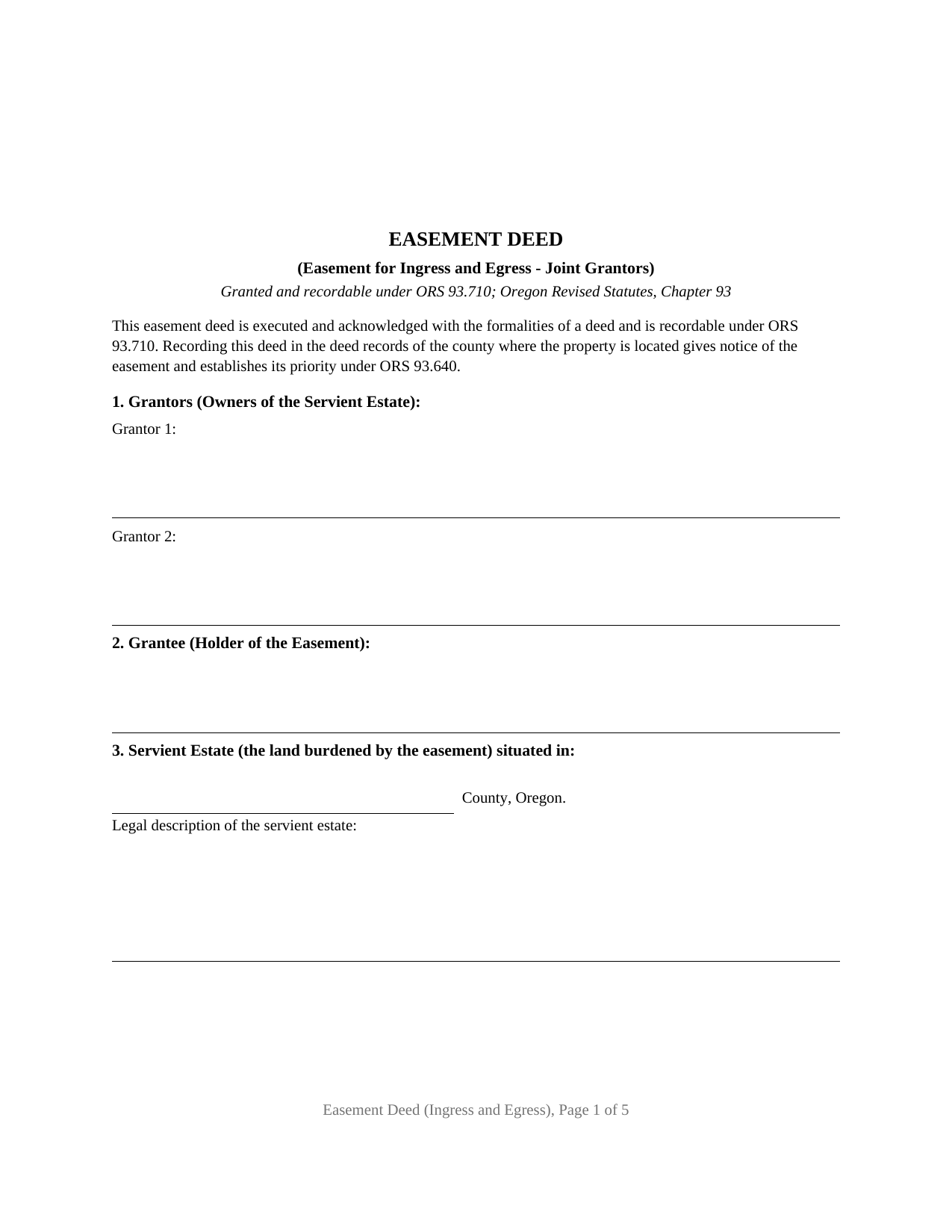
About the Oregon Easement Deed (Ingress and Egress, Joint Grantors)
How to Use This Form
- Select your county from the list
- Download the county-specific form
- Fill in the required information
- Have the document notarized if required
- Record with your county recorder's office
What Others Like You Are Saying
"A coworker recommended this service to me and I was hesitant to try it. Turned out to be a life save…"
"Saved me 1-2 hours' time dictating. Will use again."
"I have used the quit claim form and seem is very easy."
"my experience with this company: very responsive, communicative and gets the job done. Thank you"
"easy to use"
4.8/5 from 4,827 reviews. Read all
Two record owners of a single Oregon parcel can grant a perpetual right of way across their land only when both sign. That co-ownership configuration is what this form is built around: two grantors, one servient estate, and a single easement deed that both execute, each before a notary on a separate acknowledgment certificate, so they may sign on different dates or in different places.
A Nonpossessory Interest in Two People's Land
When two people own the burdened parcel together, each holds a record interest in it, and each must join the grant for the easement to reach the whole parcel. The form recites both grantors in Section 1 and provides a signature block and a separate acknowledgment certificate for each. The two-certificate structure means neither grantor's acknowledgment depends on the other's timing or location.
The grant itself is a nonpossessory interest. The grantors keep fee title to the servient estate. What they convey is the right for the grantee, and the grantee's successors as owners of the dominant estate, to travel across the easement area for pedestrian and vehicular access. No deed-of-title machinery applies: the land use statement of ORS 93.040 and the true and actual consideration statement of ORS 93.030 attach to instruments that convey fee title, and this instrument does not.
Appurtenant Character Fixed in the Grant
Oregon courts read an ambiguous easement as appurtenant rather than in gross when the language permits either construction. An appurtenant easement benefits a particular parcel and runs with it; an easement in gross belongs to a person rather than to a benefited tract. This form identifies both the servient estate and the dominant estate, grants the right to the grantee and the grantee's heirs, successors, and assigns, and states the appurtenant character expressly, so a title searcher reading the instrument cannot mistake a runs-with-the-land access right for a personal privilege.
What Recording Accomplishes Under ORS 93.710 and ORS 93.640
An easement that is signed and acknowledged by the owners of the servient estate enters the deed records under ORS 93.710, where its recorded presence gives third persons notice of the right. The legal consequence is that a buyer of the servient estate takes it with the easement already in place, and a buyer of the dominant estate acquires the access right automatically with the parcel. ORS 93.640, Oregon's race-notice recording act, gives recording a second role: an unrecorded easement interest can be defeated by a later good-faith purchaser who records first. Recording this deed is what puts the easement into the chain of title for both parcels and protects it against that defeat.
Maintenance Under ORS 105.175
Section 9 of the form is where the parties can set their own maintenance arrangement. ORS 105.175 supplies a proportionate-use default where the creating instrument is silent, dividing the cost of repair among the holders according to frequency of use and the size and weight of vehicles. A maintenance term in the deed displaces that default for the life of the easement and binds future owners of both parcels who hold an interest in it.
The package includes the blank easement deed as a fillable PDF, a completed example filled in for a realistic Deschutes County fact pattern, and a plain-language guide to every section and the statutes that govern the instrument. The materials are informational and are not legal advice.
Important: County-Specific Forms
Our easement deed (ingress and egress, joint grantors) forms are specifically formatted for each of the 36 counties in Oregon.
After selecting your county, you'll receive forms that meet all local recording requirements, ensuring your documents will be accepted without delays or rejection fees.