Rhode Island Correction Deed
County Specific Legal Forms Validated as recently as September 30, 2026 by our Forms Development Team
About the Rhode Island Correction Deed
How to Use This Form
- Select your county from the list
- Download the county-specific form
- Fill in the required information
- Have the document notarized if required
- Record with your county recorder's office
What Others Like You Are Saying
"Your Quitdeed form was easy to understand with the guidelines provided and an example of an already …"
"We love this service - so easy to use and quick. It is the second time we have used Deeds.com, in tw…"
"This was my first time using this service and it worked smoothly and efficiently and I will definite…"
"This site is very useful and reasonable. Comes in handy when you need a deed in other states."
"Very helpful."
4.8/5 from 4,832 reviews. Read all
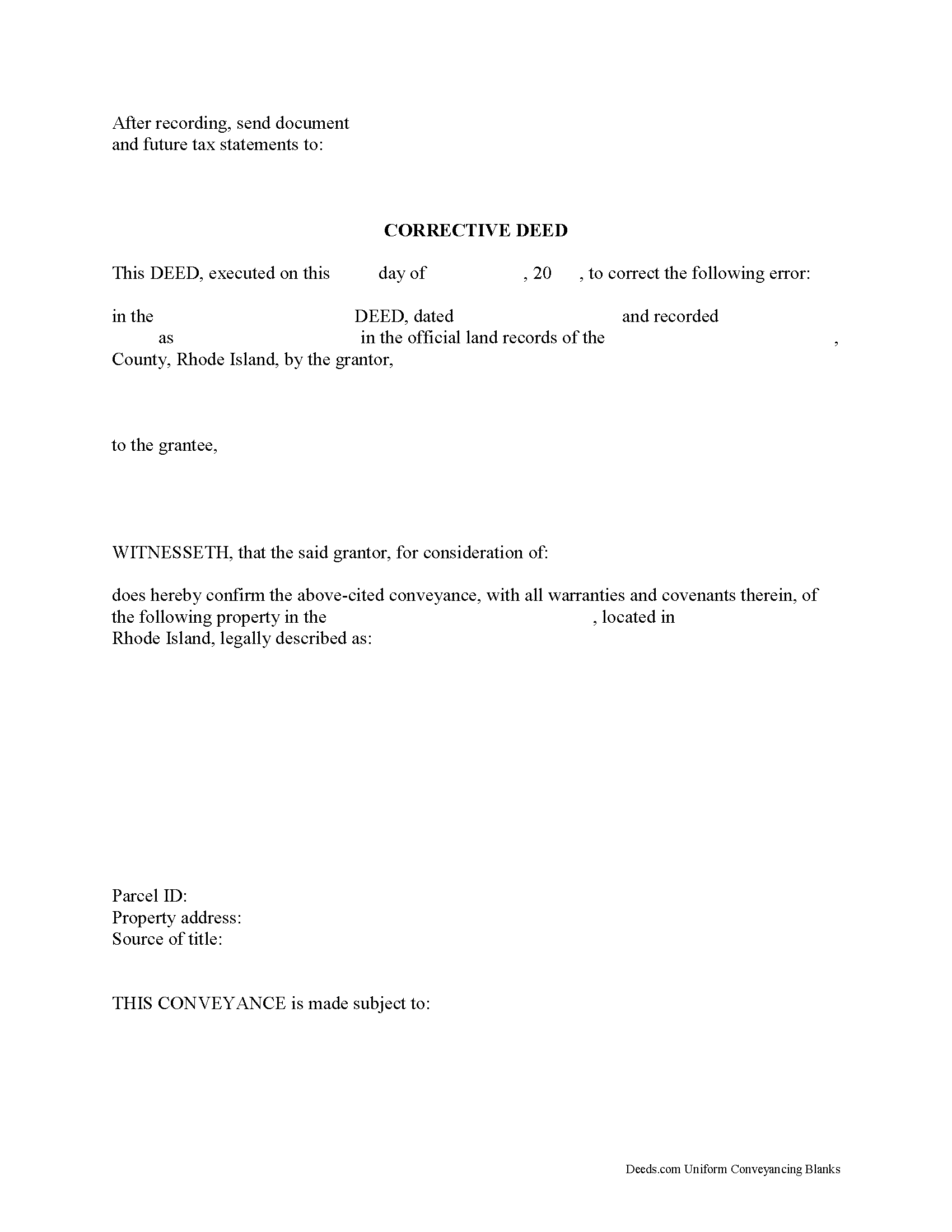
Use the corrective deed to correct an error in a previously recorded deed of conveyance in Rhode Island.
Correcting an error in a recorded deed helps prevent problems that might arise when the current owner tries to sell the property. The best method for correction is to prepare and record a new document, a so-called corrective deed. This document does not convey title; instead, it confirms the prior conveyance of the property.
Apart from supplying the correct information, the new deed must state the reason for correcting, and it must reference the prior deed by title, date, and recording number. The original grantor must sign again, thus confirming the conveyance to the same grantee. Generally, corrective deeds are used to address minor errors in a deed, such as typos, accidentally omitted suffixes or middle initials in names, and other minor omissions. A defect in the acknowledgment might also be corrected with such a deed. When in doubt about the gravity of an error, consult with a lawyer.
For certain changes, a correction deed may not be appropriate. Adding or removing a grantee, for example, or altering the manner in which title is held, or making material changes to the legal description, especially deleting a portion of the originally transferred property, may all require a new deed of conveyance instead of a corrective deed. When correcting the legal description, both the grantor and the grantee should sign the corrective deed to avoid any doubt regarding the conveyed property.
(Rhode Island CD Package includes form, guidelines, and completed example)
Important: County-Specific Forms
Our correction deed forms are specifically formatted for each of the 5 counties in Rhode Island.
After selecting your county, you'll receive forms that meet all local recording requirements, ensuring your documents will be accepted without delays or rejection fees.