Texas Affidavit of Death of Life Tenant (Enhanced Life Estate Deed)
County Specific Legal Forms Validated as recently as September 25, 2026 by our Forms Development Team
About the Texas Affidavit of Death of Life Tenant (Enhanced Life Estate Deed)
How to Use This Form
- Select your county from the list
- Download the county-specific form
- Fill in the required information
- Have the document notarized if required
- Record with your county recorder's office
What Others Like You Are Saying
"My deed has now been recorded. Thank you so very much. I saved about $120.00 by doing this with your…"
"amazing customer service. thank you deeds.com. I just wish I knew about this company earlier. Kevin"
"Fast and easy to use. Easy to print."
"Very easy to use and with all the documents that I needed."
"Very nice!"
4.8/5 from 4,823 reviews. Read all
A Texas enhanced life estate deed, better known as a lady bird deed, does its work silently. The owner who signed it keeps full control for life, and at the moment of death the property vests in the remainder beneficiary named in the deed, with no probate and no new conveyance. The county records, however, learn nothing from the death itself: they still show a deed waiting to operate and a life tenant who, as far as the index reveals, is alive. This affidavit is how the record catches up.
A Deed the Statutes Never Wrote Down
Unlike the transfer on death deed, which the legislature codified in Estates Code Chapter 114, the lady bird deed rests on common law and decades of Texas title practice; when Chapter 114 was adopted, its nonexclusivity provision (Section 114.004) expressly left the older common-law transfer methods intact. That heritage shapes the paperwork at death. There is no statutory affidavit, no official form, and no statutory checklist. What title practice expects instead is a sworn, recorded affidavit that connects the recorded deed to the death certificate and states what the records themselves cannot: that the life tenant died, and that the powers the deed reserved, to sell, mortgage, or revoke, were never exercised in a way that divested the remainder.
What the Sworn Statements Establish
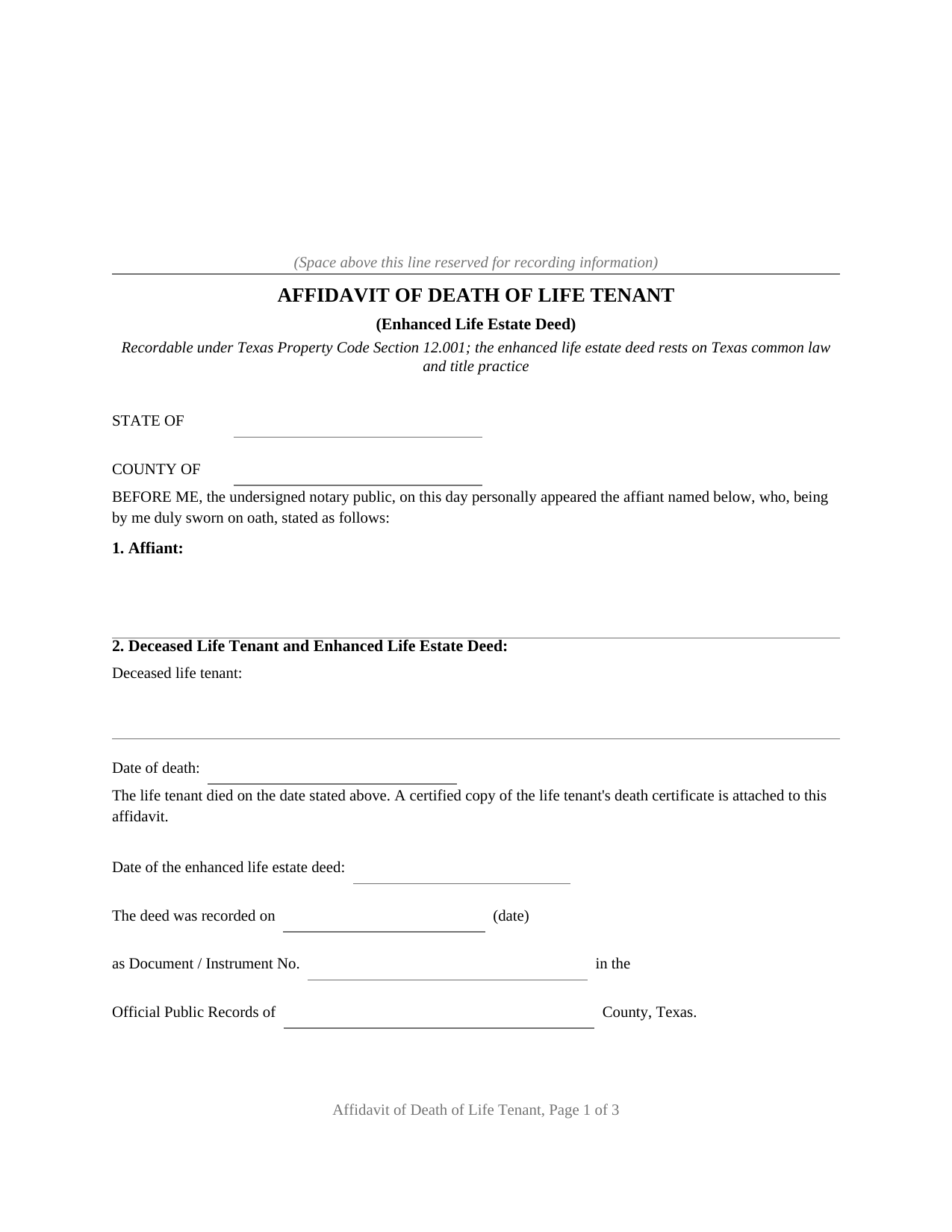
The affidavit identifies the deceased life tenant, the date of death, and the recorded enhanced life estate deed by its date, document number, and recording county, then sets out the sworn substance: the affiant is a remainder beneficiary named in the deed; the deed reserved an enhanced life estate with its characteristic powers; the life estate terminated at death; no recorded instrument shows a conveyance or revocation divesting the remainder; and title vested in the remainder beneficiaries the deed names, subject to matters of record. A certified copy of the death certificate accompanies the affidavit, and the two together give a later title examiner, in one place, the death, the deed, and the vesting.
Sworn With a Jurat, Then Recorded
Because the affidavit asserts facts under oath rather than conveying anything, the affiant signs before a notary who completes a jurat, and the instrument becomes recordable under Property Code Section 12.001(a), which admits to record an instrument concerning real property sworn to with a proper jurat. It is recorded with the county clerk of the county where the property is located, in the same deed records that hold the enhanced life estate deed itself. The confidentiality notice that appears atop Texas conveyances is absent by design: the affidavit transfers no interest, so the notice statute does not reach it.
The Complete Package
The download includes the affidavit as a fillable PDF, a completed example showing every entry for a realistic Williamson County fact pattern, and a plain language guide covering each numbered section, the jurat, and the recording steps, including the photo identification now required at Texas recording counters for in-person filings. The materials are informational and are not legal advice; a Texas attorney can address how a particular deed and death play out on a specific title.
Important: County-Specific Forms
Our affidavit of death of life tenant (enhanced life estate deed) forms are specifically formatted for each of the 254 counties in Texas.
After selecting your county, you'll receive forms that meet all local recording requirements, ensuring your documents will be accepted without delays or rejection fees.