Texas Affidavit of Death (Transfer on Death Deed Beneficiary)
County Specific Legal Forms Validated as recently as September 21, 2026 by our Forms Development Team
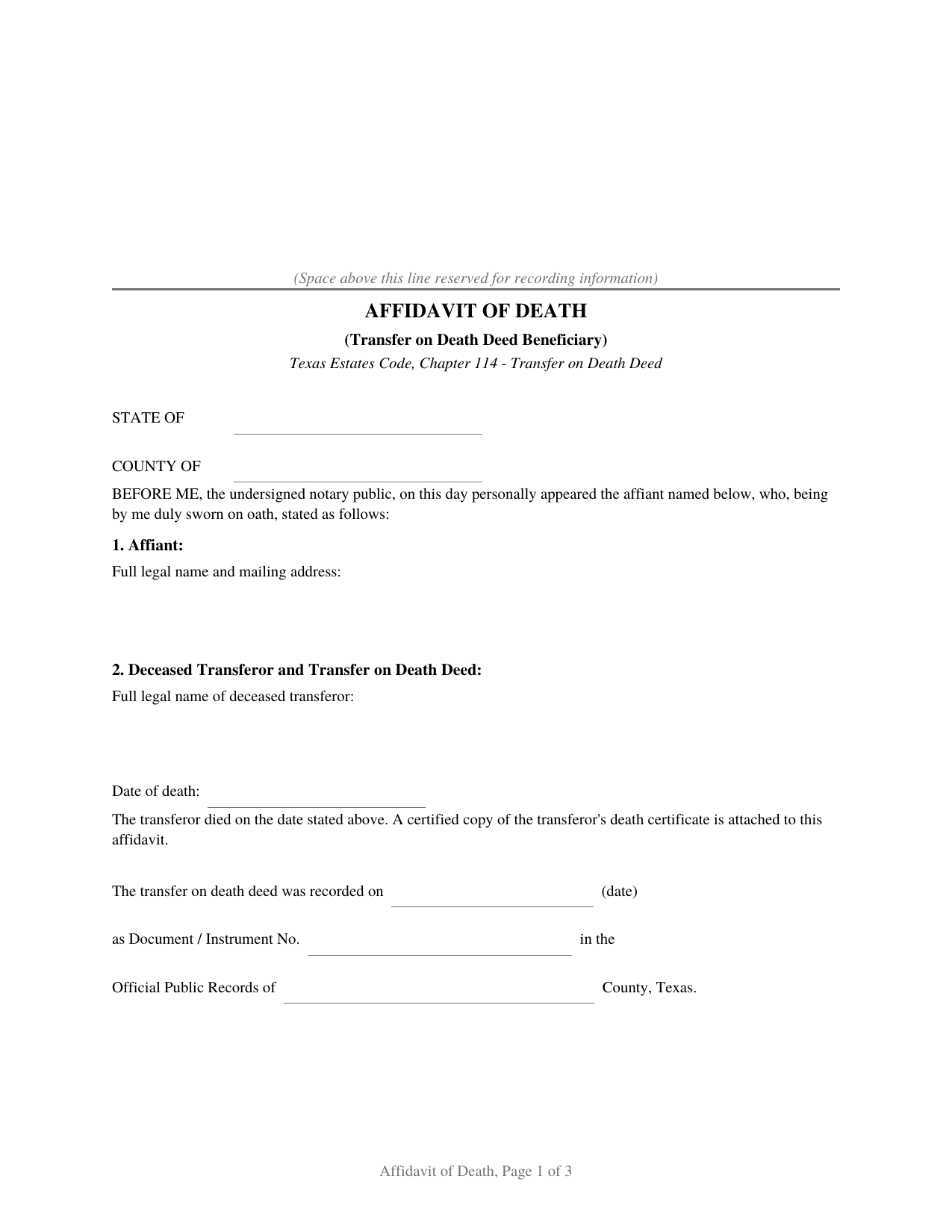
About the Texas Affidavit of Death (Transfer on Death Deed Beneficiary)
How to Use This Form
- Select your county from the list
- Download the county-specific form
- Fill in the required information
- Have the document notarized if required
- Record with your county recorder's office
What Others Like You Are Saying
"Documents were provided quickly and as promised. Very Satisfied."
"A bit pricey for someone on a fixed income."
"Efficient, helpful & easy! I highly recommend Deeds.com to anyone. Such a joy to use especially afte…"
"I received my product in great condition and it works ok. Thankyou!!!"
"I highly recommend this website. It was quick and easy with very helpful guides and examples! I am s…"
4.8/5 from 4,808 reviews. Read all
When the owner who signed a Texas transfer on death deed dies, title passes to the named beneficiary automatically, by operation of the recorded deed. No court is involved and no new deed is signed. What remains is a documentation step: getting evidence of the death, and of the beneficiary's right to take, into the county records where everyone who later examines the title will look. This form prepares the sworn affidavit Texas title practice uses for that step.
Why the Affidavit Matters
Until the death is documented of record, the title records show only a deed waiting to operate. A title examiner handling the beneficiary's later sale or refinance, the appraisal district adjusting its rolls, and anyone else searching the records all need the connection made: this owner died on this date, the deed was never revoked, and this beneficiary qualified. The affidavit, recorded with a certified copy of the death certificate, supplies exactly that, in the place title professionals expect to find it.
What the Affidavit States
The affiant identifies the deceased transferor, the date of death, and the recorded deed by its recording date, document number, and county. The sworn statements then track what Chapter 114 of the Estates Code makes relevant: the affiant is a beneficiary designated in the deed, survived the transferor by at least 120 hours as Section 114.103 requires, has found no cancellation of record and knows of no revocation, and, where the deed was made by joint owners with right of survivorship, that the deceased transferor was the last surviving owner, the death at which such a deed operates.
Sworn, Not Just Signed
This instrument is an affidavit, so the beneficiary signs and swears to the statements before a notary, who completes a jurat rather than the acknowledgment found on deed forms. The guide explains the difference and walks through every entry, including where the recording references come from and how to obtain the certified death certificate that accompanies the affidavit. The completed example shows a finished affidavit for a realistic fact pattern.
What Is Included
- The blank form as a fillable PDF, completed on screen or printed and completed by hand
- A plain language guide that walks through every numbered section: what each blank asks, where the information comes from, and what a correct entry looks like
- A completed example showing the entire document filled in for a realistic Texas fact pattern
The document is formatted for Texas recording standards: letter size pages within the dimensions of Local Government Code Section 191.007, body text well above the 8 point minimum, and reserved space on page one for the county clerk's recording stamp. As an affidavit rather than a conveyance, it does not carry the Property Code Section 11.008 confidentiality notice that introduces a deed. A separate instructions page, marked DO NOT RECORD and removed before signing, describes how an entry that outgrows its space continues on an attached exhibit, so the recorded affidavit stays free of worksheet style captions.
Related Texas Forms
The affidavit works with all three companion deeds: the Texas Transfer on Death Deed (Individual), the joint owner version, and the community property with right of survivorship version. For the two joint forms, it is recorded after the death of the last surviving owner.
Important: County-Specific Forms
Our affidavit of death (transfer on death deed beneficiary) forms are specifically formatted for each of the 254 counties in Texas.
After selecting your county, you'll receive forms that meet all local recording requirements, ensuring your documents will be accepted without delays or rejection fees.