Wisconsin Warranty Deed (Two Grantors)
County Specific Legal Forms Validated as recently as October 6, 2026 by our Forms Development Team
About the Wisconsin Warranty Deed (Two Grantors)
How to Use This Form
- Select your county from the list
- Download the county-specific form
- Fill in the required information
- Have the document notarized if required
- Record with your county recorder's office
What Others Like You Are Saying
"Quick, easy, thorough, reasonable price. Much better than trying to contact a paralegal (who do not …"
"Easy to use and fully comprehensive."
"Very efficient and easy to use process"
"good I think"
"easy to use"
4.8/5 from 4,825 reviews. Read all
Two owners whose names share a Wisconsin title convey it together, and the Wisconsin Warranty Deed (Two Grantors) is built for exactly that record: two grantors joining in one conveyance, two signature lines, and an acknowledgment certificate for each signer. The deed carries the covenant package of Wis. Stat. section 706.10(5), so both owners stand behind the title they pass.
Two grantors, one conveyance
The form recites each grantor in a separate entry of its grantor section, collects the grantee, consideration, county and legal description, source of title, homestead status, warranty exceptions, and transfer fee status in numbered sections, and closes with two signature blocks followed by two certificates worded to the Wisconsin short form of Wis. Stat. section 140.16(1). Because each certificate stands alone, the two grantors can acknowledge on different dates, before different notaries, or in different states, and the deed still records as one instrument. Spouses whose title reads survivorship marital property, two joint tenants who took a parcel together years ago, and tenants in common passing a shared property to a single buyer all present the two-name pattern this deed recites. The form recites exactly two grantors; a deed from a sole owner, from three or more co-owners, or from an entity follows a different signing pattern.
Covenants both owners make
Wisconsin builds the warranty into the deed by statute. When grantors warrant the land or its title, section 706.10(5) reads the conveyance to promise that the grantors are lawfully seized, hold the right to convey, and pass title free of encumbrance, and that they and their heirs and personal representatives will defend the grantee against lawful claims that predate the transfer. Searched as often under the name general warranty deed, this covenant package is what separates the instrument from a quitclaim, which passes whatever interest exists without promising anything about it. The deed's exceptions section trims the promise to the record: easements, recorded restrictions, and current-year taxes entered there sit outside the covenants, and each grantor joins in the covenants the deed states.
Marital property titles and the homestead signature
Wisconsin classifies most property of married couples as marital property, a form of community property under Wis. Stat. ch. 766, and a married couple's home held in both names is ordinarily survivorship marital property. Title in the names of both spouses, other than in the alternative, moves only when both act together, and Wis. Stat. section 706.02(1)(f) makes a married person's homestead conveyance invalid without the signature or joinder of each spouse. A married couple deeding their own home through this form satisfies both rules in one document, because both spouses appear as grantors and both sign. The homestead status section recites what the grantors state about the property's homestead classification, and the guide walks through the marital property forms and the case law behind the signature rule.
What arrives at the register of deeds
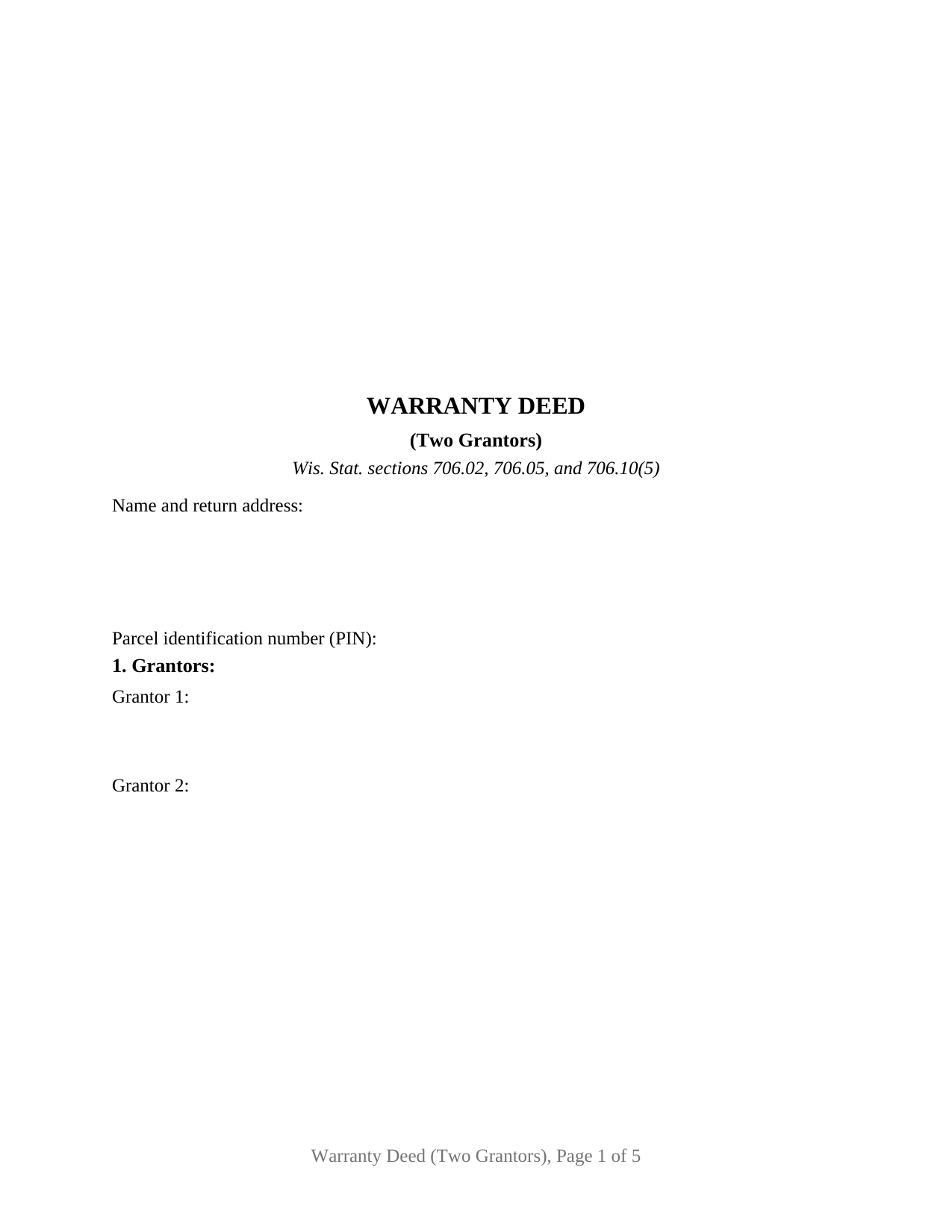
Wisconsin records a deed for one flat statewide fee, and a conveyance reaches the counter with an electronic real estate transfer return receipt beside it. The deed's transfer fee status section carries the statement Wis. Stat. section 77.25(8m) requires on the face of an exempt conveyance, identified by the subsection of section 77.25 that applies, or a recital that the fee accompanies the transfer. The first page carries the return address block, a parcel number line for counties that require one, and the blank upper right recording area the format statute reserves for the register.
Inside the download
The download includes three pieces: the fillable two-grantor warranty deed formatted for Wisconsin recording, a completed example that fills every section for a realistic Waukesha County sale from the grantor entries through both notary certificates, and a plain language guide that explains each entry with its statutory source. The materials are informational and are not legal advice; how these statutes operate on a particular title is a question for a Wisconsin attorney.
Important: County-Specific Forms
Our warranty deed (two grantors) forms are specifically formatted for each of the 72 counties in Wisconsin.
After selecting your county, you'll receive forms that meet all local recording requirements, ensuring your documents will be accepted without delays or rejection fees.