California Affidavit of Notice Served (Revocable Transfer on Death Deed)
County Specific Legal Forms Validated as recently as September 16, 2026 by our Forms Development Team
About the California Affidavit of Notice Served (Revocable Transfer on Death Deed)
How to Use This Form
- Select your county from the list
- Download the county-specific form
- Fill in the required information
- Have the document notarized if required
- Record with your county recorder's office
What Others Like You Are Saying
"Thank you for making this so easy to use. I had looked all over the internet and yours was the most …"
"Works perfect. Saved money hiring someone to do this work."
"Loved it no recurring fees easy to use your app"
"This was so painless and fast!"
"As advertised."
4.8/5 from 4,818 reviews. Read all
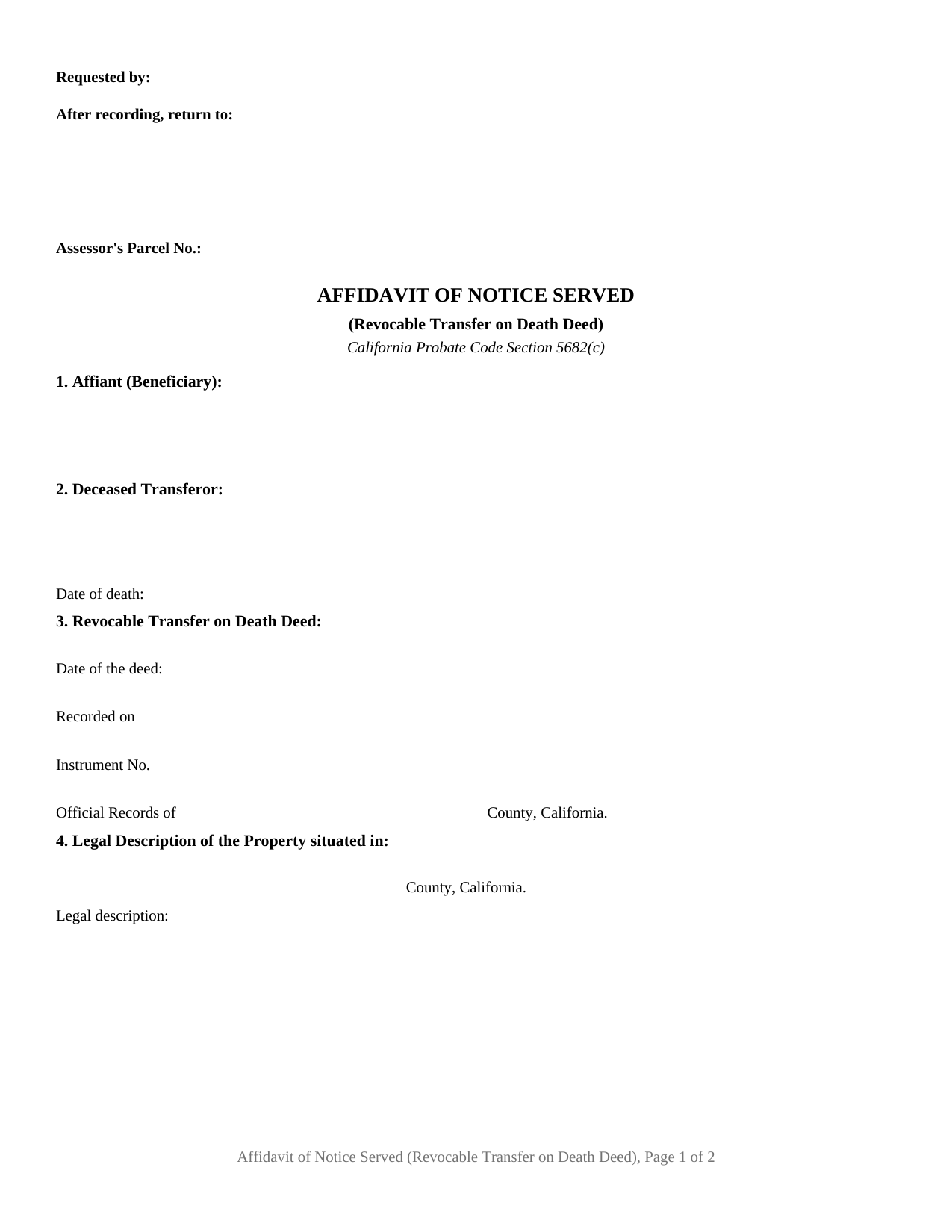
After a California revocable transfer on death deed takes effect, one recorded page carries a sentence the Probate Code wrote out word for word. This is the California affidavit of notice served, described in Probate Code Section 5682(c)(1), signed by one beneficiary named in the recorded TOD deed and recorded where the property sits. It states that the notice to heirs required by Probate Code Section 5681 went out, and two 120 day periods run from the date it reaches the record.
The one sentence the statute wrote out
Section 5682(c)(1) describes an affidavit recorded for the property containing a statement in substantially this form: I, name of beneficiary, served the notice required by Probate Code Section 5681. That is the affidavit's operative language, printed here verbatim with the beneficiary's name as a blank. The Probate Code prescribes a complete statutory form for the transfer on death deed in Section 5642 and for a revocation in Section 5644, and none for this affidavit. The form closes that gap with the statutory sentence, the data a recorder indexes, the certification under penalty of perjury in the Code of Civil Procedure Section 2015.5 wording, and the Civil Code Section 1189 certificate of acknowledgment.
One of three conditions in Section 5682
Section 5682 sets out what a person dealing with a TOD deed beneficiary receives. Where three conditions are satisfied, that person has the same rights and protections as if the beneficiary had been named a distributee of the property in an order for distribution of the transferor's estate that had become final. The three are good faith and valuable consideration under subdivision (a), a recorded affidavit of death under the chapter beginning at Probate Code Section 210 under subdivision (b), and this recorded affidavit under subdivision (c)(1). That affidavit of death is prepared and recorded separately and is not in this package. Where the deed named more than one beneficiary, Section 5682(c)(2) provides that only one beneficiary is required to comply with subdivision (c), and the form carries one affiant.
Two 120 day clocks start at recording
Probate Code Section 5694 provides that where a court determines a TOD deed transfer invalid, it voids the deed and orders the property transferred to the person entitled to it if the contest proceeding was commenced and a lis pendens recorded no later than 120 days after the Section 5682(c) affidavit was recorded, and otherwise grants relief that does not reach a purchaser or encumbrancer for value and in good faith. Probate Code Section 5652(b) runs the same 120 days from the other side: the property passes subject to any limitation of record at the transferor's death and to any recorded within that window. Section 5682 states the recording as a condition and sets no deadline for it.
What the form recites
The form recites one affiant, a beneficiary named in the recorded deed, with one signature block and one acknowledgment certificate. Numbered sections collect the affiant's name and address, the transferor's name and date of death, the deed's recording data, and the property description. Section 5 prints the statutory statement and recites that the notice went out with a copy of the deed and the death certificate, as Section 5681(a) describes. The form recites no representative capacity and no marital status, and prints no witness block: the two witnesses Probate Code Section 5624(b) requires belong to the deed, not to this affidavit.
Signing and recording in California
Government Code Section 27287 makes acknowledgment of execution a condition of recording, so the affiant signs and a notary public completes the Civil Code Section 1189 certificate, boxed notice and all, printed here with State of California as fixed text because the statute prints its venue that way. Page one reserves the top two and one half inches that Government Code Section 27361.6 requires, holding the requester line, the return address, and the assessor's parcel number, with the Government Code Section 27324 indexing title immediately below. Fees under Government Code Sections 27361, 27388.1, and 27388 follow the recorder's schedule. Documentary transfer tax belongs to the death transfer, which Revenue and Taxation Code Section 11930 exempts, not to this affidavit.
The package includes the fillable affidavit, a completed example filled with a fictional Fresno County fact pattern, and a guide that walks the form section by section and covers the Probate Code sequence, the acknowledgment rules, and the recording mechanics in full. These materials describe California law and this form, and are not legal advice.
Important: County-Specific Forms
Our affidavit of notice served (revocable transfer on death deed) forms are specifically formatted for each of the 58 counties in California.
After selecting your county, you'll receive forms that meet all local recording requirements, ensuring your documents will be accepted without delays or rejection fees.