Connecticut Warranty Deed (Two Grantors)
County Specific Legal Forms Validated as recently as October 12, 2026 by our Forms Development Team
About the Connecticut Warranty Deed (Two Grantors)
How to Use This Form
- Select your county from the list
- Download the county-specific form
- Fill in the required information
- Have the document notarized if required
- Record with your county recorder's office
What Others Like You Are Saying
"Thanks for the complete and reasonably priced set of docs. I was specifically looking for and glad t…"
"I am a retired attorney. I chanced upon this website while looking for a Florida Lady Bird Deed Form…"
"Very good, and easy and fast to use."
"Simple and straightforward"
"Thank you for your help the website is simple and easy to use and dealing with this county for the 1…"
4.8/5 from 4,831 reviews. Read all
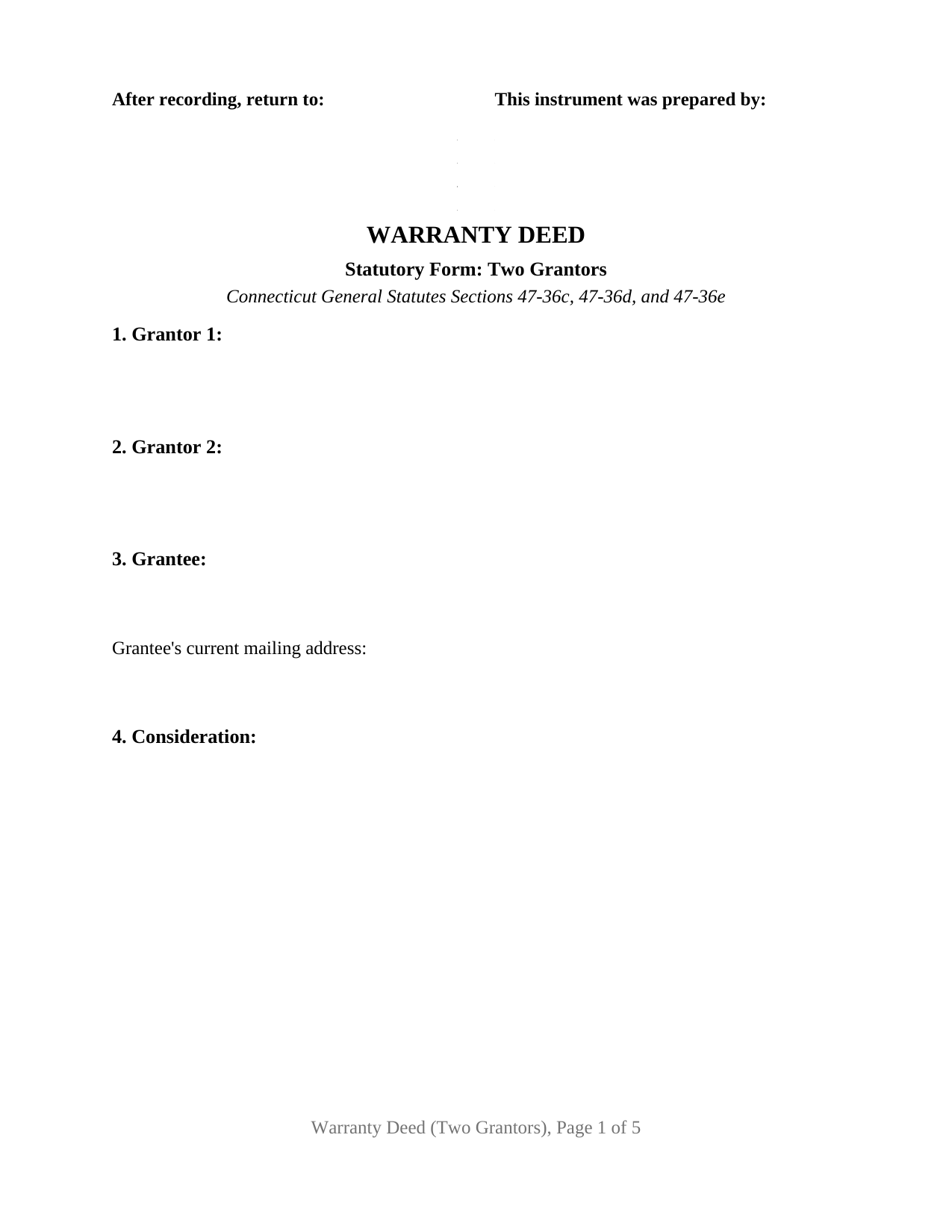
Two grantors sign this Connecticut warranty deed, and the whole record title moves in a single instrument. The form is built for two individual co-owners conveying Connecticut real property to one grantee with full statutory warranty covenants: two grantor sections, two signature blocks, a pair of attesting witnesses for each signature, and an acknowledgment certificate for each grantor.
When Two Owners Convey Together
Co-owned Connecticut land rarely passes through one signature. Tenants in common each hold an undivided share, so a deed from only one of them moves half a title. Joint tenants hold with survivorship, and General Statutes Section 47-14b lets all the joint tenants together convey exactly as tenants in common could. In both patterns, the clean transfer is the one this deed performs: both record owners named as grantors, both joining in a single grant, the grantee receiving the entire fee at one recording. Because Connecticut treats even the old 'tenants by the entirety' wording as a statutory joint tenancy, a married couple who took title with survivorship language presents the same two-owner picture on the land records.
Two Grantor Sections, Four Witness Blocks, Two Certificates
The form recites exactly two individual grantors and one grantee. Each grantor has a numbered section for name and mailing address, a labeled signature block with a date line and printed name, and, following Section 47-5's execution rule, two witness blocks tied to that grantor's signature. Each grantor also has an acknowledgment certificate in the statutory short form wording, so the two signings may happen at one closing table or on different days, in different towns, before different officers. Spouses selling a jointly owned house, two siblings passing inherited half interests to a single buyer, and former joint tenants ending co-ownership through a sale all present the two-grantor pattern this deed carries. A sole owner's conveyance follows a one-signature pattern instead, three or more owners need a signature and certificate per owner, and conveyances by executors, trustees, and other fiduciaries run through Connecticut's separate fiduciary deed forms.
The Covenants Each Grantor Makes
The operative section grants, for consideration paid, 'with WARRANTY COVENANTS,' the phrase General Statutes Section 47-36e defines. The deed prints the covenant text within the instrument: lawful seisin in fee simple, freedom from all encumbrances except those the deed sets forth, good right and full power to sell and convey, and a promise to warrant and defend the title forever against the claims and demands of all persons. With two grantors, each joins in the conveyance and in those covenants, which is what a buyer purchasing from co-owners searches for under the name Connecticut general warranty deed. The encumbrances section marks the covenants' boundary; whatever the grantors list there is excepted, and everything else is warranted.
A Deed That Meets the Town Clerk Ready to Record
Connecticut land records live in town halls, so this deed goes to the clerk of the town where the property sits, alongside the OP-236 conveyance tax return; a taxable deed enters the record only after the return is filed and the tax is paid. The form anticipates that intake: the grantee section includes the current mailing address that Connecticut deed law expects, and every signature, witness, and notary line pairs with a printed name so the clerk indexes the instrument without the statutory legibility surcharge. The completed example runs the entire document through a realistic Hartford County fact pattern, from the two grantor entries to the second acknowledgment certificate.
What Arrives With the Purchase
The download includes the blank two-grantor warranty deed as a fillable PDF, the completed example, and a guide covering each numbered section, the witness and acknowledgment ceremony for each grantor, and the town recording process. The materials are informational and are not legal advice; a Connecticut attorney can address how these rules operate on a specific title or transaction.
Important: County-Specific Forms
Our warranty deed (two grantors) forms are specifically formatted for each of the 8 counties in Connecticut.
After selecting your county, you'll receive forms that meet all local recording requirements, ensuring your documents will be accepted without delays or rejection fees.