Massachusetts Correction Deed
County Specific Legal Forms Validated as recently as October 12, 2026 by our Forms Development Team
About the Massachusetts Correction Deed
How to Use This Form
- Select your county from the list
- Download the county-specific form
- Fill in the required information
- Have the document notarized if required
- Record with your county recorder's office
What Others Like You Are Saying
"Using Deeds.com was unbelievably quick and easy to file a deed restriction with our local county off…"
"Very responsive and helpful. Made a big task quite easy and effecient. I would highly recommend. Rea…"
"We love this service - so easy to use and quick. It is the second time we have used Deeds.com, in tw…"
"This worked. Saved me a trip to get a copy of a deed. Cost less than the parking fee. Very convenien…"
"I was able to print the deed and follow the instructions and sample deed quite easily. Thank you"
4.8/5 from 4,828 reviews. Read all
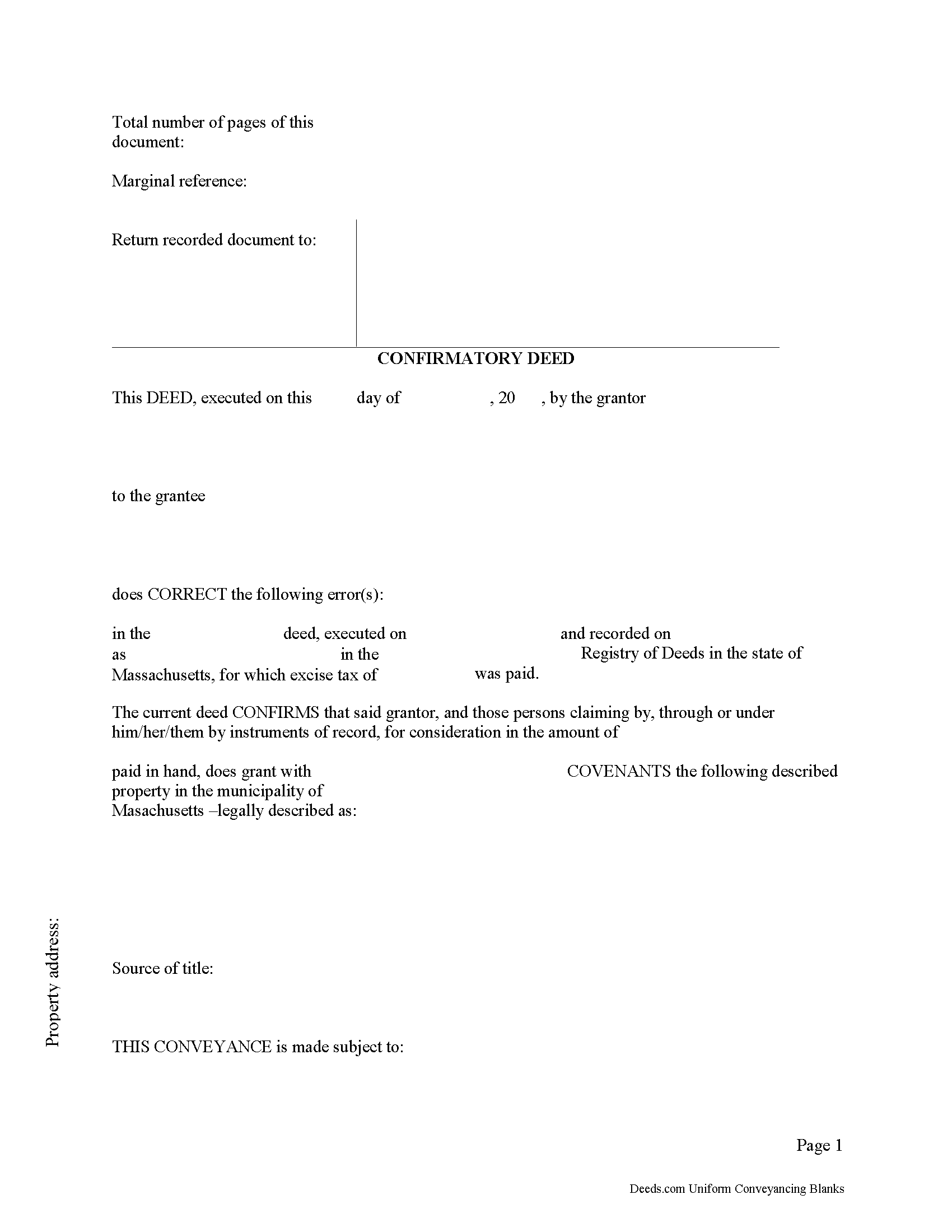
Use the confirmatory deed to correct an error in a warranty or quitclaim deed in Massachusetts.
A corrective or confirmatory deed is in effect an explanation and correction of an error in a prior instrument and passes no title. It should be executed from the original grantor to the original grantee, and it needs to be recorded, which in Massachusetts constitutes delivery of the deed. The date of the conveyance will remain unchanged, and the correction has retroactive effect, that is, it is valid as of the date of the original instrument even though it has a different execution date.
The confirmatory deed must reference the original conveyance it is correcting by type of error, date of execution and recording, and recording number and location. Beyond that, it restates the information given in the prior deed, thus reiterating and confirming it. No additional excise tax is required for such a deed, but the tax paid on the prior conveyance should be indicated.
Deeds of confirmation are most appropriate for minor errors and omissions in the original deed, such as misspelled names, omission of marital status, or typos in the legal description. More substantial changes, such as adding a name to the title, changing the vesting information or the legal description of the property, require a new deed of conveyance instead of a confirmatory deed.
(Massachusetts CD Package includes form, guidelines, and completed example)
Important: County-Specific Forms
Our correction deed forms are specifically formatted for each of the 14 counties in Massachusetts.
After selecting your county, you'll receive forms that meet all local recording requirements, ensuring your documents will be accepted without delays or rejection fees.