Montana Quitclaim Deed (LLC Grantor)
County Specific Legal Forms Validated as recently as October 12, 2026 by our Forms Development Team
About the Montana Quitclaim Deed (LLC Grantor)
How to Use This Form
- Select your county from the list
- Download the county-specific form
- Fill in the required information
- Have the document notarized if required
- Record with your county recorder's office
What Others Like You Are Saying
"It all looked pretty easy to navigate. Forms are just now downloaded so I'll see how opening, fillin…"
"This service is so good, quick, reasonably priced! I would use Deeds.com again!"
"Very satisfied with the ease of using your database. Excellent place to get help with deeds."
"This is my third time using Deeds.com and they don't disappoint. Their customer service is outstandi…"
"Great, quick and easy to use"
4.8/5 from 4,829 reviews. Read all
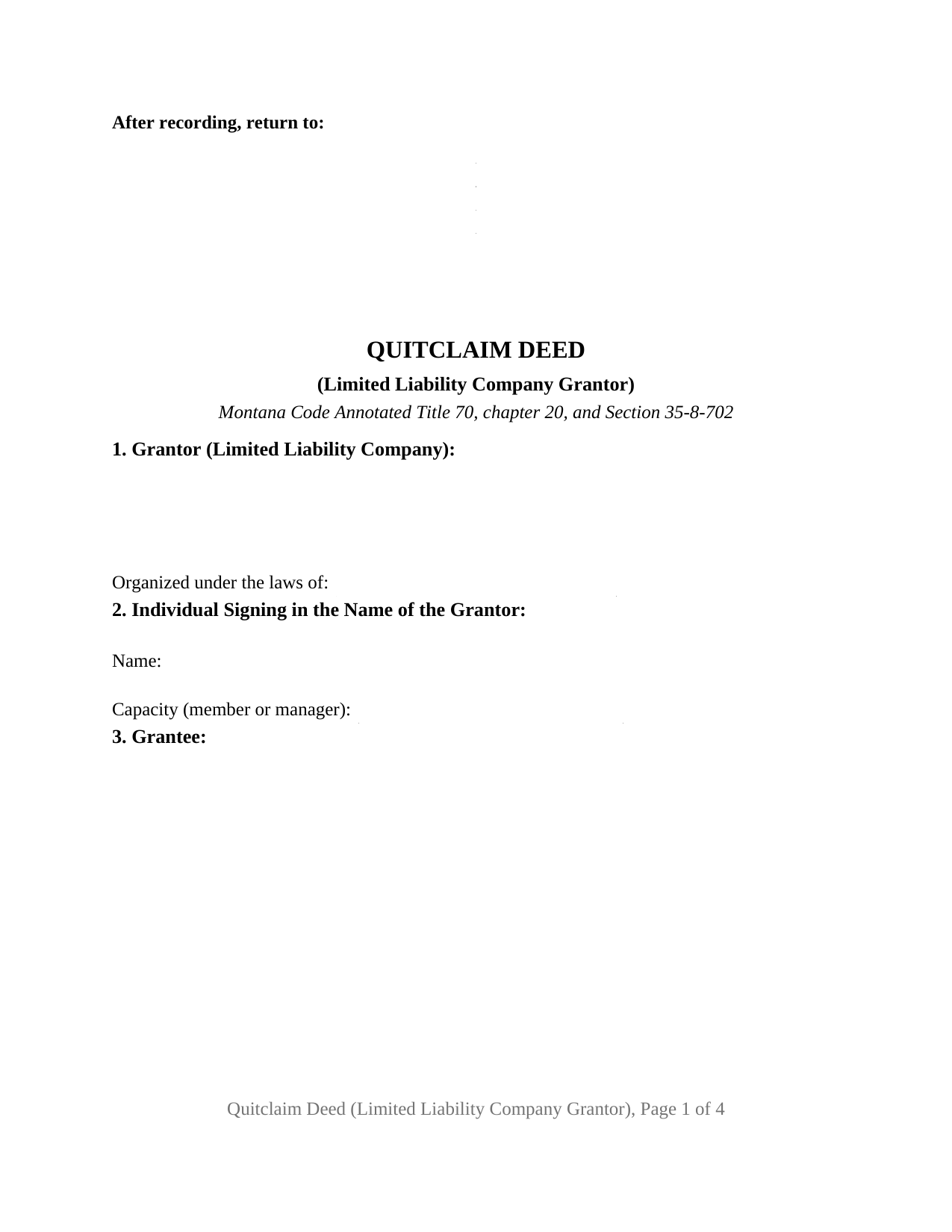
A Montana limited liability company holds its land in its own name and signs by one human being. This Montana quitclaim deed is configured for that arrangement: the company is the grantor, a single individual executes in the company's name as its member or manager, and what reaches the grantee is the company's own right, title, and interest as of delivery, with no title warranty.
Which signature the statute accepts
Montana Code Annotated Section 35-8-702 decides who may sign a company deed, and the answer turns on a single line in the articles of organization. Under subsection (1), title standing in the company's name may be transferred by an instrument executed by any member in the company's name. Subsection (5) displaces that where the articles vest management in a manager or managers: the instrument is executed by any manager, and a member acting solely in the capacity of a member may not transfer the title at all. Section 2 of the form takes the signer's name and the capacity held, member or manager, the entry the statute makes decisive.
Title in the company, not in its members
Section 35-8-701 explains why one signature moves the whole parcel. Property acquired by a limited liability company becomes company property, title vests in the company rather than in the members individually, and a member has no interest in specific company property. So this quit claim deed collects no member signatures beyond the one signer, and no spousal signature: the homestead execution rule reaches property of a married person, and this parcel belongs to the company. Where the county records show title in a member's or manager's individual name instead, Section 35-8-702(2) addresses that transfer, and the deed runs from those individuals.
The covenant word, left out on purpose
The operative sentence avoids one word deliberately. Section 70-20-304 loads two implied covenants into a fee conveyance made with the word grant, so this form conveys by remise, release, and quitclaim, says in terms that those implied covenants are restrained and excluded, and adds that title reaching the company later stays where it lands. Montana enacted no quitclaim form, and its Supreme Court reads a deed's character from the whole document. The grantee takes the parcel as it stands, deed of trust, easement, and plat restriction included.
What a statement of capacity carries, and what it does not
The deed states the capacity the signer holds. Section 35-8-702(3) then keeps a door open for the company: where the signer's act did not bind it under Section 35-8-301, the company may recover the property, unless it has reached a later transferee who gave value without notice of the missing authority. No Montana statute makes a resolution or consent a recording condition for a company deed, so the company's own documents remain the answer to that question.
The company patterns that reach the record
A company distributing a parcel to its members while winding up, a transfer between affiliated companies, a remnant strip released to the adjoining owner, and a company clearing a defect left by an earlier deed: these are the arrangements that put a limited liability company on the grantor line of a Montana quitclaim. The form recites one company grantor and one authorized signer in a representative capacity, with a single acknowledgment certificate drawn on the Montana short form at Section 1-5-610(2). It is not set up for two signers, for co-managers who must both sign, or for a grantor signing as trustee or attorney in fact.
At the recording counter
The deed records with the clerk and recorder of the county holding the land, at twenty dollars for a first page and ten for each page after it, for documents recorded on or after October 1, 2025. The grantee's post office address belongs in the body, because Section 7-4-2618 keeps the clerk and recorder from receiving a deed without it, and a Realty Transfer Certificate is filed alongside, prepared separately and not included here. A company organized outside Montana carries one more question: Section 35-8-1001 conditions transacting business here on a certificate of authority, while Section 35-8-1002(5) keeps the absence of one from impairing the validity of the company's acts.
The package delivers the deed as a fillable PDF, a completed example worked out for a Park County distribution to a Livingston company's two members, and a plain language guide covering each numbered section, the execution statutes, notarization, and recording. The materials are informational and are not legal advice.
Important: County-Specific Forms
Our quitclaim deed (llc grantor) forms are specifically formatted for each of the 56 counties in Montana.
After selecting your county, you'll receive forms that meet all local recording requirements, ensuring your documents will be accepted without delays or rejection fees.