Nebraska Small Estate Affidavit for Real Property (Two Claiming Successors)
County Specific Legal Forms Validated as recently as September 8, 2026 by our Forms Development Team
About the Nebraska Small Estate Affidavit for Real Property (Two Claiming Successors)
How to Use This Form
- Select your county from the list
- Download the county-specific form
- Fill in the required information
- Have the document notarized if required
- Record with your county recorder's office
What Others Like You Are Saying
"They didn't have what I was looking for so they refunded my money immediately. Very easy to work wit…"
"So far it seems easy and hopefully be acceptable to Hillsborough Co"
"GREAT STUFF TKS"
"Excellent and timely responses. Do you offer an annual rate? Thank you."
"This was such an easy process and even tho you had to pay a $15 - to me it was well worth not having…"
4.8/5 from 4,820 reviews. Read all
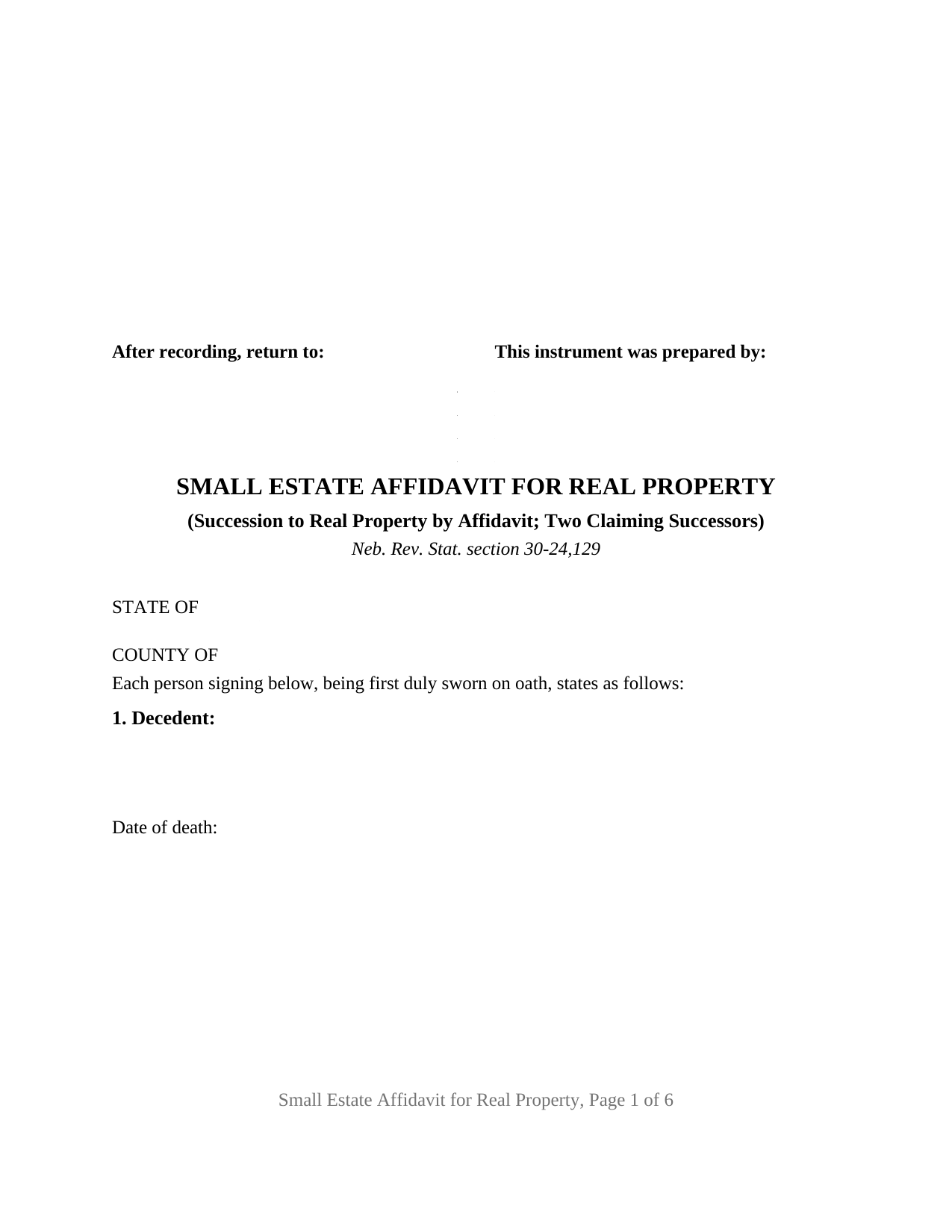
Two people inherit a house in Nebraska, the estate is small, and no one has been appointed to administer it. Neb. Rev. Stat. section 30-24,129 answers that situation with a recorded affidavit rather than a probate case, and this Nebraska small estate affidavit for real property is drawn for exactly two claiming successors: both names in the affidavit, both signatures at the end, and a separate notarial jurat under each one.
Two successors, one affidavit, two oaths
Section 30-24,129 requires the affidavit to be signed by all persons claiming as successors, so the count of signature blocks is a statutory feature of the document rather than a layout choice. This form carries two, each with its own printed name and date line and its own jurat certificate, so the two signers may swear on different dates or before different notaries and still file one instrument. The form asks each signer for a mailing address and for that signer's relationship to the decedent, which section 30-24,129 lists among the required statements, and it states the basis of entitlement once for both: homestead allowance, exempt property, intestate succession, or devise under the will. Two adult children dividing a parent's house, and a surviving spouse taking with one child, are the patterns that appear in the county records under this arrangement. An estate with one claiming successor presents a single signature pattern, and an estate with three or more presents more blocks than this form carries.
A ceiling measured from the assessment rolls
The gate on this procedure is a valuation rule with a specific source. The decedent's interest in all real property in the estate located in Nebraska cannot exceed one hundred thousand dollars, and the value is taken from the assessment rolls for the year in which the decedent died, less real estate taxes and interest on those taxes due at the time of death. LB1195 (2024) raised that ceiling from fifty thousand dollars, so the figure an affidavit states today is the newer one. Two more conditions run alongside it: thirty days must have elapsed since the death, and no application or petition for appointment of a personal representative may be pending or granted in Nebraska. A certified or authenticated copy of the death certificate rides with the affidavit and supplies the proof of the thirty day interval; a claim by devise carries a copy of the will as well.
What the affidavit puts in the county record
Recording is where this instrument does its work. Section 30-24,129 makes the affidavit prima facie evidence of the facts stated in it, and section 30-24,130 supplies the title consequences: a successor named in the affidavit stands in the position of a distributee who received a deed of distribution from a personal representative, and a later purchaser or lender stands in the position of a person dealing with such a distributee. The same section preserves every proceeding to enforce a mortgage, pledge, or other lien, so encumbrances ride through untouched. The affidavit is also not a deed. No grantor executes it, nothing is conveyed by it, and the documentary stamp tax that section 76-901 imposes on a grantor executing a deed has nothing to compute against here. The separate statutory affidavit for a decedent's personal property under section 30-24,125 is prepared separately and is not part of this package.
Filed with the register of deeds, county by county
The affidavit is filed with the register of deeds of a county where the decedent's real property is located, and subsection (b) sends the recorded affidavit and the death certificate to every other Nebraska county in which that property lies. Nebraska format rules follow it to the counter: section 23-1510 reserves a blank space of three inches by eight and one half inches across the top of the first page and places the return address and the document title below that space, and section 23-1503.01 governs page size, legibility, paper, and the printed name under each signature. The form is built to those measurements, with twelve point body text and the reserved band left clear.
The package contains the blank fillable affidavit, a completed example filled out for a Lancaster County estate, and a guide that walks the statute, the numbered sections, the signing formalities, and the recording steps. These are informational materials for a Nebraska recording, not legal advice.
Important: County-Specific Forms
Our small estate affidavit for real property (two claiming successors) forms are specifically formatted for each of the 93 counties in Nebraska.
After selecting your county, you'll receive forms that meet all local recording requirements, ensuring your documents will be accepted without delays or rejection fees.