North Carolina Affidavit of Death and Heirship (Estate Real Property)
County Specific Legal Forms Validated as recently as September 22, 2026 by our Forms Development Team
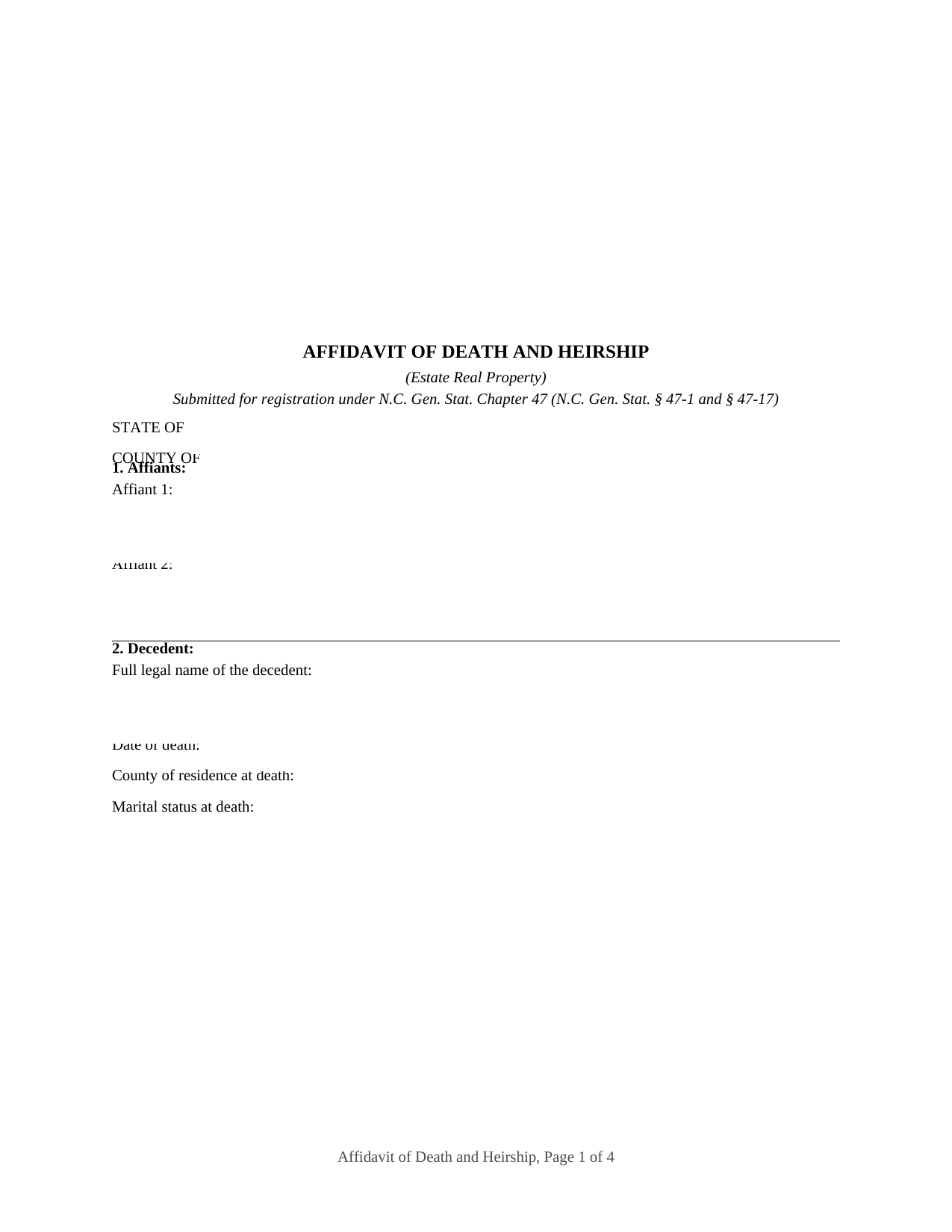
About the North Carolina Affidavit of Death and Heirship (Estate Real Property)
How to Use This Form
- Select your county from the list
- Download the county-specific form
- Fill in the required information
- Have the document notarized if required
- Record with your county recorder's office
What Others Like You Are Saying
"It was very easy to get the documents which I needed."
"This is an extremely user friendly site! I had been searching the internet for days for the proper G…"
"Forms used, created quitclaim deed that the county accepted without a second look (turns out they se…"
"Had the correct forms I needed with guides and examples to follow on filling them out. Very easy to …"
"Had what I needed, service was excellent."
4.8/5 from 4,819 reviews. Read all
North Carolina has no transfer on death deed or beneficiary deed for real estate. When a North Carolina landowner dies, title to property not held with a right of survivorship passes the instant the owner dies: to the people named in a probated will, or, with no will, to the heirs the Intestate Succession Act identifies. The title has moved; what the land records may not yet show is who now holds it. A North Carolina affidavit of death and heirship is the sworn statement that fills that gap for estate real property.
A land record, not a transfer
The affidavit does not move title, because title moved at death. It is a sworn statement of facts, recorded with the register of deeds, that a named person died and that title to that person's described real property vested at death in the people named as heirs or devisees. A title examiner, lender, or buyer reviewing the chain of title later finds the death and the heirship stated where they look for it, rather than an open question after the last recorded deed.
Where the affidavit fits in Chapter 47
North Carolina does not have a single affidavit of heirship statute; the affidavit rests on the registration statutes. N.C. Gen. Stat. Section 47-1 lists the instruments that may be proved or acknowledged and then registered, naming affidavits concerning land titles or family history and any instruments pertaining to real property. An affidavit of death and heirship is both. Section 47-18, the registration statute at the center of North Carolina title, makes the land records the place that controls notice, and the affidavit gives notice in exactly those records.
Sworn by people with knowledge, not by the heirs
The affidavit is made by affiants with personal knowledge of the decedent and the family, and North Carolina practice favors affiants who are not heirs or devisees, so the statement comes from people with no stake in the property. The form carries two affiant blocks for that pattern and works for a single affiant as well. Each affiant swears before a notary, who completes a jurat. The heirs and devisees named in the affidavit do not sign, because it states facts about them rather than acting for them, and there is no spousal joinder line, because the affidavit conveys nothing.
What it states and what it leaves to other instruments
The sworn statements recite that the named persons are all of the heirs or devisees, that the affiants know of no other claimant, and that the affiants have no interest in the property. The affidavit states how title devolved; it does not determine ownership, settle a dispute, or cure a defect in the chain of title. Where the land was held with a right of survivorship, an affidavit of survivorship documents the passage to the survivor instead; where a personal representative conveys estate land, an executor or administrator deed does so.
The package pairs the fillable affidavit with a plain language guide that walks through every section and the statutes behind it and a completed example on a realistic North Carolina fact pattern. Because the affidavit is sworn, a false statement in it carries consequences under N.C. Gen. Stat. Section 14-118.6. These materials are informational and are not legal advice.
Important: County-Specific Forms
Our affidavit of death and heirship (estate real property) forms are specifically formatted for each of the 100 counties in North Carolina.
After selecting your county, you'll receive forms that meet all local recording requirements, ensuring your documents will be accepted without delays or rejection fees.