Vermont Memorandum of Lease (Individual Lessor)
County Specific Legal Forms Validated as recently as September 16, 2026 by our Forms Development Team
About the Vermont Memorandum of Lease (Individual Lessor)
How to Use This Form
- Select your county from the list
- Download the county-specific form
- Fill in the required information
- Have the document notarized if required
- Record with your county recorder's office
What Others Like You Are Saying
"At first glance, explanations and guidance to fill out the grant deed seems quite direct and no too …"
"Ordered a Quitclaim deed and worked perfectly at Register of Deed office. Liked the instructions and…"
"I downloaded the gift deed and I can not type my info onto it what am I doing wrong. Please advise"
"The site is user friendly and uncomplicated."
"Easy access"
4.8/5 from 4,817 reviews. Read all
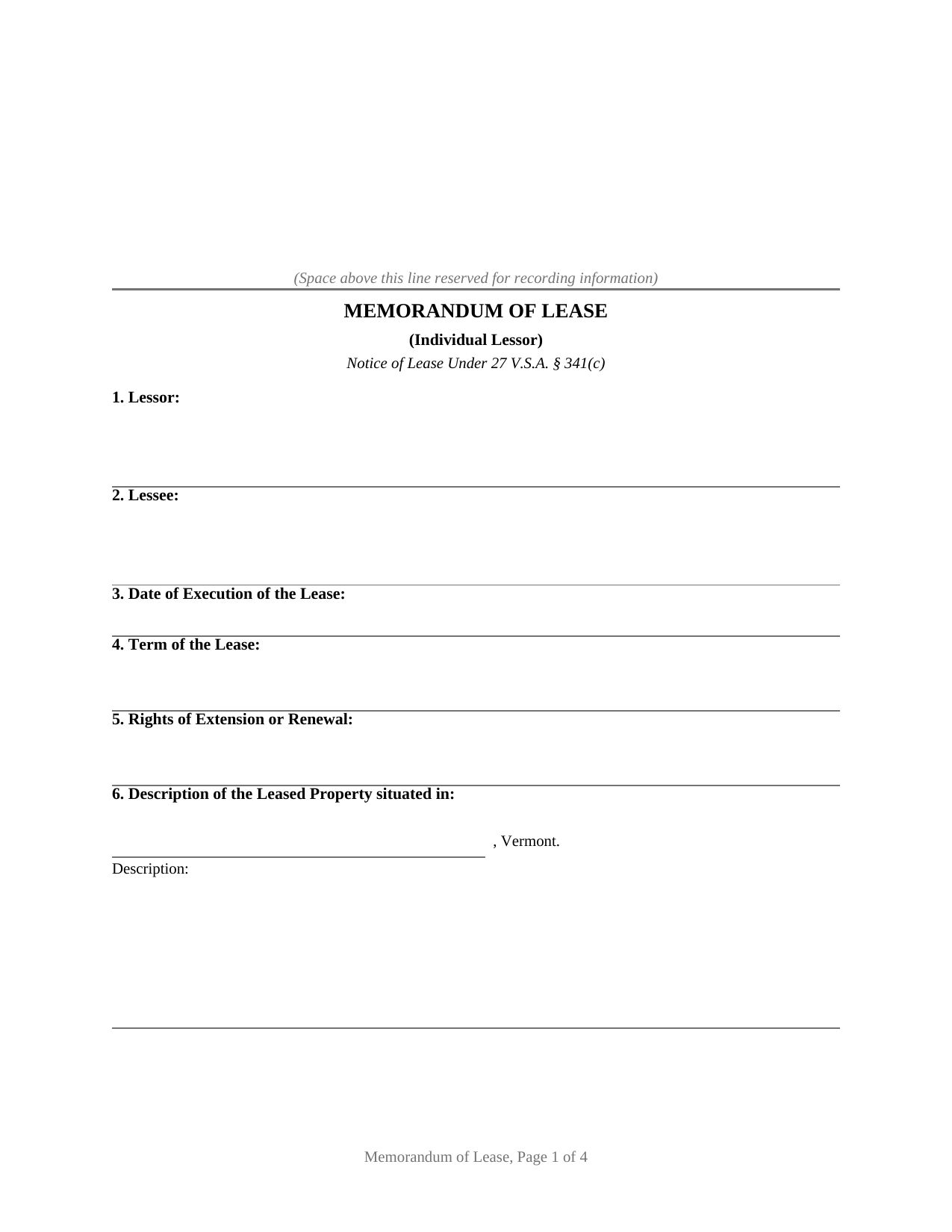
A Vermont lease that runs longer than one year can appear in the town land records without placing the entire lease on public file. This Vermont Memorandum of Lease prepares that record notice under 27 V.S.A. § 341(c) in the individual lessor configuration: one natural person as the property owner and landlord, one lessee, and signature and acknowledgment blocks for both parties to the lease.
Notice in the Land Records, Privacy for the Lease
Under 27 V.S.A. § 342, a lease for more than one year is not effectual to hold the estate against anyone but the grantor and the grantor's heirs unless it is acknowledged and recorded. Recording the whole lease satisfies that rule, but it also puts the rent, the security arrangements, and every negotiated concession on permanent public display. Section 341(c) supplies the alternative this form implements: a short notice or memorandum of lease, executed and acknowledged by the parties and recorded in the land records of the town where the leased property is situated, stands in for recording the lease at length. The leasehold, and record rights like a renewal option or a right of first refusal, become part of the town record; the financial terms stay in the parties' files.
The Nine Items Vermont Requires
The statute lists the minimum contents of the notice, and the form presents them as numbered sections:
- The names of the parties as set forth in the lease, with any addresses the lease states as theirs
- The date the lease was executed and the term of the lease
- A statement of any rights to extend or renew
- A description of the leased property
- A statement of any right to purchase the property or exercise a right of first refusal
- A statement of any restrictions on assignment of the lease
- The location of an original lease
The form closes with an operative paragraph in which the parties give notice of the lease under § 341(c) and state that the memorandum describes, and does not amend, the lease itself.
The Individual Lessor Configuration
The form recites exactly one individual lessor signing in a personal capacity, plus the lessee. Both parties sign, and the form carries a separate acknowledgment certificate for each signer, so the landlord and the tenant can appear before different notaries, on different dates, in different states. A sole owner leasing a storefront, farmland, or a commercial building for a multiyear term presents the pattern this memorandum recites. The form is not set up for a landlord that is a limited liability company, corporation, or trustee, and a property owned by co-owner lessors presents a different signature pattern than the single lessor recital here.
Recording With the Town Clerk
Vermont records land documents by town or city, not by county, so the completed memorandum goes to the clerk of the municipality where the property is situated, at the statewide fee of fifteen dollars per page under 32 V.S.A. § 1671. Most fixed term leases record without a Vermont Property Transfer Tax Return, but a perpetual leasehold or a lease in the statute's fifty year class is treated as a transfer of title to property under 32 V.S.A. § 9601, and the clerk cannot record a memorandum evidencing that kind of lease without the completed return. The guide walks through that distinction, the notary certificate contents, and each numbered section of the form.
The download includes the memorandum of lease as a fillable PDF, a completed example showing a realistic Woodstock, Vermont fact pattern, and a plain language guide to every section and to recording. The materials describe Vermont law in general terms and are not legal advice.
Important: County-Specific Forms
Our memorandum of lease (individual lessor) forms are specifically formatted for each of the 14 counties in Vermont.
After selecting your county, you'll receive forms that meet all local recording requirements, ensuring your documents will be accepted without delays or rejection fees.