Arizona Warranty Deed (Trustee Grantor)
County Specific Legal Forms Validated as recently as October 12, 2026 by our Forms Development Team
About the Arizona Warranty Deed (Trustee Grantor)
How to Use This Form
- Select your county from the list
- Download the county-specific form
- Fill in the required information
- Have the document notarized if required
- Record with your county recorder's office
What Others Like You Are Saying
"Everything I had hoped for. Easy and formatted correctly."
"Deeds.com was quick, efficient, and cost effective. Deeds.com works with individuals where I found o…"
"Great service!"
"you guys/girls are the bestest.."
"Easy and fast!"
4.8/5 from 4,824 reviews. Read all
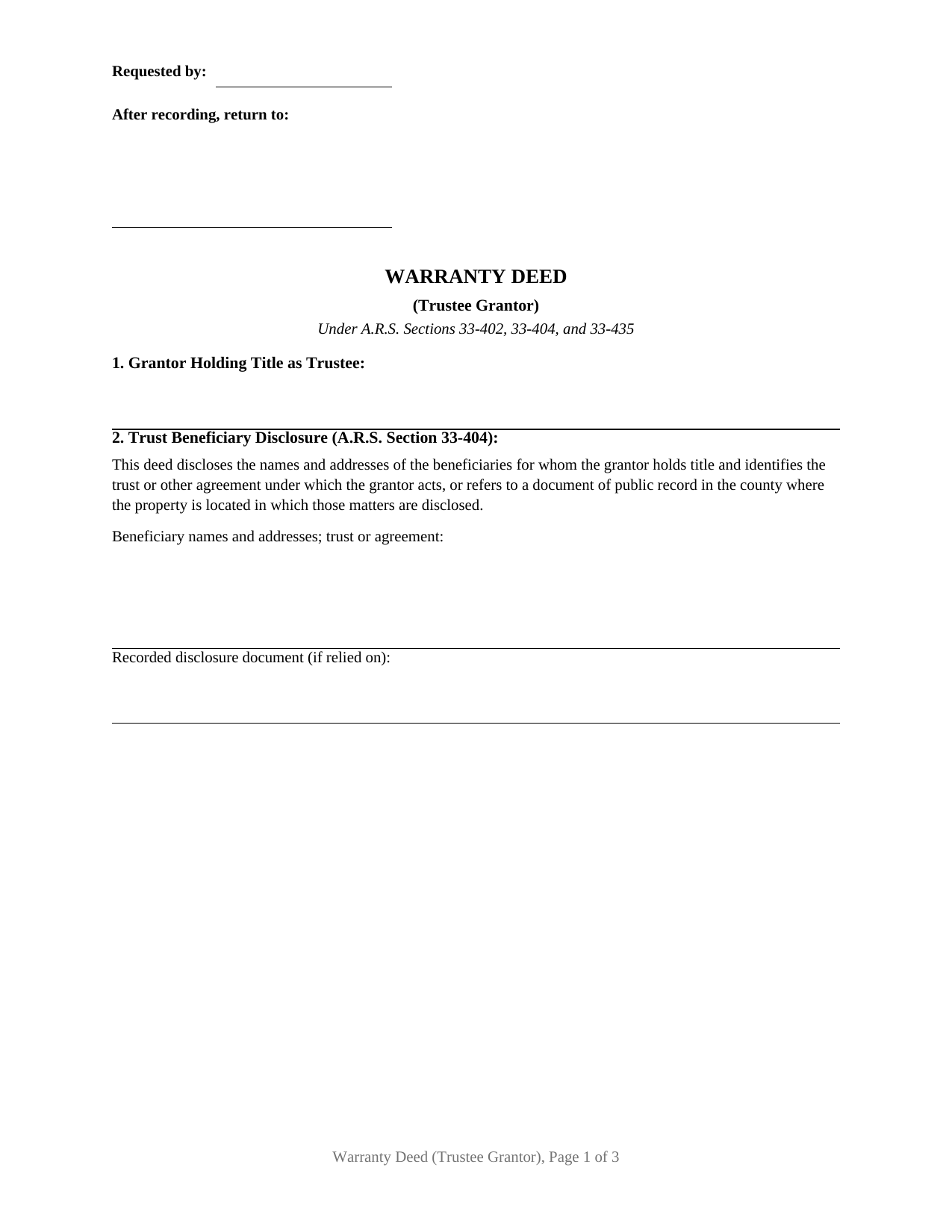
The Arizona Warranty Deed (Trustee Grantor) is the configuration of Arizona's statutory warranty deed in which the party conveying holds title as trustee of a trust. One fiduciary occupies the grantor block, one acknowledgment certificate closes the instrument, and the operative section gives the complete A.R.S. 33-402(3) promise, title warranted against all persons whomsoever. What distinguishes the form is where the trust law lands: when the seller is a trustee, A.R.S. 33-404 puts a beneficiary disclosure on the conveying side of the deed itself.
The Seller's Own Beneficiary Disclosure
Section 33-404(B) speaks directly to a grantor who holds title as trustee, and it applies whether or not the trustee capacity was identified on the document through which title was acquired, so a trust that took title in the trustee's bare name still conveys under the disclosure rule. The statute offers two ways to satisfy it, and this form carries a labeled entry for each: the deed states the beneficiaries' names and addresses and identifies the trust or other agreement under which the grantor acts, or it points by document number or docket and page to an instrument already of public record in the county where the land lies that contains those matters. The stakes of leaving Section 2 blank are written into the statute: a conveyance made without the disclosure is voidable by the other party for two years after recordation, although interests acquired for value are not impaired. Completing the disclosure on the face of the deed closes that question in the record.
Full Warranty, Trustee Capacity
The conveyance runs from the grantor acting solely in the stated trustee capacity and not individually, and it still carries everything Arizona packs into its short warranty form: the express warranty of title against all persons whomsoever under A.R.S. 33-402(3), plus the two covenants A.R.S. 33-435 implies from the word convey, that the grantor has not already conveyed the estate or any interest in it to someone else and that the estate is free of encumbrances the grantor placed. An exceptions section frames the promise; current year taxes, patent reservations, and recorded easements and covenants entered there fall outside it, and title matters left unlisted stay within it.
Who Appears in This Grantor Block
The ownership patterns that put a trustee on the conveying side of an Arizona warranty deed are familiar ones: the trustee of a revocable living trust selling the house the trust holds, a successor trustee liquidating trust real estate after the settlor's death, and a corporate fiduciary conveying Arizona land out of a trust it administers. The form recites exactly one grantor, identified by name and by the trust's name and date, and it is built for a trustee under a trust or similar title-holding agreement. Fiduciaries that Section 33-404(G) places outside its trustee definition, among them a personal representative, a conservator, an attorney-in-fact, and a trustee under a deed of trust, convey in capacities this form's disclosure section and capacity language do not describe. A deed from an owner conveying individually, or from spouses conveying community realty under the both-spouses rule of A.R.S. 25-214(C)(1), likewise presents a signer architecture different from the single fiduciary block this deed carries.
At the Recorder's Counter
The deed records with the county recorder where the property is located, and the trustee context shapes the paperwork that rides along. A sale for value is reported on the Affidavit of Property Value, the Department of Revenue form the parties prepare and sign separately; it is not part of this package. A trustee's transfer to a trust beneficiary for nominal or no consideration is on the A.R.S. 11-1134 exempt list instead, and the code for a claimed exemption belongs beneath the legal description, where this form prints its notation line. The statewide fee stays thirty dollars under A.R.S. 11-475, the two dollar transfer fee included, and the first page holds Arizona's two inch recording reserve with the requester and return entries tucked into the statutory left corner.
The download package contains three pieces: the fillable deed configured for a trustee grantor, a completed example showing a Coconino County trust sale from the fiduciary grantor block through the notary certificate, and a plain language guide covering each section, both disclosure paths, the grantee vesting forms, and the recording sequence. These materials describe Arizona law in general terms; they are not legal advice.
Important: County-Specific Forms
Our warranty deed (trustee grantor) forms are specifically formatted for each of the 15 counties in Arizona.
After selecting your county, you'll receive forms that meet all local recording requirements, ensuring your documents will be accepted without delays or rejection fees.