North Carolina Correction Deed
County Specific Legal Forms Validated as recently as October 14, 2026 by our Forms Development Team
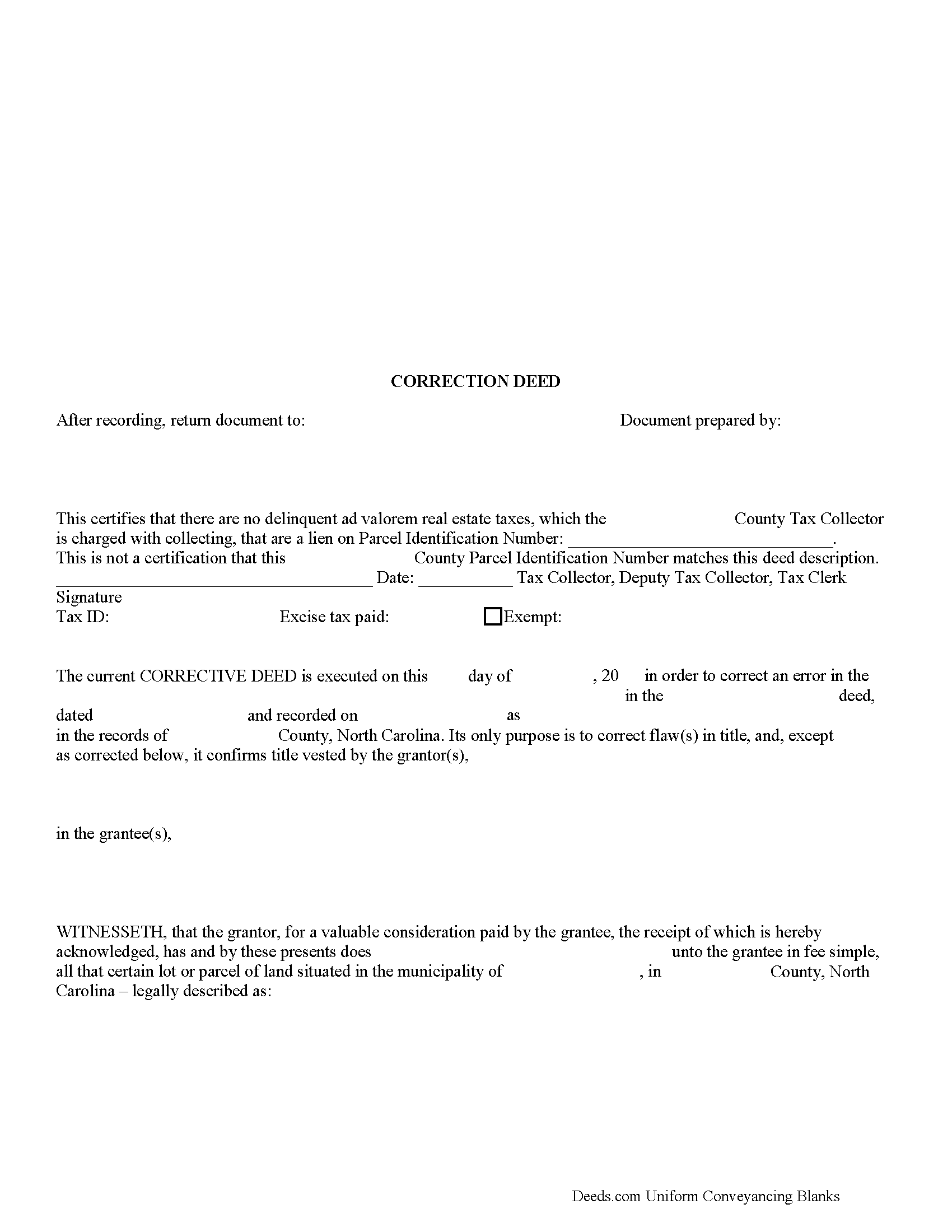
About the North Carolina Correction Deed
How to Use This Form
- Select your county from the list
- Download the county-specific form
- Fill in the required information
- Have the document notarized if required
- Record with your county recorder's office
What Others Like You Are Saying
"The process was efficient, from initiation to follow up took two days. This was a step in the right …"
"Easy, convenient, and very reasonably priced. I really appreciate the comprehensive step-by-step ins…"
"These guidelines and form helped me lot in preparing quit deed to add my spouse's name in tittle pro…"
"I liked having the forms. Some may need to know they can look at the legal Description from online c…"
"Took it to the Courthouse and the Register of Deeds said,"well Done" Thanks you so much."
4.8/5 from 4,833 reviews. Read all
Use the correction deed to correct errors in a warranty, special warranty, or quit claim deed in North Carolina.
In North Carolina, several correction options may be used: an affidavit of correction, also called scrivener's affidavit; a re-recording of the original erroneous deed; and a newly drafted correction deed. Choosing the best option will depend on the type of error in the deed. Minor or typographical errors can be addressed through the affidavit (N.C.G.S. 47-36.1), but material errors and any errors affecting the legal description require a correction deed, or at least a re-recordation of the corrected original deed.
The affidavit of correction goes on public record with cross-reference to the deed and constitutes notification of an error, but not an actual correction. When re-recording the original deed, make corrections directly on the document (or a certified copy of it). Initial these changes and have the document re-signed by the original parties and re-acknowledged. Check with the county's recording office before choosing this option to verify local requirements regarding title pages, contents and fees.
The easiest and cleanest option for correcting a deed is to record a new correction deed. This eliminates the need to determine the type of error and its potential impact on the ability to sell the property at a later point. The correction deed references the original document by date and recording number and, except for the corrected or omitted information, duplicates the text of the old deed. The original parties must sign in the presence of a notary, who then acknowledges this new instrument prior to recording.
(North Carolina CD Package includes form, guidelines, and completed example)
Important: County-Specific Forms
Our correction deed forms are specifically formatted for each of the 100 counties in North Carolina.
After selecting your county, you'll receive forms that meet all local recording requirements, ensuring your documents will be accepted without delays or rejection fees.