Ohio Affidavit of Survivorship (Successor Trustee Beneficiary)
County Specific Legal Forms Validated as recently as October 23, 2026 by our Forms Development Team
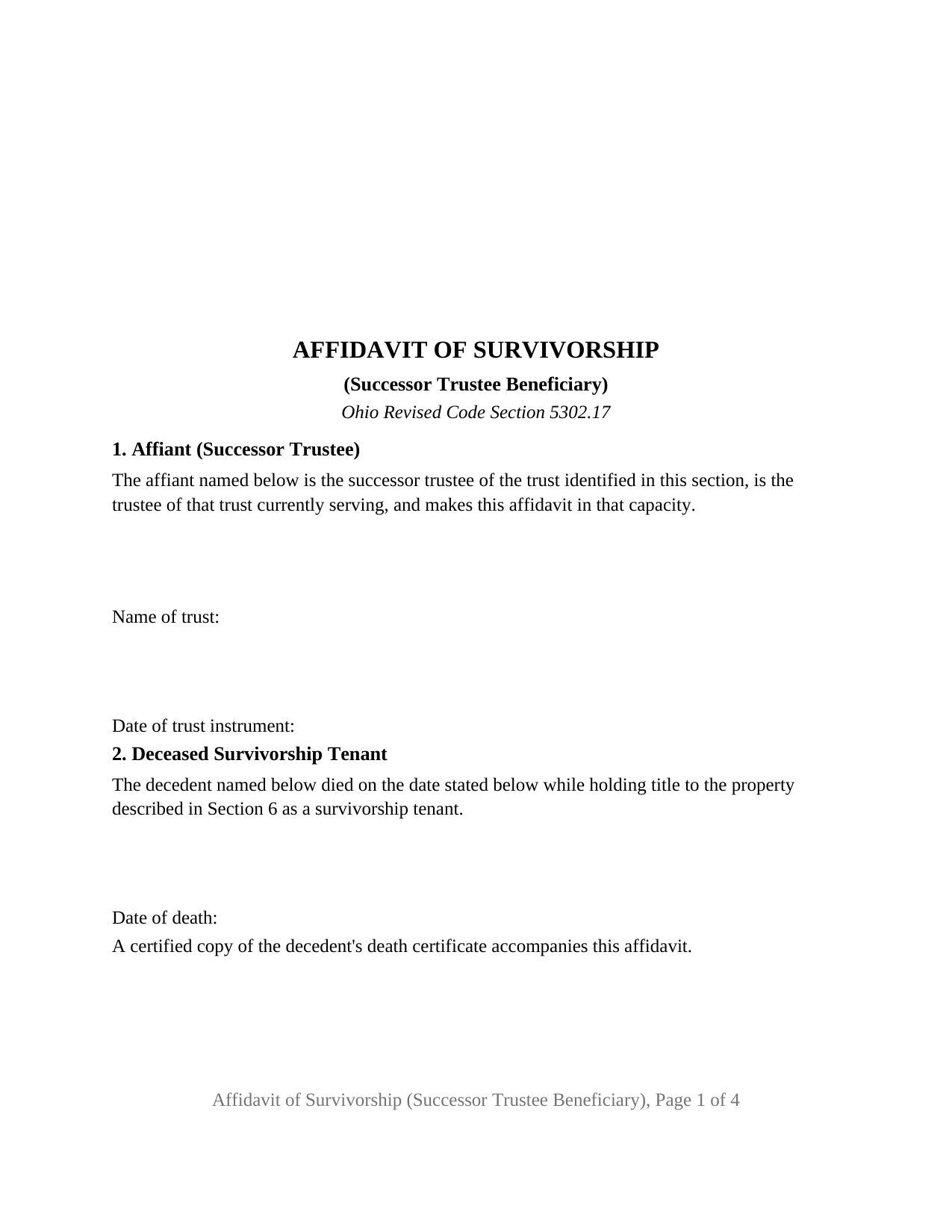
About the Ohio Affidavit of Survivorship (Successor Trustee Beneficiary)
How to Use This Form
- Select your county from the list
- Download the county-specific form
- Fill in the required information
- Have the document notarized if required
- Record with your county recorder's office
What Others Like You Are Saying
"I thought the forms were reasonably priced, the instructions included in the packet were thorough, a…"
"Just joined. Recommended by a strong source. Looking forward to doing business."
"Received feedback in a timely manner and got a quick reponse."
"The three people we dealt with were courteous and helpful."
"Easy to use and understand. I am glad to have found this resource."
4.8/5 from 4,831 reviews. Read all
A trust cannot sign an affidavit, and a surviving survivorship tenant who has died or stepped down as trustee cannot sign one either. The Ohio Affidavit of Survivorship (Successor Trustee Beneficiary) is the Revised Code Section 5302.17 affidavit for that gap: the surviving tenant's interest is held by a trust, the successor trustee is the person now serving, and the other survivorship tenant's death was never placed in the county records. The successor trustee makes the affidavit, attaches the certified death certificate, and presents it to the county auditor and recorder.
The survivor's assigns
Section 5302.17 does more than create survivorship between the grantees of a survivorship deed. Its first sentence vests the decedent's interest in the survivor, survivors, or the survivor's or survivors' separate heirs and assigns. A trustee who took the survivor's interest by deed is the survivor's assign, and Section 5302.20(C)(2) describes that deed: a conveyance from fewer than all of the survivorship tenants to a person who is not one vests the grantor's title in the grantee, conditioned on the grantor surviving. Whether the survivor signed the deed to the trustee after the other tenant died, as in the completed example, or before, the chain runs survivorship deed, death, deed to trustee, and the affidavit documents the middle link.
Two deeds behind one affidavit
Section 5302.17 names the recitals: the name and address of the other survivorship tenant, the decedent's date of death, and a description of the real property. This form carries each in its own numbered section and adds the two instruments that put the trust where it stands. Section 4 identifies the survivorship deed by date, recording reference, and county, which also serves as the prior instrument reference Section 319.20 asks the auditor to find. Section 5 identifies the deed from the surviving tenant to the trustee, and its fixed sentence recites that the survivor conveyed the survivor's interest to the trustee of the trust named in Section 1.
An affiant who signs as successor trustee
The form recites one decedent, one surviving survivorship tenant, one trust, and one affiant, and it prints the affiant's capacity as fixed text: the affiant is the successor trustee of the trust identified in Section 1, is the trustee currently serving, and makes the affidavit in that capacity. The name of the trust and the date of the trust instrument are entries, matching the deed to the trustee and the certification of trust a trustee furnishes under Section 5810.13. The signature block is a single line signed in the fiduciary capacity, followed by one jurat, the sworn certificate Section 147.542 distinguishes from an acknowledgment, with venue lines completed for the place the oath is administered. The affidavit does not recite why the trusteeship became vacant; Section 5807.04 of the Ohio Trust Code governs that, beginning with the successor the trust instrument names.
A survivor still of record in the survivor's own name, a survivor who is the initial trustee and still serving, a trust that took title from the decedent, and a deed with two or more surviving tenants present different patterns, and the form is not set up for them. Registered land under Chapter 5309 follows Section 5309.081 rather than an affidavit.
The auditor transfers a death, not a sale
Ohio keeps the tax list at the county auditor and the official records at the county recorder, and Section 5302.17 sends the affidavit through both. The conveyance fee does not reach it: Section 319.54(G)(3)(n) exempts a transfer to a surviving survivorship tenant under Section 5302.17, and Section 322.01 keeps an exempt instrument outside the county permissive transfer tax, so the auditor takes the exemption statement, form DTE 100EX, with the fifty cent transfer fee of Section 319.54(G)(2). The recorder charges by the page under Sections 317.32 and 317.36, and the form is built to the standard format of Section 317.114 with the preparer's name Section 317.111 requires. The affidavit changes no ownership; Section 5302.20(B) vested the decedent's title at the moment of death, and the memorandum of trust Section 5301.255 requires of record attaches to a later conveyance by the trustee, not to this affidavit.
The package includes the fillable affidavit of survivorship form, a completed example filled in for a realistic Hamilton County fact pattern, and the guide that walks through every numbered section and the auditor and recorder steps. This description and the guide describe the form and the governing Ohio statutes in general terms; they are not legal advice.
Important: County-Specific Forms
Our affidavit of survivorship (successor trustee beneficiary) forms are specifically formatted for each of the 88 counties in Ohio.
After selecting your county, you'll receive forms that meet all local recording requirements, ensuring your documents will be accepted without delays or rejection fees.