Ohio Gift Deed (Reserving Life Estate)
County Specific Legal Forms Validated as recently as October 20, 2026 by our Forms Development Team
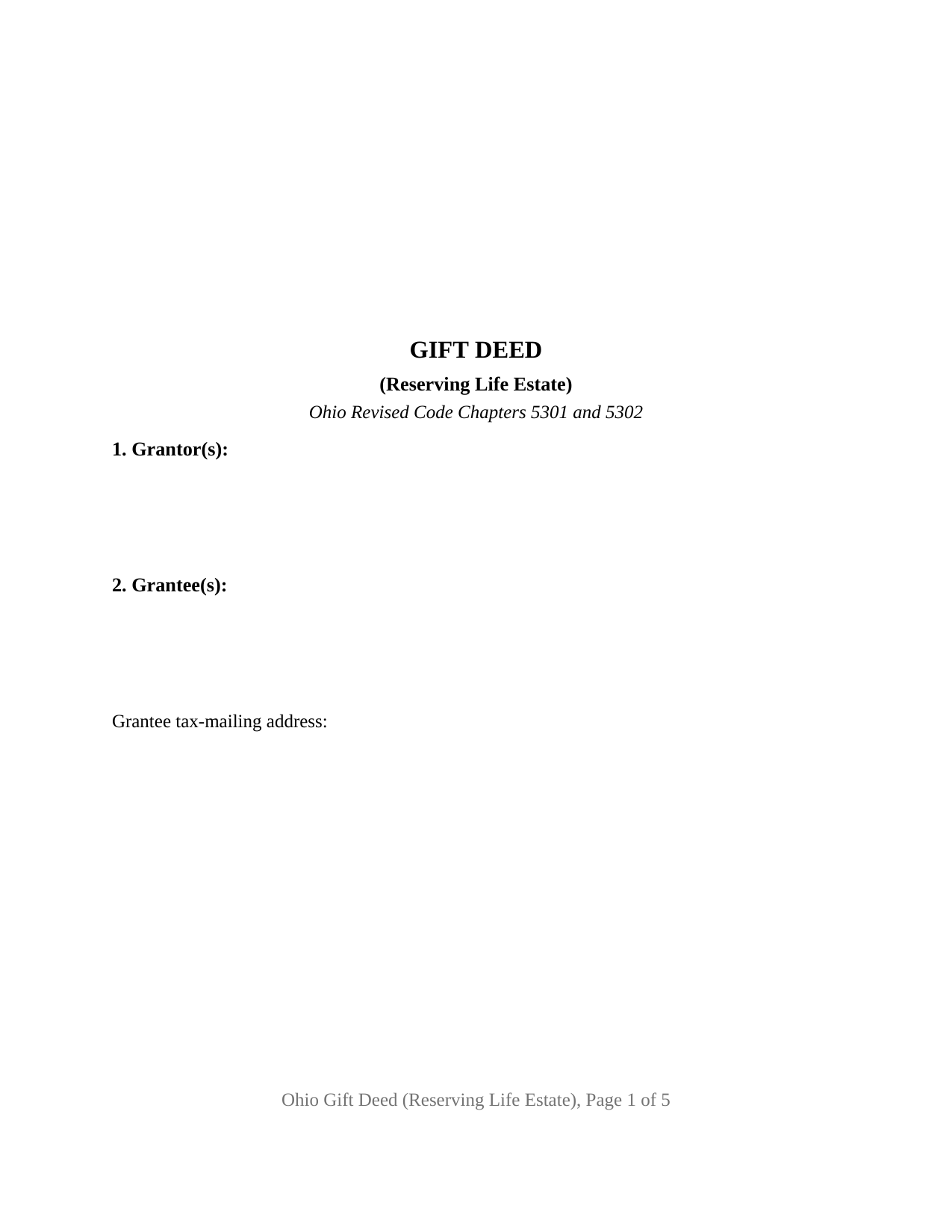
About the Ohio Gift Deed (Reserving Life Estate)
How to Use This Form
- Select your county from the list
- Download the county-specific form
- Fill in the required information
- Have the document notarized if required
- Record with your county recorder's office
What Others Like You Are Saying
"It was quick and easy to download the forms I need to modify a property deed. No problems n the leas…"
"Very convenient"
"easy to download and print. came with instructions also. very helpful."
"This was amazingly easy to access."
"The form provided was a perfect fill in form. Was able to complete with no problems. The instruction…"
4.8/5 from 4,829 reviews. Read all
One Ohio deed, two estates. This Ohio Gift Deed (Reserving Life Estate) gives the remainder in real property to the grantee for no consideration while the grantor keeps a life estate: the right to live in the property, use it, and collect its rents for life. The grantee's ownership is real from the day the deed is delivered, but possession waits until the life tenant dies, and no further deed is signed then: the recorded instrument already says who holds the property next.
A remainder that vests now and possesses later
Ohio's statutory quit-claim form in Revised Code Section 5302.11 invites the drafter to state any reservations in the grant, and Section 5302.01 lets the forms be altered as circumstances require. A life estate deed is that alteration: the deed grants the property and, in the same breath, reserves the life estate. Section 5301.02 makes the reservation effective, since a grant passes the grantor's whole interest unless a lesser estate is clearly indicated. What the grantee holds from delivery is a vested remainder in fee simple; what the grantor holds is a life estate, an interest Section 323.151(A)(2) counts as ownership for the homestead exemption.
Why it cannot be undone alone
The reservation is a conventional life estate and nothing more. The grantor keeps no power to sell the fee, mortgage it, change the grantee, or take the property back, and a later will does not reach the remainder. Selling the whole title afterward takes the life tenant and the remainderman together. That permanence separates this deed from an enhanced life estate or lady bird deed, which rests on no Ohio statute, and from the transfer on death designation affidavit of Section 5302.22, a separate recorded instrument not included in this package, under which the beneficiary holds nothing until the owner dies.
What the state reads into a reserved life estate
Section 5162.21(A)(1)(b) defines the estate reached by Ohio Medicaid estate recovery to include property in which the decedent had any interest at death, to the extent of that interest, and names the life estate among them; the guide describes that section with its exceptions. At the auditor's counter the gift exemption of Section 319.54(G)(3)(d), for a gift between parent and child or the spouse of either, reaches a gift of the remainder as it reaches a gift of the fee; a gift of the remainder to anyone else pays the conveyance fee on open-market value.
Every grantor is a life tenant
The grantor section names one or two natural persons, and the reservation is written for both counts without an entry: the life estate runs for the life of the grantor and, where two persons are named, for their joint lives and the life of the survivor of them, so a surviving spouse keeps the whole property for life. A widowed owner passing a home to two children while remaining in it, and a married couple deeding the remainder in the family house to their children, present the patterns this deed recites. Because Ohio dower reaches the fee a married owner gives away, an owner who holds title alone names the spouse in the grantor section and the spouse signs; under this deed that spouse is then a life tenant too. The grantee section carries one or two grantees and any statement of how two of them hold the remainder, from tenancy in common to the survivorship tenancy of Section 5302.17. Two signature blocks follow, each with its own acknowledgment certificate, and the second stays blank when one grantor conveys. Trustees, entities, attorneys in fact, and groups of three or more on either side are outside what this form recites.
Auditor first, then recorder
Like every Ohio conveyance, this deed goes to the county auditor before the recorder, carrying the grantee tax-mailing address and prior instrument reference of Section 319.20 with the DTE 100 or DTE 100EX form, and is then recorded in the county where the land lies. It prints to the Section 317.114 format and is acknowledged before a notary public or another officer named in Section 5301.01, with no witnesses.
The package includes the fillable deed, a completed example for a Summit County gift of a remainder from a married couple to their two children, and the guide that explains the life estate, the dower release, and recording. The form and this description state what Ohio law provides in general terms; they are not legal advice.
Important: County-Specific Forms
Our gift deed (reserving life estate) forms are specifically formatted for each of the 88 counties in Ohio.
After selecting your county, you'll receive forms that meet all local recording requirements, ensuring your documents will be accepted without delays or rejection fees.