Texas Release of Easement
County Specific Legal Forms Validated as recently as September 21, 2026 by our Forms Development Team
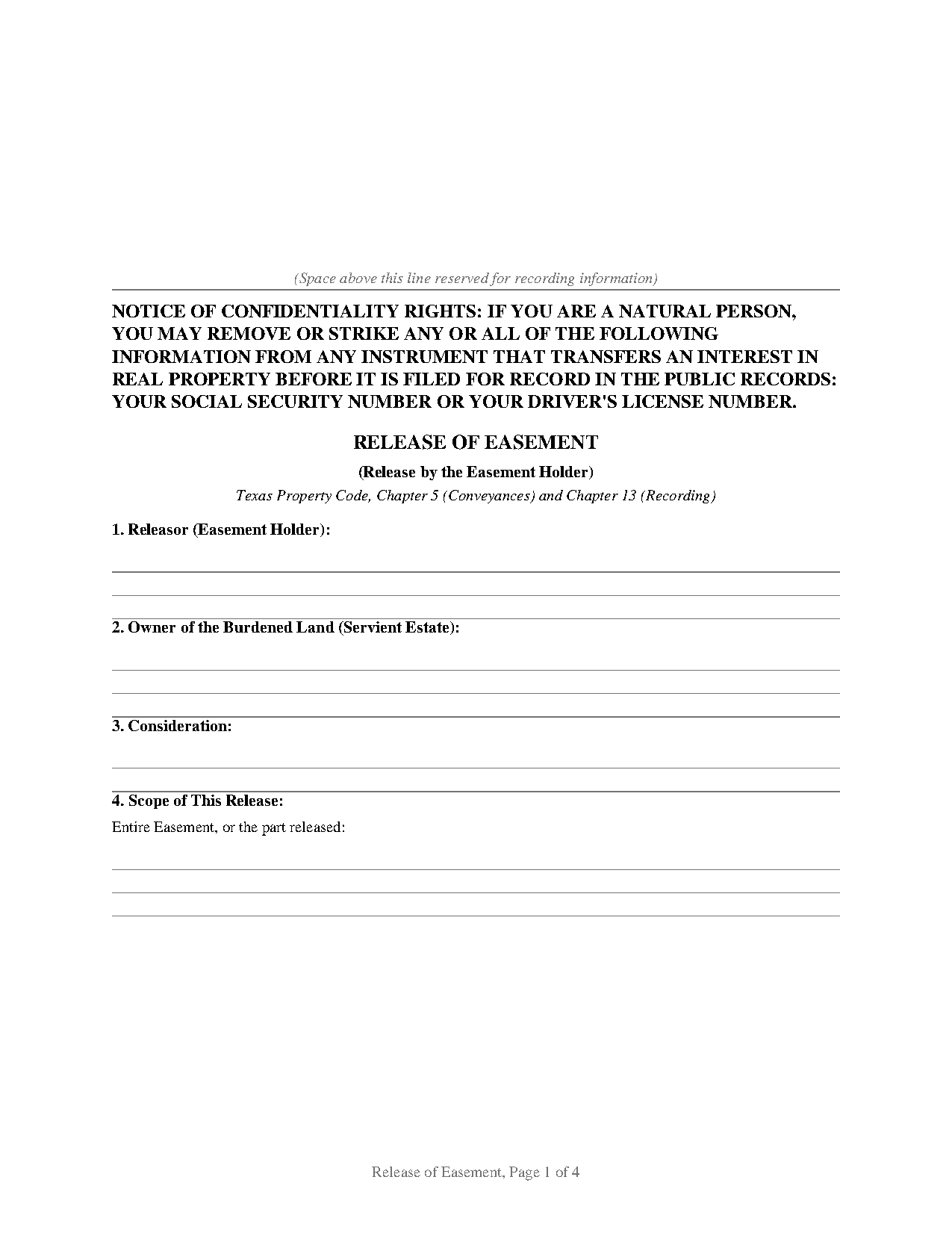
About the Texas Release of Easement
How to Use This Form
- Select your county from the list
- Download the county-specific form
- Fill in the required information
- Have the document notarized if required
- Record with your county recorder's office
What Others Like You Are Saying
"Very easy"
"Nice site, easy to maneuver around, and walks you thru completing forms. However, at the end, the fo…"
"Forget what I just wrote! I found it. Thank You! This is a very convenient service."
"So easy to use!"
"I found a typo. It would be good to list the documents an individual needs to fill out the form."
4.8/5 from 4,824 reviews. Read all
An easement is an interest in someone else's land, and the cleanest way to take one off a Texas title is for the party who holds it to give it up in writing. This form prepares that instrument: a Release of Easement, signed by the easement holder and recorded where the burdened land sits, so the public record matches the fact that the easement is gone.
Only the Holder Can Release It
A release works because of who signs it. The holder, the owner of the land an easement appurtenant benefits, or the company named in a utility or pipeline easement in gross, is the one party who can let the right go; the owner of the burdened land cannot erase an easement that runs in someone else's favor. On this form the holder is the releasor and the signer, and the operative language has the holder release, relinquish, and quitclaim the easement so that, to the extent stated, it is terminated, extinguished, and of no further force or effect.
No Statute, So the Drafting Carries the Weight
Texas easement law is largely common law. The Legislature never wrote a release of easement form, so the instrument rests on the general rules for written conveyances and recording. Because an easement is an interest in land, Property Code Section 5.021 requires the release to be in writing, subscribed, and delivered by the holder. With no statute supplying boilerplate, the words on the page do the work: the form ties the release to the recording reference of the instrument that created the easement, describes the burdened land, names the parties, and states how much of the easement is being released.
Full Release or Partial Release
Some releases give up the whole easement; others surrender only a strip or a stated portion while the rest stays in place. The form handles both. A scope section states whether the entire easement is released or describes the part released, and the operative section keeps every portion not described as released in full force.
Why Recording Is the Point
A signed and delivered release is effective between the parties right away, but recording does something just as important: under Property Code Section 13.002 a recorded instrument is notice to all persons, and under Section 13.001 an unrecorded release is void as to a later purchaser for value without notice. Until the release reaches the county records, a title examiner still sees a live easement, so recording in the county where the property is located is what clears it from the chain of title. Senate Bill 16 added a photo identification requirement at the recording counter for instruments filed in person on or after December 4, 2025, a step that happens at the counter and changes nothing in the release itself.
An optional joinder block lets the owner of the burdened land sign the same release, recording the agreement of both sides in one document, though that signature is a convenience rather than a condition. The package includes the fillable PDF, a completed example built on a realistic Texas pipeline easement release, and a plain language guide that walks through every section and explains how the release interacts with the homestead joinder rule and the recording statutes. The materials are informational and are not legal advice.
Important: County-Specific Forms
Our release of easement forms are specifically formatted for each of the 254 counties in Texas.
After selecting your county, you'll receive forms that meet all local recording requirements, ensuring your documents will be accepted without delays or rejection fees.