Texas Easement Deed (In Gross - Utility)
County Specific Legal Forms Validated as recently as October 7, 2026 by our Forms Development Team
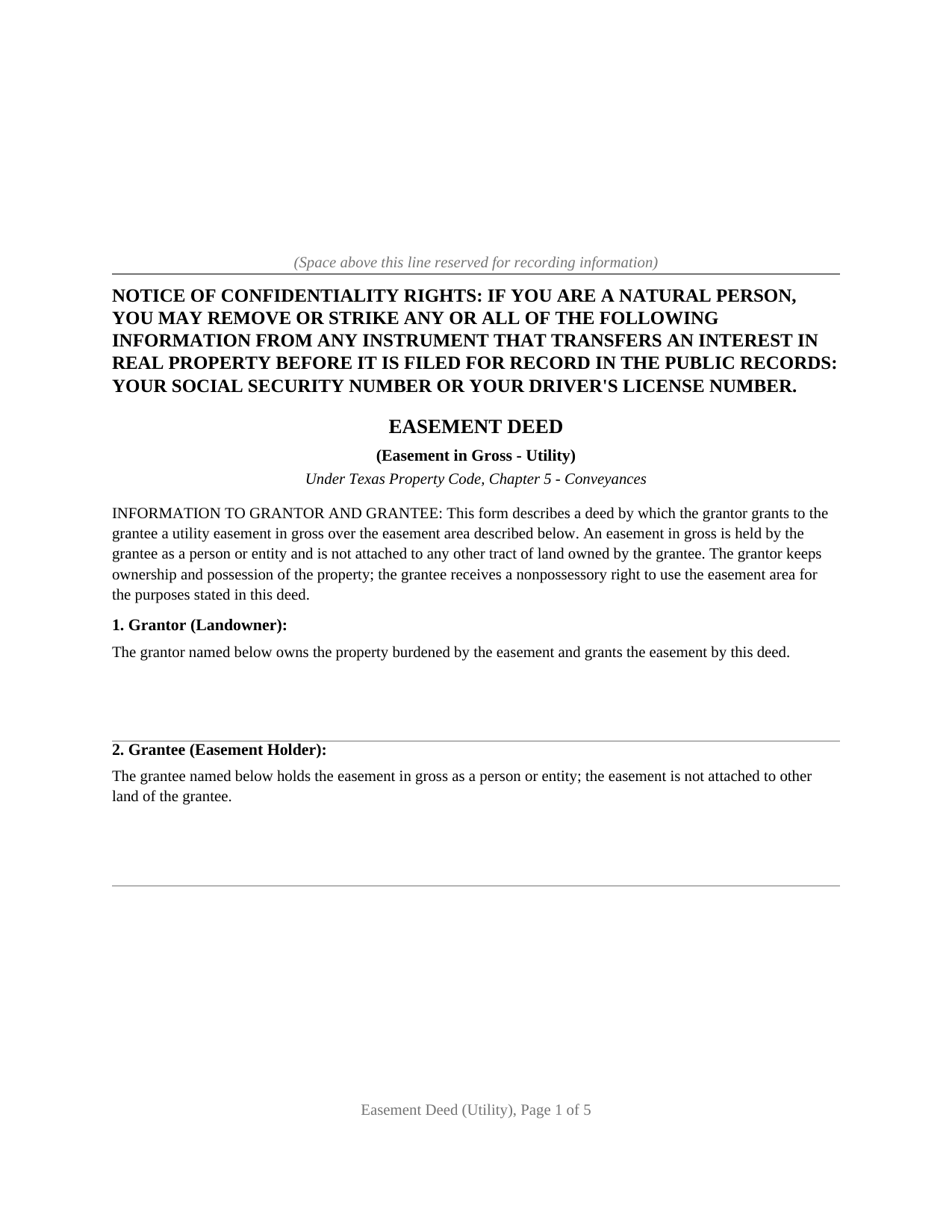
About the Texas Easement Deed (In Gross - Utility)
How to Use This Form
- Select your county from the list
- Download the county-specific form
- Fill in the required information
- Have the document notarized if required
- Record with your county recorder's office
What Others Like You Are Saying
"Thank you for making this so easy to use. I had looked all over the internet and yours was the most …"
"Got the legal forms, they worked. Nothing exciting but that probably a good thing."
"This website is very user friendly. I easily found the form I needed and was given an example for fi…"
"it was very helpful."
"This form was very helpful ... I wish I had run across your before it would have saved me a lot of m…"
4.8/5 from 4,828 reviews. Read all
A utility easement is the most common easement in gross in Texas: the right to run power lines, pipes, or cables across private land belongs to the utility provider as an entity, not to any neighboring parcel. This form prepares the deed that creates that right over a defined area of a landowner's property.
An Easement, Not a Conveyance of Land
An easement is a nonpossessory interest in land. The grantor keeps title and possession and continues to use the property; the grantee receives only the limited right to use a described easement area for the stated utility purposes. The deed says so expressly, conveying an easement only and reserving to the landowner every use that does not unreasonably interfere with the utility's use. The distinction carries weight in Texas, where a grant phrased as a transfer of all right, title, and interest in a strip of ground can be read as a conveyance of the land itself rather than an easement.
In Gross Means Held by an Entity
Texas easements fall into two families. An easement appurtenant benefits a particular parcel, the dominant estate, and passes with that land when it sells. An easement in gross benefits a person or entity and burdens a servient estate with no dominant estate on the other side. The Texas Supreme Court drew this line in Drye v. Eagle Rock Ranch, Inc., and a utility easement sits on the in gross side: the right belongs to the electric, water, gas, pipeline, or telecommunications provider.
Why the Assignment Clause Matters
The in gross classification creates a trap the form is built to avoid. Texas courts have treated easements in gross as ordinarily not assignable unless the instrument provides for assignment. For commercial easements in gross, such as utility easements, courts have recognized transferability, particularly where the grant extends to the grantee's successors and assigns. The form includes an assignment and successors provision stating the parties' intent that the easement be assignable, so the right survives a later sale or merger of the provider rather than being trapped with the original grantee.
Homestead Property and the Spouse's Signature
An easement is an encumbrance on the land it burdens. Where the burdened property is the homestead of a married grantor, Texas Family Code Section 5.001 calls for the joinder of the grantor's spouse, whether the homestead is community property or the separate property of one spouse. The form carries a joinder signature block and a separate acknowledgment for the spouse, left blank where the grantor is unmarried or the property is not homestead, a point a generic easement form often misses.
Signing and Recording
The grantor signs before a notary, and the deed is recorded with the county clerk of the county where the property is located. Recording is not what makes the easement valid between the parties; under Property Code Section 13.001 it protects the easement against a later purchaser who buys the land without notice of it. The package includes the blank easement deed as a fillable PDF, a completed example built around a realistic electric distribution easement, and a plain language guide that walks through every section, explains the in gross and appurtenant distinction, and describes the homestead joinder rule. The materials are informational and are not legal advice.
Important: County-Specific Forms
Our easement deed (in gross - utility) forms are specifically formatted for each of the 254 counties in Texas.
After selecting your county, you'll receive forms that meet all local recording requirements, ensuring your documents will be accepted without delays or rejection fees.