Vermont Easement Deed
County Specific Legal Forms Validated as recently as October 1, 2026 by our Forms Development Team
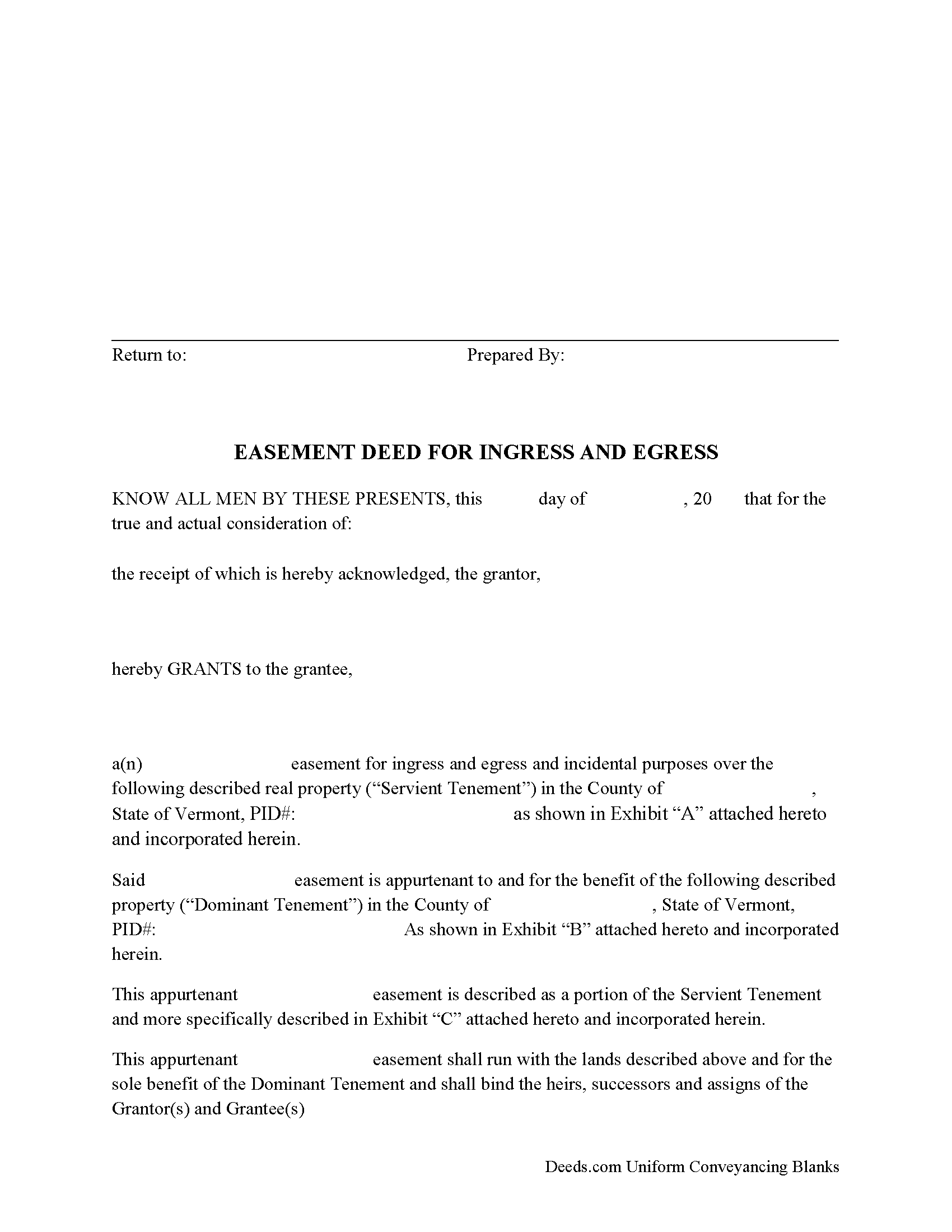
About the Vermont Easement Deed
How to Use This Form
- Select your county from the list
- Download the county-specific form
- Fill in the required information
- Have the document notarized if required
- Record with your county recorder's office
What Others Like You Are Saying
"Very easy to work with."
"Good Work!"
"easy to use"
"Thank you! You made the process of filing something unusual very easy and efficiently. I will defini…"
"The example and guide were invaluable! Easy to use and easy to fill out."
4.8/5 from 4,815 reviews. Read all
An easement can be created by a grant or deed, by implication, or by prescription. An easement created by a deed should be in writing and should define the terms and scope of the agreement. This type of real property instrument creates a non-possessory interest in land that allows one person to use another's property for a specific purpose.
As an interest in real property, an easement deed in Vermont is required to be signed and acknowledged by the grantor before recording can take place. The acknowledgment of a deed in Vermont can be taken before a town clerk, notary public, master, county clerk, or judge or register of probate. Acknowledgments taken before a notary public will be valid without an official seal being affixed to the notary's signature (27 V.S.A. Statute 341a). Vermont recognizes acknowledgments taken out of state if the acknowledgments are taken according to the laws of such state (379).
Real estate documents in Vermont are recorded in the town or city where the property is located. This is different from many other states that have a county recording system. Recording an easement deed will impart constructive notice of the contents of the instrument. Unless an easement deed is acknowledged and recorded, it will not be effective to hold such lands against any person but the grantor and his or her heirs (342).
(Vermont ED Package includes form, guidelines, and completed example)
Important: County-Specific Forms
Our easement deed forms are specifically formatted for each of the 14 counties in Vermont.
After selecting your county, you'll receive forms that meet all local recording requirements, ensuring your documents will be accepted without delays or rejection fees.