Texas Appointment and Acceptance of Successor Trustee (Recordable)
County Specific Legal Forms Validated as recently as September 23, 2026 by our Forms Development Team
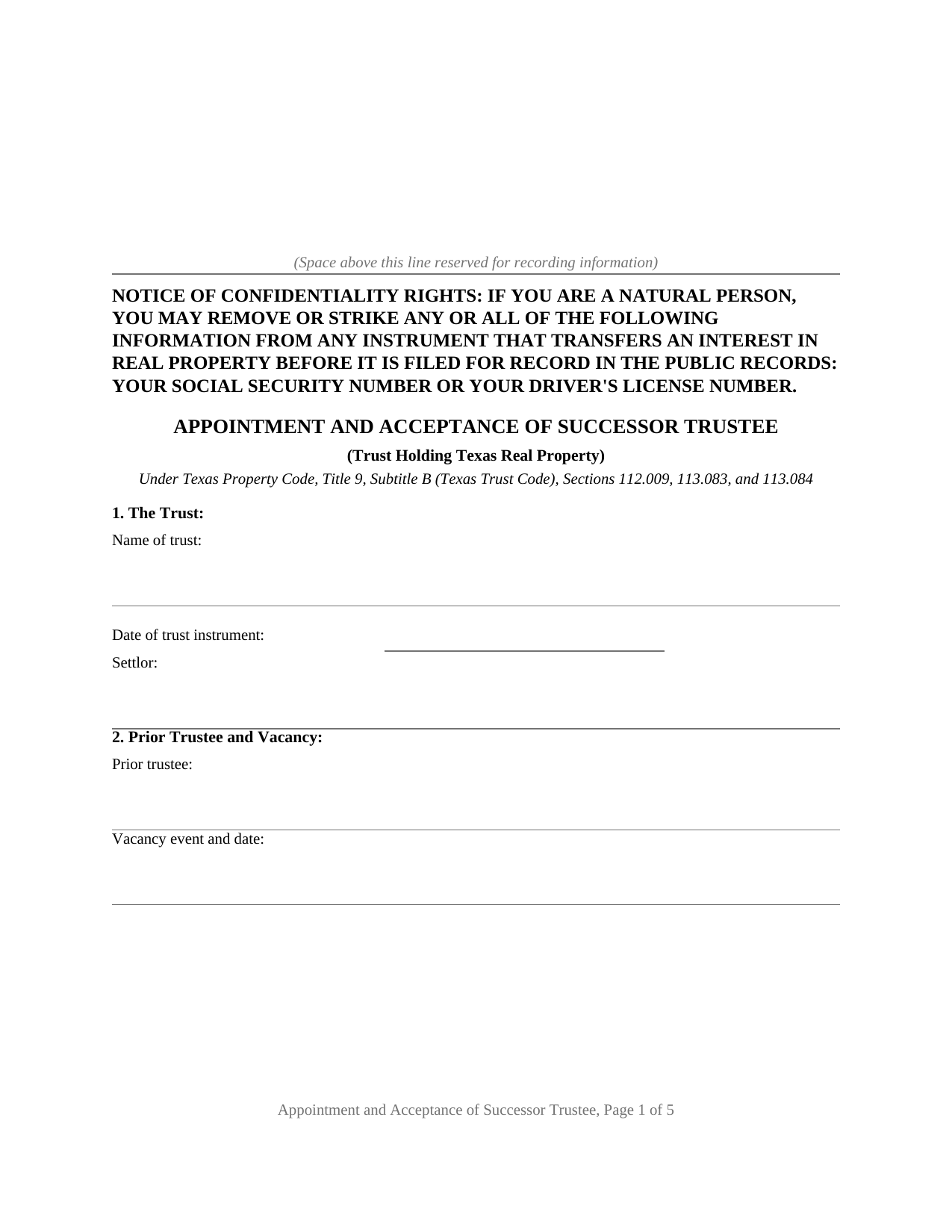
About the Texas Appointment and Acceptance of Successor Trustee (Recordable)
How to Use This Form
- Select your county from the list
- Download the county-specific form
- Fill in the required information
- Have the document notarized if required
- Record with your county recorder's office
What Others Like You Are Saying
"While most of the material is available elsewhere, this puts it all together and can save a lot of t…"
"Thank you for your complete listing of deeds and forms. The Deed form I needed worked perfectly!"
"The website worked fine and I would have been happy to pay the extra money except the deed I needed …"
"They have been fabulous not only for getting me the Title and Property info I needed quickly, but al…"
"This looks easy enough. Thanks. Very simple and efficient navigating the site."
4.8/5 from 4,825 reviews. Read all
Legal title to real property held in a Texas trust stands in the name of the trustee. The deed that moved the property into the trust names the trustee of record, and every later search of the county records starts from that name. When that trustee dies, resigns, becomes incapacitated, or is removed, the trust continues and a successor steps in, but the county records still show only the prior trustee. This form prepares the instrument Texas title practice uses to close that gap: a recordable appointment and acceptance of successor trustee for a trust holding Texas real property.
Title Follows the Trustee
Under Section 113.083 of the Texas Trust Code, a successor trustee is selected according to the method, if any, prescribed in the trust instrument, with court appointment available where the instrument supplies none. Section 113.084 then does the quiet work that matters for real estate: unless the trust instrument or a court order provides otherwise, the successor trustee has the rights, powers, authority, discretion, and title to trust property conferred on the trustee. The succession takes effect under the trust instrument and the statute, with no new deed from the old trustee to the new one. What the succession does not do on its own is appear in the county records.
One Instrument, Two Legal Acts
The form performs two acts in a single recordable document. The appointing party, the person the trust instrument authorizes to select a successor, appoints the successor trustee, reciting the trust, the prior trustee, the vacancy event, and the provision relied on. The successor trustee then accepts the trust in writing; under Section 112.009, a signature on a separate written acceptance is conclusive evidence that the person accepted the trust. Each signer acknowledges before a notary, and the acknowledgments are what make the instrument recordable: Property Code Section 12.001 provides that an instrument concerning real property may be recorded once acknowledged.
Recording as Notice, Not Effectiveness
No Texas statute requires an appointment of successor trustee to be recorded, and recording is not what makes it effective. Recording serves the title record. A title company examining the trust property years later, a purchaser tracing the chain of title, and the appraisal district adjusting its rolls all find the succession documented in the same records that hold the vesting deed. The instrument identifies the property by county, legal description, street address, and vesting instrument, so the clerk indexes it where examiners look. The confidentiality notice required by Property Code Section 11.008 appears at the top of the first page, and the layout reserves the customary space on page one for the clerk's recording stamp.
What the Package Prepares
The download includes the blank instrument as a fillable PDF, a completed example showing a realistic Travis County succession from written resignation through acceptance, and a plain language guide that walks through every numbered section: the trust, the prior trustee and the vacancy, the authority for the appointment, the parties, the property, and the operative appointment and acceptance language. The instrument does not convey the property and does not modify the trust; the guide describes those limits, along with the certification of trust that banks and title companies separately request under Property Code Section 114.086. The materials are informational and are not legal advice.
Important: County-Specific Forms
Our appointment and acceptance of successor trustee (recordable) forms are specifically formatted for each of the 254 counties in Texas.
After selecting your county, you'll receive forms that meet all local recording requirements, ensuring your documents will be accepted without delays or rejection fees.